
Arnold Böcklin
Swiss painter, draftsman, graphic artist and sculptor
About Arnold Böcklin
Lived 1827 – 1901 (aged 73). Arnold Böcklin was a Swiss painter, sculptor, university teacher, draftsperson and designer.
Arnold Böcklin (; 16 October 182716 January 1901) was a Swiss Symbolist painter. His five versions of the Isle of the Dead inspired works by several late Romantic composers.
Biography Arnold Böcklin was born in Basel. His father, Christian Frederick Böcklin (b. 1802), was descended from an old family of Schaffhausen, and engaged in the silk trade. His mother, Ursula Lippe, was a native of the same city.
Career
He then exhibited the Great Park, one of his earliest works, in which he treated ancient mythology. Of this period are his Nymph and Satyr, Heroic Landscape (Diana Hunting), both of 1858, and Sappho (1859). These works, which were much discussed, together with Lenbach's recommendation, gained him appointment as professor at the Weimar academy. He held the office for two years, painting the Venus and Love, a Portrait of Lenbach, and a Saint Catherine.
Clement Greenberg wrote in 1947 that Böcklin's work "is one of the most consummate expressions of all that is now disliked about the latter half of the nineteenth century."
Legacy Isle of the Dead (Die Toteninsel): Third version, 1883. Alte Nationalgalerie, Berlin. The Island of Life (Die Lebensinsel), 1888. Kunstmuseum Basel, Basel.
During his lifetime, Böcklin achieved considerable recognition, especially in central Europe, and influenced younger artists such as Hans Thoma. After his death in 1901 his reputation declined rapidly as modern art styles made the literary character of his paintings seem old-fashioned. – who said "Each of Böcklin's works is a shock" – and was admired by Surrealist painters such as Max Ernst and Salvador Dalí. A general revival of interest in Böcklin began only in the 1960s.
Museums holding several works by Böcklin include the Kunstmuseum Basel and the Kunsthaus Zürich.
In music Böcklin's paintings, especially Isle of the Dead, inspired several late-Romantic composers. Gustav Mahler's song Des Antonius von Padua Fischpredigt (St. Anthony's Sermon to the Fish) from his Des Knaben Wunderhorn song cycle, which also appears as the Scherzo movement in Mahler's Symphony No. 2 (Mahler) was inspired by Böcklin's 1892 painting, St. Anthony Preaching to the Fish. Hans Huber's second symphony is entitled Böcklin-Sinfonie / "Sieh es lacht die Au'", Op. 115 (1897) Andreas Hallén, a Swedish Romantic composer, wrote a symphonic poem Die Toteninsel in 1898. In 1891, Portuguese pianist José Vianna da Motta composed two pieces on Böcklin's paintings Meeresidylle and Im Spiel der Wellen. Böcklin's Das Gefilde der Seligen (Elysium) appears on the cover of Felix Weingartner's eponymous tone-poem, Op.21 (1897). In 1903, Austrian, later American, composer Karl Weigl composed a tone poem for piano "Die Toteninsel". Sergei Rachmaninoff wrote his symphonic poem Isle of the Dead in 1909. He was also inspired by Böcklin's painting Die Heimkehr ("The Homecoming" or "The Return") when writing his Prelude in B minor, Op. 32, No. 10. Heinrich Schulz-Beuthen composed a symphonic poem after the Isle of the Dead (1909?) Felix Woyrsch composed 3 Böcklin Phantasies (Die Toteninsel, Der Eremit, Im Spiel der Wellen), Op. 53 (1910). In 1913 Max Reger composed a set of Four Tone Poems after Böcklin with the movements "Der geigende Eremit", "Im Spiel der Wellen", "Die Toteninsel", and "Bacchanal". In Mark Robson's film Isle of the Dead (1945), Disney composer Leigh Harline's somber score makes use of Sergei Rachmaninoff's music. Fulvio Caldini composed L'isola di Böcklin, his Op.85 for electronic instruments (2001).
Other The Schriftgiesserei Otto Weisert foundry designed an Art Nouveau typeface in 1904 and named it "Arnold Böcklin" in his honor.
Adolf Hitler was fond of Böcklin's work, at one time owning 11 of his paintings.
Roger Zelazny's novel Isle of the Dead features a planet-building character inspired by the painting to create an Isle of the Dead on one of his worlds, and an Ace books edition features a cover painting by Dean Ellis that is deliberately reminiscent of Böcklin's work.
Yemelyan Yaroslavsky, Academician of the Academy of Sciences of the Soviet Union, opened his 1942 laudatory article on Dmitry Shostakovich's Seventh Symphony with an allusion to Böcklin's painting "War".
Works
Don’t just read it —
keep it.
Full-length biographies made to live with: read them, listen on the way to work, watch them tonight.
- E-book
- Audio
- Video
Instant download · yours to keep · every purchase keeps this site free
Important facts
more
a. boecklin, bocklin arnold, prof. a. bocklin, arn. boecklin, Bocklin, carl Boecklin, Carlo Böcklin, Arnold Böcklin-PascucciPeople in Arnold Böcklin's life
Named in this biography and alive at the same time

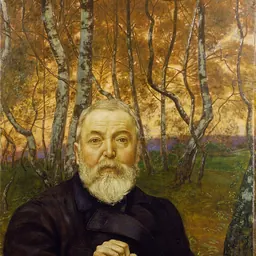
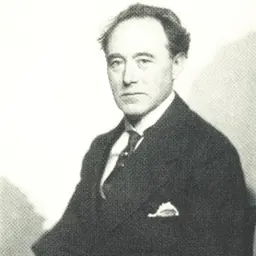

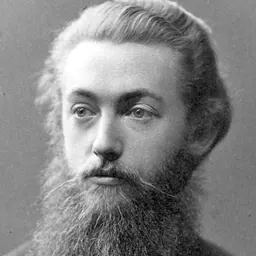

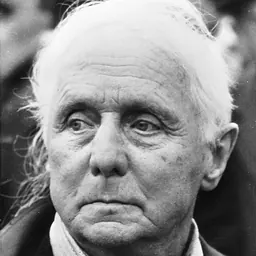

Related people
Same field, nearest in time

Contemporaries
People whose lives overlapped Arnold Böcklin's





Frequently asked questions
Who was Arnold Böcklin?
Swiss painter, draftsman, graphic artist and sculptor (1827–1901)
When was Arnold Böcklin born?
Arnold Böcklin was born on 16 October 1827 in Basel.
When did Arnold Böcklin die?
Arnold Böcklin died on 16 January 1901 in convent of San Domenico, Fiesole.
What was Arnold Böcklin's occupation?
Arnold Böcklin was a painter, sculptor, university teacher, draftsperson and designer.
What nationality was Arnold Böcklin?
Arnold Böcklin was Swiss.
Sources & further reading
Cite this page
APA: Biography.guide. (2026). Arnold Böcklin. https://biography.guide/arnold-bocklin/
MLA: "Arnold Böcklin." Biography.guide, https://biography.guide/arnold-bocklin/.
Chicago: "Arnold Böcklin." Biography.guide. https://biography.guide/arnold-bocklin/.
Data last updated: 2026-09-25 · Spot an error? Report a correction.
Page generated 2026-09-27 05:13 UTC