
About Aurelio Macedonio Espinosa
Lived 1880 – 1958 (aged 77–78). Aurelio Macedonio Espinosa was an American philologist.
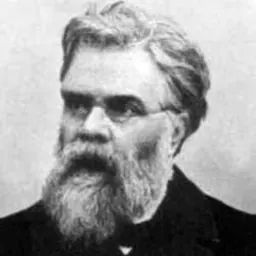
Aurelio Macedonio Espinosa Sr. (September 12, 1880 – September 4, 1958), was an American author and professor of Mexican heritage. He was a professor at Stanford University. He was known for his promotion of the study of the Spanish language and literature.
Personal life Espinosa, one of 14 siblings, was born in El Carnero, Colorado in the mostly Hispanic San Luis Valley, on September 12, 1880, to Celso and Rafaela Espinosa. His parents, descendants of the first New Mexicans to settle in Colorado in the mid-1800s, lived on a homestead and raised cattle and sheep. He learned about Spanish folk tales and ballads from his uncle, Don Ramon Martinez, who lived in the mountains of southern Colorado. The Espinosas moved to Del Norte, Colorado, by 1895 when Espinosa began attending the Del Norte High School. He graduated in June 1898. The family then moved to Boulder, Colorado, so Espinosa and his older brother, Tobias, could attend college there.
He married in 1905, to Margarita García, also of New Mexican Spanish descent, and had five children, Margarita, Aurelio, Jose Manuel, Josefita, and Francisco Ramon. Four of their children became educators.
Career Espinosa attended the University of Colorado in Boulder, where he received his Bachelor of Arts degree in 1902. Immediately after, he started work at the University of New Mexico, where he became a professor of modern languages. He received his MA from University of Colorado, and in 1909, he completed his Ph.D. cum laude at the University of Chicago. His dissertation earned him the attention of several people in the United States, one of the most noted, Prof. Ford of Harvard University, who recommended Espinosa to the head of the Romanic Languages department at Stanford University, who offered him a position in the department. He joined Stanford faculty in 1910 and remained there until his retirement. He became the chairman of the Department of Romanic Languages from 1933 to 1947. He retired from his position at Stanford University in 1947.
Despite his conservative politics, He also described the fusion between the two languages (English and Spanish) that became common in Northern New Mexico due to the settling of Anglo-Americans; this fusion included the incorporation of English-origin words and the Hispanicization of certain words. Along with the study of the interaction between the languages, he also studied Spanish ballads, folktales, proverbs, riddles, children's games, and nursery rhymes. He was the first to collect vast numbers of versions of the same ballads/folktales (especially noted is the Tar Tar Baby story
Works Many of his works were also published in France, Spain, and Germany, hence his international recognition.
Don’t just read it —
keep it.
Full-length biographies made to live with: read them, listen on the way to work, watch them tonight.
- E-book
- Audio
- Video
Instant download · yours to keep · every purchase keeps this site free
Important facts
Related people
Same field, nearest in time



Contemporaries
People whose lives overlapped Aurelio Macedonio Espinosa's




Frequently asked questions
Who was Aurelio Macedonio Espinosa?
author (1880–1958)
When was Aurelio Macedonio Espinosa born?
Aurelio Macedonio Espinosa was born on 12 September 1880 in San Luis Valley.
When did Aurelio Macedonio Espinosa die?
Aurelio Macedonio Espinosa died in 1958.
What was Aurelio Macedonio Espinosa's occupation?
Aurelio Macedonio Espinosa was a philologist.
What nationality was Aurelio Macedonio Espinosa?
Aurelio Macedonio Espinosa was American.
Sources & further reading
· Wikipedia: Aurelio Macedonio Espinosa
· DBpedia: Aurelio Macedonio Espinosa Sr.
Cite this page
APA: Biography.guide. (2026). Aurelio Macedonio Espinosa. https://biography.guide/aurelio-macedonio-espinosa/
MLA: "Aurelio Macedonio Espinosa." Biography.guide, https://biography.guide/aurelio-macedonio-espinosa/.
Chicago: "Aurelio Macedonio Espinosa." Biography.guide. https://biography.guide/aurelio-macedonio-espinosa/.
Data last updated: 2026-09-22 · Spot an error? Report a correction.
Page generated 2026-09-27 05:01 UTC