
About Arthur Willner
Lived 1881 – 1959 (aged 78). Arthur Willner was a composer, pianist, music educator, editor, music arranger and music teacher.
Arthur Willner (5 March 18816 April 1959) was a Bohemian-German composer, pianist, and teacher who from 1938 lived and worked in the UK.
Education and European career Willner was born in Turn in Teplitz-Schönau, Bohemia, Austrian Empire. He attended the Leipzig Conservatory where he studied with Adolf Ruthardt (piano), Carl Reinecke (composition) and Carl Piutti (music theory). He then continued his studies at the Akademie der Tonkunst in Munich with Joseph Rheinberger (piano) and Ludwig Thuille (composition).
In 1902 he secured his first significant academic post, as composition teacher and (from 1904) deputy director of the Stern Conservatory, Berlin. The position was secured after Gustav Hollaender heard his first string quartet. Fellow teachers there included Englebert Humperdink, Arnold Schoenberg and Ferrucio Busoni. Students he taught and influenced included Claudio Arrau, Otto Klemperer, Frederick Loewe, Edgar Varese, Kurt Weill and Stefan Wolpe. ) were living in the 7th district of Vienna, in the Zieglergasse.
Exile in England On 15 March 1938 at the age of 57, Willner left Austria for Paris to escape the Anschluss; he moved to England later that year. After arriving in England, Willner received an invitation through the Jewish Centre, Woburn House from Arthur Franklin, director of Routledge & Co, to stay at Chartridge House, Chesham in Buckinghamshire. Willner stayed for two months, during which time he composed his English Concerto for chamber orchestra (Op. 98). This work is one of only three English-themed works in his entire known output (the others being the Hereford Suite (Op. 102) and a handful of English songs). In September 1939 he moved to Kington in Herefordshire, into the gardener's cottage at Gravel Hill, the parental home of composer E.J. Moeran, where he composed, taught, edited music for Boosey & Hawkes and helped Moeran with music copying and some orchestrations. His most successful period as a composer was between 1907 and 1925 when his opus list includes string quartets, piano and violin sonatas, chamber works, a symphony, violin and cello concertos and numerous vocal and choral works. a recital of his own piano music at Leighton House in May 1939, a concert by the City of Birmingham Orchestra including his Piano Concerto in A minor,
Willner's music combines romantic lyricism with contrapuntal rigour and formal clarity. Otherwise he is best remembered for arrangements, such as his string orchestra transcription of Béla Bartók's Romanian Folk Dances for piano, and for his orchestral reduction of Richard Strauss's Oboe Concerto.
His archives, including extensive diaries, journals and letters, are held at the Leo Baeck Institute in New York and the Gesellschaft der Musikfreunde in Vienna.
Don’t just read it —
keep it.
Full-length biographies made to live with: read them, listen on the way to work, watch them tonight.
- E-book
- Audio
- Video
Instant download · yours to keep · every purchase keeps this site free
Important facts
People in Arthur Willner's life
Named in this biography and alive at the same time
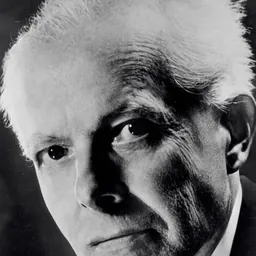

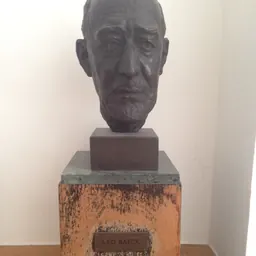
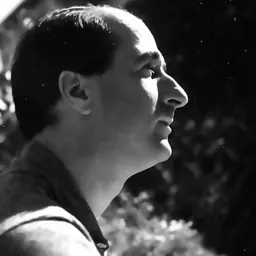

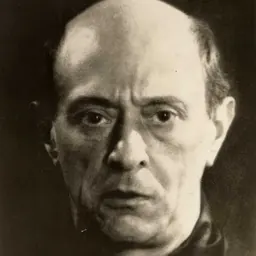
Related people
Same field, nearest in time



Contemporaries
People whose lives overlapped Arthur Willner's




Frequently asked questions
Who was Arthur Willner?
Czech composer and teacher (1881–1959)
When was Arthur Willner born?
Arthur Willner was born on 5 March 1881 in Trnovany.
When did Arthur Willner die?
Arthur Willner died on 6 April 1959 in London.
What was Arthur Willner's occupation?
Arthur Willner was a composer, pianist, music educator, editor, music arranger and music teacher.
What nationality was Arthur Willner?
Arthur Willner's recorded nationality: Kingdom of Bohemia.
Sources & further reading
Cite this page
APA: Biography.guide. (2026). Arthur Willner. https://biography.guide/arthur-willner/
MLA: "Arthur Willner." Biography.guide, https://biography.guide/arthur-willner/.
Chicago: "Arthur Willner." Biography.guide. https://biography.guide/arthur-willner/.
Data last updated: 2026-09-20 · Spot an error? Report a correction.
Page generated 2026-09-27 05:00 UTC