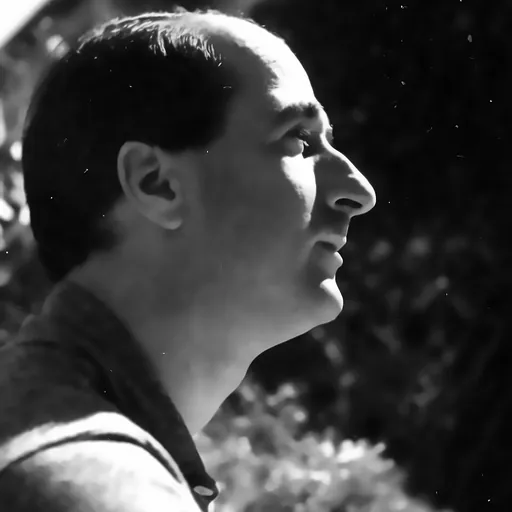
About Stefan Wolpe
Lived 1902 – 1972 (aged 69). Stefan Wolpe was an American composer and university teacher.
Stefan Wolpe (25 August 1902 – 4 April 1972) was a German-born American composer. He was associated with interdisciplinary modernism, with affiliations ranging from the Bauhaus, Berlin agitprop theater and the kibbutz movement to the Eighth Street Artists' Club, Black Mountain College, and the Darmstadt Summer Courses for New Music. He lived and worked in Berlin (1902–1933) until the Nazi seizure of power forced him to move first to Vienna (1933–34) and Jerusalem (1934–38) before settling in New York City (1938–72). In works such as Battle Piece (1942/1947) and "In a State of Flight" in Enactments for Three Pianos, he responded self-consciously to the circumstances of his uprooted life, a theme he also explored extensively in voluminous diaries, correspondence, and lectures. His densely eclectic music absorbed ideas and idioms from diverse artistic milieus, including post-tonality, bebop, and Arab classical musics.
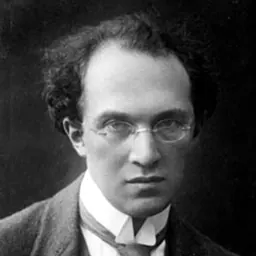
Life Wolpe was born in Berlin to Jewish parents. He attended the Klindworth-Scharwenka Conservatory from the age of fourteen, and for one semester the State Academic College of Music in Berlin (currently: Berlin University of the Arts). He studied composition under Franz Schreker and was also a pupil of Ferruccio Busoni. He also studied at the Bauhaus circa 1923, and met some of the dadaists, setting Kurt Schwitters's poem An Anna Blume to music.
In 1928, Wolpe's first opera, Zeus und Elida, premiered in Berlin. This soon was followed by two more operas in 1929, Schöne Geschichten and Anna Blume. In 1927, he married the artist Ola Okuniewska from Czechoslovakia and their daughter, Katharina Wolpe, was born in 1931, but the couple had separated. His wife escaped to London in 1938, but his daughter was a de facto orphan in Berne during the war.
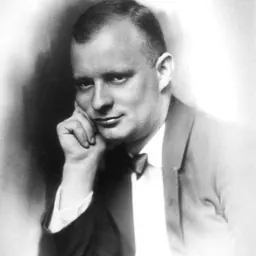
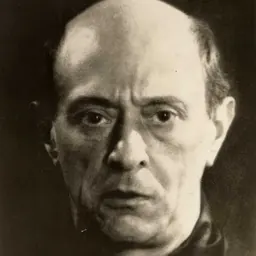
The music Wolpe was writing between 1929 and 1933 was dissonant, using Arnold Schoenberg's twelve-tone technique. However, possibly influenced by Paul Hindemith's concept of Gebrauchsmusik (music that serves a social function), and as an avid socialist, he wrote a number of pieces for workers' unions and communist theatre groups. For these, he made his style more accessible, incorporating elements of jazz and popular music.
When the Nazis came to power in Germany, Wolpe, a Jew and a communist, fled the country, first to his sister in Czechoslovakia, and then to Zurich. After a brief visit to the Soviet Union, Wolpe continued for a short stay in Vienna in 1933, where he met and studied with Anton Webern. With his partner, Irma Schoenberg, he then moved to Romania and shortly afterwards to Palestine, where he wrote simple songs for the kibbutzim, and sought to create an amalgam of Western, Mizrahi music and Arab influences. The music he was writing for concert performance, however, remained complex and atonal. Partly because of this, his teaching contract with the Palestine Conservatoire was not renewed for the 1938–39 school year.
In 1938, Wolpe moved to New York City. In 1945 he became an American citizen and started teaching at the Brooklyn School of Music.
In 1971, Wolpe completed his last composition, "Piece for Trumpet and Seven Instruments" for the trumpeter Ronald Anderson. Wolpe developed Parkinson's disease in 1964, and died in New York City in 1972.
Music
Elliott Carter said of Wolpe's music that, "he does everything wrong and it comes out right."
Don’t just read it —
keep it.
Full-length biographies made to live with: read them, listen on the way to work, watch them tonight.
- E-book
- Audio
- Video
Instant download · yours to keep · every purchase keeps this site free
Important facts
People in Stefan Wolpe's life
Named in this biography and alive at the same time




Related people
Same field, nearest in time





Contemporaries
People whose lives overlapped Stefan Wolpe's




Frequently asked questions
Who was Stefan Wolpe?
German composer (1902–1972)
When was Stefan Wolpe born?
Stefan Wolpe was born on 25 August 1902 in Berlin.
When did Stefan Wolpe die?
Stefan Wolpe died on 4 April 1972 in New York City.
What was Stefan Wolpe's occupation?
Stefan Wolpe was a composer and university teacher.
What nationality was Stefan Wolpe?
Stefan Wolpe was American.
Sources & further reading
Cite this page
APA: Biography.guide. (2026). Stefan Wolpe. https://biography.guide/stefan-wolpe/
MLA: "Stefan Wolpe." Biography.guide, https://biography.guide/stefan-wolpe/.
Chicago: "Stefan Wolpe." Biography.guide. https://biography.guide/stefan-wolpe/.
Data last updated: 2026-09-20 · Spot an error? Report a correction.
Page generated 2026-09-27 05:10 UTC