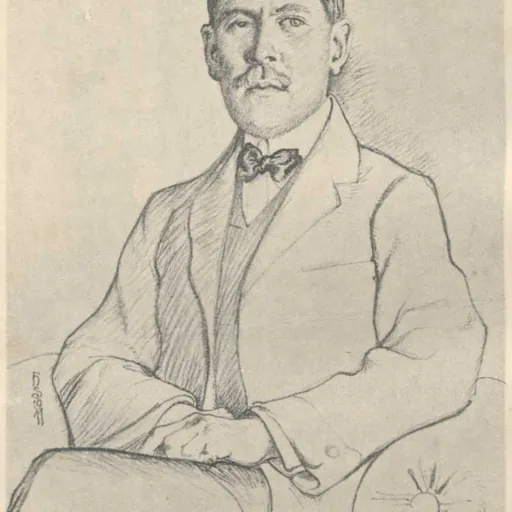
About Arthur Trebitsch
Lived 1880 – 1927 (aged 47). Arthur Trebitsch was an Austrian writer and philosopher.
Arthur Trebitsch (1880–1927) was an Austrian writer and racial theorist, known for being an antisemite of Jewish origin. He offered his services to help the fledgling Nazis to write their antisemitic literature, and was an influence on the early development of the Austrian branch of the Nazi Party.
Life Arthur Trebitsch was born on 17 April 1880 in Vienna, the son of wealthy Jewish silk industrialist Leopold Trebitsch. His older half-brother was the writer Siegfried Trebitsch. As a young man he came under the influence of fellow student Otto Weininger and the racial theorist Houston Stewart Chamberlain, whose Viennese circles he frequented. From these writers, Trebitsch developed a radical German nationalist and antisemitic ideology.
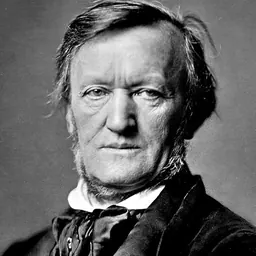
Following the lead of his brother Siegfried, he tried to become a creative writer but was unsuccessful. He completed a novel in 1909 and a collection of essays in 1910, but they remained unpublished. Trebitsch had them published at his own expense by his own specially founded press: Antaios Verlag, named after the mythological giant Antaeus in reference to a passage in Richard Wagner's 1850 essay The Art Work of the Future.
Trebitsch died on 26 September 1927 in Eggersdorf bei Graz at the age of 47.
Theories
Trebitsch's theories were first articulated in his 1919 book Geist und Judentum. According to Trebitsch Jewish presence in Europe was fundamentally destructive to the spirit ("geist") of the Aryan peoples. The Jews were an "Ungeist" within Europe which must be excised. However, he believed that an antitoxin works best when it is derived from the toxin itself. People of Jewish ancestry who reject Judaism, such as himself, will be the spiritual force to destroy the corrupting influence of the Jewish presence in Europe. Jesus Christ was the archetype of a Judaised Aryan who had overcome and rejected the Jewishness within himself. The Ashkenazi Jews of Eastern Europe were the antithesis of this, representing the "toxin" itself in its most virulent form. They had to be forcibly expelled from Europe, though a few might be absorbed into the Aryan population after a long period of forced labour eradicated the Jewishness from their souls.
Works Galileo Galilei. Ein Trauerspiel in fünf Akten. Wien 1901; 2. Auflage Antaios-Verlag, Berlin 1920. Aus Max Dorns Werdegang. Ein Lebensabschnitt. 1909; 2. Auflage Antaios-Verlag, Wien/Leipzig, 1920. Der Fall Ferdinand Gregori und Siegfried Trebitsch. Ein Beitrag zur deutschen Literaturgeschichte unserer Zeit. Bachmair, München 1914. Erkenntnis und Logik. Braumüller, Wien 1917. Friedrich der Große. Ein offener Brief an Thomas Mann. Wilhelm Borngräber Verlag, Berlin 1916; Antaios-Verlag, Wien/Leipzig 1916. Gespräche und Gedankengänge. Wilhelm Borngräber Verlag, Berlin 1916; 2. Auflage Antaios-Verlag, Wien/Leipzig 1920. Seitenpfade. Ein Buch Verse. Wilhelm Borngräber Verlag, Berlin 1917; 2. Auflage Antaios-Verlag, Wien/Leipzig 1920. Geist und Leben. Wilhelm Borngräber Verlag, Berlin 1917; Antaios-Verlag, Berlin/Wien 1921. Aus des Ratsherrn Johannes Teufferius Lebensbeschreybung. Antaios-Verlag, Wien/Leipzig 1920. Nikolaus Lenaus geistiges Vermächtnis. Antaios-Verlag, Wien/Leipzig 1920. Wir Deutsche aus Österreich. Ein Weckruf. Antaios-Verlag, Wien/Leipzig 1921. Zur Förderung der Persönlichkeiten. Wilhelm Borngräber Verlag, Berlin 1917; Antaios-Verlag, Wien/Leipzig 1920. Drei Vorträge mit Zwischenstücken. Die erste Darstellung der erkenntniskritischen Grundgedanken des Verfassers. Wilhelm Borngräber Verlag, Berlin 1917; Antaios-Verlag, Wien/Leipzig 1920. Deutscher Geist – oder Judentum. Der Weg der Befreiung. Verlag Ed. Strache, Berlin/Wien/Leipzig 1919; Antaios-Verlag, Berlin 1921. Geist und Judentum. Verlag Ed. Strache, Wien/Leipzig 1919. Deutscher Geist aus Österreich. Ausgewählte dichterische Deutschtumsbekenntnisse. Antaios-Verlag, Berlin/Leipzig 1920. Wort und Leben. Eine grundlegende Untersuchung. Antaios-Verlag, Berlin 1920. Die böse Liebe. Novellen. Verlag Ed. Strache, Wien 1920. Die Geschichte meines „Verfolgungswahnes“. Antaios-Verlag, Wien/Leipzig 1923. Arische Wirtschaftsordnung. Eine grundlegende Untersuchung. Antaios-Verlag, Wien/Leipzig 1925. Der Dichter, der Denker, der Redner, der Arier. Antaios-Verlag, Leipzig 1926. Der brennende Mensch. Antaios-Verlag, Leipzig 1930 (aus seinem Nachlass).
Don’t just read it —
keep it.
Full-length biographies made to live with: read them, listen on the way to work, watch them tonight.
- E-book
- Audio
- Video
Instant download · yours to keep · every purchase keeps this site free
Important facts
People in Arthur Trebitsch's life
Named in this biography and alive at the same time


Related people
Same field, nearest in time




Contemporaries
People whose lives overlapped Arthur Trebitsch's






Frequently asked questions
Who was Arthur Trebitsch?
Austrian writer and philosopher (1880-1927)
When was Arthur Trebitsch born?
Arthur Trebitsch was born on 17 April 1880 in Vienna.
When did Arthur Trebitsch die?
Arthur Trebitsch died on 26 September 1927 in Eggersdorf bei Graz.
What was Arthur Trebitsch's occupation?
Arthur Trebitsch was a writer and philosopher.
What nationality was Arthur Trebitsch?
Arthur Trebitsch was Austrian.
Sources & further reading
Cite this page
APA: Biography.guide. (2026). Arthur Trebitsch. https://biography.guide/arthur-trebitsch/
MLA: "Arthur Trebitsch." Biography.guide, https://biography.guide/arthur-trebitsch/.
Chicago: "Arthur Trebitsch." Biography.guide. https://biography.guide/arthur-trebitsch/.
Data last updated: 2026-09-20 · Spot an error? Report a correction.
Portrait: Wikimedia Commons · author & licence
Page generated 2026-09-27 04:58 UTC