
About Siegfried Trebitsch
Lived 1869 – 1956 (aged 86). Siegfried Trebitsch was an Austrian translator, writer, music critic, playwright and poet.
Siegfried Trebitsch (22 December 1868 – 3 June 1956) was an Austrian playwright, translator, novelist and poet. Though prolific as a writer in various genres, he was best known for his German translations, especially of the works of the Irish playwright George Bernard Shaw, with whom he kept up a long and detailed correspondence. He is also known for translations of French writers, especially Georges Courteline.
Life Trebitsch was born on 22 December 1868, into a wealthy secular Jewish family, who "taught him nothing of Judaism or Christianity". He entered the silk trade business of his stepfather Leopold, where he remained until 1903 when he took a year out for personal study and for travels across Europe and North Africa.
While in England he personally sought out Bernard Shaw, offering to translate his works and help build the playwright's reputation in Europe. This initiated a lengthy correspondence with Shaw that lasted until the Irish writer's death, and has since been published. Trebitsch became the sole German translator of Shaw during his lifetime. Three of Shaw's plays had their world premieres in Trebitsch's German translations. Pygmalion and The Millionairess were both first performed in Vienna. His last full-length play Buoyant Billions was first performed Zürich, to which Trebitsch had moved during World War II. In 1923 Shaw rewarded Trebitsch for his efforts by translating and adapting his play Frau Gitta's Sühne into English, as Jitta's Atonement. Trebitsch also cultivated links with French writers.
He took up his residence in Vienna, where he built the prestigious "Villa Trebitsch" designed by Ernst Gotthilf. He married in 1907 to the Hungarian Princess Antoinette Engalitscheff, the widow of a Russian Grand Duke who had been killed in 1904 fighting the Japanese.
Trebitsch's relationship with his brother Arthur had become increasingly strained in the years before the First World War. Arthur was unable to replicate his brother's success as a writer, and was increasingly obsessed with the idea that there were Jewish conspiracies against him. In 1912, he unsuccessfully tried to sue Siegfried and the critic Ferdinand Gregori, who had written a bad review of his short stories. Siegfried had agreed with Gregori, describing Arthur's work as "amateurish" and suggesting that he suffered from "megolamania and paranoia".
Trebitsch fled to Paris, where he was awarded an honorary French citizenship in 1939 in recognition of his promotion of French culture in Germany. After the invasion of France in 1940, he moved to Zurich. While there he wrote to Shaw asking him for financial support. He also attempted to raise funds by unsuccessfully claiming royalties for The Chocolate Soldier, a German operetta based on Arms and the Man. Even though he was not the translator, he claimed that he had the sole rights to German versions of Shaw. Frau Gittas Sühne, 1920 Die Last des Blutes, 1921 Der Geliebte, 1922 Renate Aldringen, 1929 Mord im Nebel, 1931 Die Heimkehr des Diomedes, 1941 Chronik eines Lebens (Autobiography), 1951
Don’t just read it —
keep it.
Full-length biographies made to live with: read them, listen on the way to work, watch them tonight.
- E-book
- Audio
- Video
Instant download · yours to keep · every purchase keeps this site free
Important facts
People in Siegfried Trebitsch's life
Named in this biography and alive at the same time

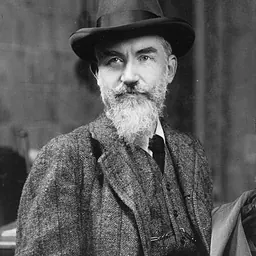

Related people
Same field, nearest in time


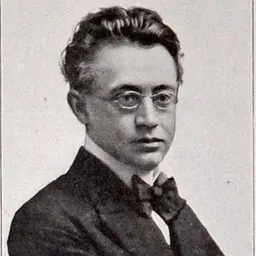


Contemporaries
People whose lives overlapped Siegfried Trebitsch's


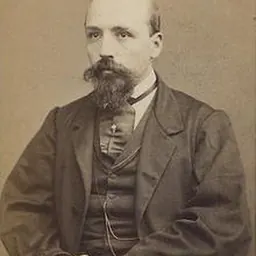

Frequently asked questions
Who was Siegfried Trebitsch?
Austrian author and translator (1869-1956)
When was Siegfried Trebitsch born?
Siegfried Trebitsch was born on 21 December 1869 in Vienna.
When did Siegfried Trebitsch die?
Siegfried Trebitsch died on 3 June 1956 in Zurich.
What was Siegfried Trebitsch's occupation?
Siegfried Trebitsch was a translator, writer, music critic, playwright and poet.
What nationality was Siegfried Trebitsch?
Siegfried Trebitsch was Austrian.
Sources & further reading
· Wikipedia: Siegfried Trebitsch
· DBpedia: Siegfried Trebitsch
Cite this page
APA: Biography.guide. (2026). Siegfried Trebitsch. https://biography.guide/siegfried-trebitsch/
MLA: "Siegfried Trebitsch." Biography.guide, https://biography.guide/siegfried-trebitsch/.
Chicago: "Siegfried Trebitsch." Biography.guide. https://biography.guide/siegfried-trebitsch/.
Data last updated: 2026-09-22 · Spot an error? Report a correction.
Page generated 2026-09-27 05:33 UTC