
About Armand Lanusse
Lived 1810 – 1867 (aged 56–57). Armand Lanusse was an American writer.
Armand Lanusse (March 16, 1868) was a Creole of color, educator, poet, and writer from New Orleans, Louisiana. He is the editor of Les Cenelles, a collection of poems by fellow Creoles of color in New Orleans widely considered to be the first African-American poetry anthology published in the United States. He also served as the founder and director of the Catholic Institute for Indigent Orphans from 1852 to 1867.
Biography
Early life Lanusse was born in New Orleans in 1812. The nature and location of Lanusse's education is a topic that is widely debated by literary historians. According to Rodolphe Desdunes in his book Nos hommes et notre histoire, Lanusse received his entire education in New Orleans and did not travel to France. However, other historians believe Lanusse, like many other Créoles de couleur libres of his time, studied for a period of time in Paris. Lanusse is said to have taken enjoyment in the study of French classic literature and the linguistic complexities of the French language. His refusal to fly the Union flag over the Catholic Institute led to his censure by the Union military government. According to Desdunes, despite passing as white, Lanusse never tried to hide or deny his African heritage and identity as a Creole of color and "encouraged his people to love their fellow men."
Poetry style and context
The poetry of Lanusse and others in Les Cenelles is best understood within the context of the complexities of Creole identity in antebellum New Orleans. Creoles of color in New Orleans, due to their mixed racial heritage from the French colonial history of plaçage, occupied a position somewhere in between the boundaries of Black and white. They were not enslaved and were often more affluent than free Black Americans (some Creoles even held slaves), but they did not enjoy the same freedoms as whites in New Orleans. Furthermore, despite living in the anglophone culture of the United States, their culture and language was predominately French. Lanusse's poetry must also be understood through the laws and legal restrictions on Creoles of color at the time. In 1830, a law was passed by the state of Louisiana that banned the publishing of material that could sow discontent and rebelliousness among the state's free people of color or enslaved population, under penalty of life imprisonment or death.
There is disagreement among literary historians and critics as to whether Les Cenelles should be considered to be within the field of African American literature. Some scholars, such as Henry Louis Gates Jr., argue that Les Cenelles is "the first attempt to define a Black canon." They cite Lanusse's introduction, which states his desire for Creole poetry to provide a pathway towards racial progress. The apolitical poetry of Les Cenelles, according to Gates, seeks a political purpose (the end of racism) through its adoption of French Romantic poetry styles. By imitating famous French writers of the time, the authors are imploring their broader audience to treat them like white French people. However, other scholars argue that Les Cenelles is separate from other works of African American literature due to the differing positionalities of Creoles of color and African Americans. Many cultural traits possessed by Creoles of color, including their French language and heritage, Catholicism, and oftentimes greater accumulations of wealth separated them from other Black Americans. These cultural elements are highly present in the poems of Les Cenelles.
Don’t just read it —
keep it.
Full-length biographies made to live with: read them, listen on the way to work, watch them tonight.
- E-book
- Audio
- Video
Instant download · yours to keep · every purchase keeps this site free
Important facts
People in Armand Lanusse's life
Named in this biography and alive at the same time
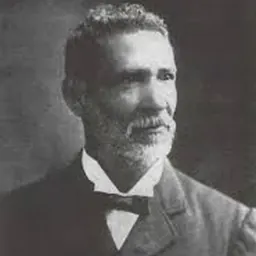
Related people
Same field, nearest in time


Contemporaries
People whose lives overlapped Armand Lanusse's





Frequently asked questions
Who was Armand Lanusse?
African-American writer and educator
When was Armand Lanusse born?
Armand Lanusse was born in 1810 in New Orleans.
When did Armand Lanusse die?
Armand Lanusse died in 1867 in New Orleans.
What was Armand Lanusse's occupation?
Armand Lanusse was a writer.
What nationality was Armand Lanusse?
Armand Lanusse was American.
Sources & further reading
Cite this page
APA: Biography.guide. (2026). Armand Lanusse. https://biography.guide/armand-lanusse/
MLA: "Armand Lanusse." Biography.guide, https://biography.guide/armand-lanusse/.
Chicago: "Armand Lanusse." Biography.guide. https://biography.guide/armand-lanusse/.
Data last updated: 2026-09-20 · Spot an error? Report a correction.
Page generated 2026-09-27 05:17 UTC