
About Antônio dos Santos Cunha
Lived 1755 – 1822 (aged 66–67). Antônio dos Santos Cunha was a Brazilian composer.
Rio de Janeiro and final years
From 31 December 1821, Cunha worked as a clerk at the Powder Factory of the Army Arsenal near Lagoa Rodrigo de Freitas, where he managed accounts and paperwork from 1821 to 1829. In 1823, he was also a member of the 4th Company of the 2nd Infantry Battalion of the city's Civic Guard. He also served as accounting officer for the municipal council from 1827 until his death. Pedro I admitted him to the Order of Christ on 1 October 1827.
Cunha also took part in plans for a bronze equestrian statue of Pedro I. In June 1825, he joined the supporters called together by the municipal senate of Rio de Janeiro. On 21 April 1826, he delivered 383$880 to the General Treasury, money collected in São João del-Rei for the proposed monument.
Cunha died at his home on Rua dos Ferradores in Rio de Janeiro on 19 November 1830. The street was later renamed Rua Gonçalves Dias. His cause of death was not given. He received the sacraments, was dressed in the habit of the Third Order of the Minims of Saint Francis of Paola, and was taken to the order's church for burial. Helena remained in Rio de Janeiro and lived on Rua da Alfândega until her death in 1845.
Braziel's son-in-law João Leocádio do Nascimento had studied with him from childhood and sang and played in his ensemble. João Leocádio asked to receive scores and instruments from the estate so that he could continue working as a musician. Hermenegildo José de Souza Trindade and João José da Silva Vieira assessed the material before it was divided among the heirs.
In 2000, Funarte published the hymn Assumptionem Virginis Mariae and the antiphon Maria Mater gratiae, from the Novena de Nossa Senhora da Boa Morte, under the title Hino e Antífona de Nossa Senhora. The pieces were printed in the second edition of Música sacra mineira.
In 2004, Edilson Rocha conducted a revised version of the Missa Grande in Salvador with the Orquestra Sinfônica and Madrigal of the Federal University of Bahia.
Funarte included Cunha in the first digital volume of Música Sacra Mineira, released in December 2020 with scores and separate instrumental parts. Musica Brasilis provides the PAMM edition of the Missa e Credo a Cinco Vozes and a score of Hino e Antífona de Nossa Senhora prepared by Carlos Alberto Figueiredo from a manuscript of the Lira Sanjoanense.
The International Music Score Library Project provides a 293-page scan of manuscript CRI-SM82 from the Metropolitan Chapter of Rio de Janeiro. Its files also include the PAMM score, separate parts, a vocal score and a 2020 edition by Rafael Sales Arantes.
Symphonia Colonialis
Cunha's name and music were used in the 1991 film Symphonia Colonialis, written by Georg Brintrup and Fábio de Araújo and directed by Brintrup. The film follows the Orquestra Ribeiro Bastos in São João del-Rei and tells the imagined life of Antônio Francisco da Cunha, an enslaved boy who gains his freedom through music and becomes a composer.
Antônio Francisco da Cunha is fictional. His story combines episodes from the lives of José Maurício Nunes Garcia, João de Deus de Castro Lobo, José Joaquim Emerico Lobo de Mesquita, Ignácio Parreiras Neves, Marcos Coelho Neto, Francisco Gomes da Rocha and Antônio dos Santos Cunha. The soundtrack uses music by Cunha and seven other composers.
Don’t just read it —
keep it.
Full-length biographies made to live with: read them, listen on the way to work, watch them tonight.
- E-book
- Audio
- Video
Instant download · yours to keep · every purchase keeps this site free
Important facts
People in Antônio dos Santos Cunha's life
Named in this biography and alive at the same time
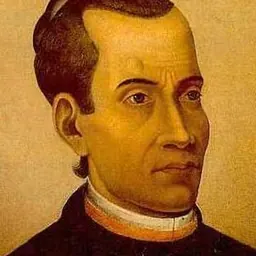




Related people
Same field, nearest in time
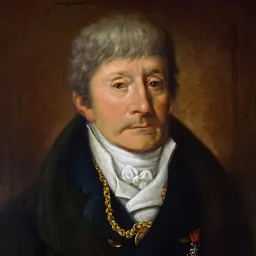

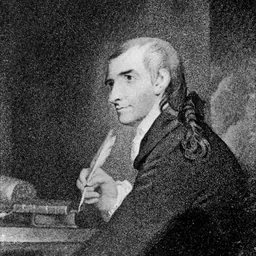
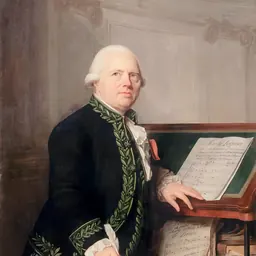

Contemporaries
People whose lives overlapped Antônio dos Santos Cunha's



Frequently asked questions
Who was Antônio dos Santos Cunha?
Brazilian composer
When was Antônio dos Santos Cunha born?
Antônio dos Santos Cunha was born in 1755 in São João del Rei.
When did Antônio dos Santos Cunha die?
Antônio dos Santos Cunha died in 1822 in Brazil.
What was Antônio dos Santos Cunha's occupation?
Antônio dos Santos Cunha was a composer.
What nationality was Antônio dos Santos Cunha?
Antônio dos Santos Cunha was Brazilian.
Sources & further reading
· Wikipedia: Antônio dos Santos Cunha
· DBpedia: Antônio dos Santos Cunha
Cite this page
APA: Biography.guide. (2026). Antônio dos Santos Cunha. https://biography.guide/antonio-dos-santos-cunha/
MLA: "Antônio dos Santos Cunha." Biography.guide, https://biography.guide/antonio-dos-santos-cunha/.
Chicago: "Antônio dos Santos Cunha." Biography.guide. https://biography.guide/antonio-dos-santos-cunha/.
Data last updated: 2026-09-20 · Spot an error? Report a correction.
Page generated 2026-09-27 05:12 UTC