
Emerico Lobo de Mesquita
Brazilian composer, music teacher, conductor and organist
About Emerico Lobo de Mesquita
Lived 1746 – 1805 (aged 58). Emerico Lobo de Mesquita was a Brazilian conductor, composer and musicologist.
José Joaquim Emerico Lobo de Mesquita ( – mid-April 1805), also known as Emerico Lobo de Mesquita or Lobo de Mesquita, was a Brazilian composer, organist, music director and teacher. He wrote sacred music for the churches, brotherhoods and public ceremonies of colonial Minas Gerais, where he worked in Serro, Arraial do Tejuco, now Diamantina, and Vila Rica, now Ouro Preto. He spent his final years as an organist in Rio de Janeiro.
Mesquita earned his living within the network of lay religious associations that supported music in the mining towns. He played the organ, directed singers and instrumentalists, supplied music for feast days and civic ceremonies, and held administrative offices in local brotherhoods. His appointments included long periods with Carmelite third orders in Tejuco, Vila Rica and Rio de Janeiro. The details of his birth, family and musical education remain uncertain, but his career can be followed through contracts, payments and manuscripts from the 1770s until his death.
His music remained in use after his death. Musicians in Minas Gerais continued to copy and perform it through the nineteenth century, and manuscript sets entered the archives of groups such as the Orquestra Lira Sanjoanense. Francisco Curt Lange brought the repertory to a wider concert and recording audience in the twentieth century, while later editors returned to Mesquita's own manuscripts and other early copies to prepare critical editions for smaller, historically informed ensembles.
Biography
Origins and documentary uncertainties
The details of Lobo de Mesquita's birth remain uncertain. The date 12 October 1746 and Serro as his birthplace were first published by Geraldo Dutra de Moraes, who also named him as the natural son of the Portuguese José Lobo de Mesquita and an enslaved woman, Joaquina Emerenciana. No baptismal record or other contemporary document has been found to confirm this account. Francisco Curt Lange later searched for the relevant register without success and advised caution, even though Moraes's version became widely repeated in reference works, concert programmes and recordings.
A birth sometime between 1740 and 1750 is considered plausible because Mesquita was already directing music for a public ceremony in Serro in 1774. Maria Inês Junqueira Guimarães estimated that a musician trusted with such responsibility was probably in his twenties or thirties. His work in Serro during the 1770s is firmly documented, but there is no proof that he was born there.
His family background is equally difficult to establish. Guimarães accepts the possibility that he was of mixed ancestry and may have been the son of José Lobo de Mesquita and Joaquina Emerenciana. Sérgio Pires considers the evidence too limited to settle either his parentage or his racial and legal status.
His Carmelite appointment ended in 1800. On 15 October, Francisco Gomes da Rocha took over the contract. Mesquita may have left Vila Rica shortly before or after that date, but nothing is known about the following year. He next emerges in Rio de Janeiro in December 1801.
Music formed part of the spending for worship and ceremony. A brotherhood could make an annual agreement with a director for the recurring feasts in its calendar, or negotiate a separate adjustment for an extraordinary occasion. Municipal chambers also paid for music. In Vila Rica, the chamber used public auctions to select the company responsible for the regular official celebrations. Civic and church sponsorship often overlapped under the Portuguese system of royal patronage. Corpus Christi, for example, was a liturgical feast and a public ceremony financed by the chamber. Musicians were also hired for Holy Week, patronal feasts, novenas, processions, funerals, royal marriages and deaths, and services of thanksgiving such as the Te Deum. Rachel Tupynambá de Ulhôa argues that Lobo de Mesquita should be understood as a skilled artisan dependent on brotherhoods and municipal patrons, correcting Curt Lange's more elevated image of an autonomous composer comparable to a European court musician.
Brotherhood names used this vocabulary openly: Minas had confraternities of homens pretos, homens crioulos and homens pardos, alongside institutions whose membership was drawn chiefly from affluent white residents. Each association's compromisso, or statute, fixed its admissions, dues, offices and religious obligations. The boundaries were not absolute, and one person could join more than one association. Membership offered burial, funeral Masses, mutual help and the chance to serve as judge, treasurer, scribe or member of the governing board. Militia service offered free men another set of titles and offices, and militia ensembles supplied musicians for military and public ceremonies. These openings did not remove the racial and legal hierarchy of a slave society; they gave free and freed people limited ways to seek income, standing and protection within it.
The most complete thematic catalogue was prepared by Maria Inês Junqueira Guimarães in 1996. It contains 67 entries. She accepted 48 works as Mesquita's and placed another 19 in a doubtful group. The accepted works are numbered to , while the doubtful group runs from to . Letters after a number distinguish different versions or groups of manuscripts belonging to the same work.
His dated music stretches from 1778 to about 1803. The earliest is the Missa para Quarta-Feira de Cinzas of 1778. It was followed by the Regina caeli in 1779, the Palm Sunday music of 1782, the Tercio of 1783, the Salve Regina of 1787 and the Office and Mass for the Dead of 1798. The Easter responsory Cum transisset Sabbatum, written around 1803, is the latest work that can be placed in his career with confidence.
Holy Week occupies a broad place in the known repertory. The Palm Sunday complex of 1782 contains music for the blessing and distribution of palms, the procession, Mass and Passion narrative. The Ash Wednesday Mass and Office stand at the beginning of Lent, while the Holy Saturday tracts, Mass and Vespers belong to the Easter Vigil. Cum transisset Sabbatum was intended for Easter Matins. Such collections joined music to ceremonial movement: a choir might sing inside the church, accompany a procession, pause for a liturgical action and resume at another station.
The Tercio occupies a different devotional setting. Its four sections, Diffusa est gratia, Padre Nosso, Ave Maria and Gloria Patri, combine Latin with Portuguese prayer. The opening section uses concerted voices and instruments, while the more direct settings of the familiar prayers may have aided participation or clear collective recitation.
Musical style
Mesquita moves easily between solo voices, duets and the full ensemble, sometimes within a single short movement. The choir usually sings the words together in clear, syllabic phrases, though brief imitation and longer melismas add emphasis. The instruments take an active part. They may support the singers, introduce a melody before the voice enters, answer a phrase or continue the motion during a pause. In the Quoniam of the E-flat major Mass, the first violin follows and anticipates the soprano while the second violin fills out the harmony. Runs on and a rising phrase on draw attention to the text without giving the movement the character of an operatic aria.
The harmony usually moves through clear tonic and dominant areas, with chromatic bass lines, suspensions and sharper changes reserved for moments of prayer or emotional weight. Mesquita does not force every phrase into a regular four- or eight-measure pattern. In the Salve Regina, the length of each phrase follows the Latin text. The voices may stop after six, seven, ten or eleven measures, and the instruments sometimes finish the thought on their own. Cadences give these unequal phrases a natural sense of arrival.
His Masses share traits with the Italian church music heard at the Portuguese court, especially the Neapolitan repertory of composers such as David Perez and Niccolò Jommelli. Long texts are divided into short movements, with solos and duets alternating with the choir. Melodies often unfold in balanced phrases, while the orchestra introduces ideas or answers the singers. Mesquita shaped these methods for the smaller ensembles and ceremonial needs of colonial Minas Gerais.
Te Deum in A minor The A-minor Te Deum (CT-MIOP 134) is one of three settings of the hymn associated with Mesquita. Its fourteen movements alternate composed music with plainchant and call for four vocal parts, two violins, viola, two horns and continuo. Eight source sets are held by the Museu da Inconfidência, but only the alto, tenor and two violin parts are autograph; the remaining voices and instruments depend partly on eighteenth- and nineteenth-century copies. Recurrent violin motives bind the short movements together, while changes among solos, duets and full ensemble clarify the long hymn. The source history has made the work a case study in critical editing: modern performances must distinguish Mesquita's notation from later added instruments, dynamics and articulation.
The Museu da Música de Mariana holds some of the earliest sources. Its Coleção Dom Oscar de Oliveira contains the autograph Regina caeli laetare of 1779, catalogued as CDO.01.272, and the autograph score of the Tercio of 1783, CDO.01.098. The former is a ten-part set comprising four voices, two violins, obbligato viola, figured cello and two horns. The latter occupies fifteen folios and sets its four devotional sections in score. Graphoscopic comparison has confirmed Mesquita's hand in these sources. Régis Duprat and Carlos Alberto Baltazar's 1991 catalogue assigned the A-minor Te Deum the number 134, although its three Te Deum entries contain exchanged incipits that have required correction.
The archive of the Orquestra Lira Sanjoanense in São João del-Rei preserves another branch of the music's transmission. Its Mesquita holdings include a copy of the Dominica in Palmis made by Francisco de Paula de Miranda in 1835, Holy Week offices copied by Hermenegildo José de Souza Trindade, Matins for Holy Saturday, the gradual Christus factus est, the Ofício das Violetas, and an A-minor litany copied by José Joaquim de Sant'Ana in 1807. The 1807 litany has voices, violins and instrumental bass; a source in the Curt Lange collection adds viola and horns. Such differences may result from adaptation to another ensemble, not from a second version authorized by Mesquita.
Cataloguing proceeded by archive before it reached the composer-wide level. O Ciclo do Ouro, published in 1978, catalogued and microfilmed a selection from Minas Gerais holdings. Duprat and Baltazar's 1991 volume arranged the Minas Gerais composers in the Coleção Francisco Curt Lange. Guimarães's 1996 thematic catalogue drew the scattered witnesses together around Mesquita's works. Its 67 entries contain musical incipits, liturgical purpose, title-page transcriptions, vocal and instrumental parts, source locations, dates, copyists and bibliography. Forty-eight entries were accepted under the numbers CT-MIG 01–48; nineteen uncertain entries were separated as CT-MIG D49–67. Version letters distinguish settings or source groups that share a title. Critical editions of individual compositions have since returned to the autograph material, among them Carlos Alberto Figueiredo's edition of the Salve Regina and Sérgio Pires's edition of the A-minor Te Deum. Listen: Internet Archive. Mass in F major Mass Ordinary; one version includes a Credo Undated CT-MIG 22a–b Accepted Two versions or source families of the same catalogue entry. Exaudi nos and Misereris omnium Office and Mass for Ash Wednesday Undated CT-MIG D52 Doubtful A separate source family from the accepted dated setting CT-MIG 16.
His editions made the music readily performable, but they did not always separate manuscript notation from editorial intervention. Lange's transcription of the A-minor Te Deum relied on the complete set copied by João Nepomuceno Ribeiro Urcini in 1878, although autograph parts and other manuscript groups were available. Lange changed notes and supplied dynamics, articulation, and bowing without consistently marking those additions. Urcini's trumpet and saxhorn parts, written long after Mesquita's death, also entered Lange's performing text.
Work on Serro and Diamantina has also questioned the racial theory of mulatismo musical that guided part of Lange's interpretation. His narrative elevated a group of named composers while giving less space to communal, anonymous, and Afro-Brazilian forms of music-making. New readings of the same archival material have placed contracts, ceremonies, institutions, copyists, and working musicians beside the composers whose names became familiar through Lange's publications.
Modern scholarship, editions, and performance
Editors working after Lange returned to autograph parts and compared them with the full family of later copies. The bicentenary volume Lobo de Mesquita no Museu da Música de Mariana, edited by André Guerra Cotta in 2005, printed five works with commentary and facsimiles of the Regina caeli and Tercio. Missing or reconstructed material was marked in the edition, including the editorial horn parts supplied for Ave Regina caelorum.
The first volume of the state-sponsored Patrimônio Arquivístico-Musical Mineiro, issued in 2008 under the coordination of Paulo Castagna, printed nine works with archival and liturgical commentary, scores, and material intended for performance. It drew on manuscripts from more than one archive, allowing different copies of the same composition to be compared.
Critical studies of the Salve Regina and the A-minor Te Deum have made the line between manuscript reading and editorial reconstruction clearer. Carlos Alberto Figueiredo compared three editions, two analyses, and nine recordings of the Salve Regina. Sérgio Pires rebuilt the Te Deum from its four autograph parts and selected material from four other source groups. He excluded the nineteenth-century trumpet and saxhorn parts and marked notes reconstructed from parallel passages or secondary copies.
Performance changed with the editions. The symphonic choirs and orchestras heard in the 1950s gradually gave way to vocal quartets and chamber ensembles. Performers paid closer attention to articulation, continuo realization, plainchant, tempo, and the changing balance between solo, duet, and tutti passages. Pires's edition of the A-minor Te Deum proposes four singers and a small orchestra using eighteenth-century instruments or suitable modern equivalents.
Vocal interpretation has moved in the same direction. The short phrases, syllabic writing, and frequent exchange between solo and ensemble passages favour clear consonants and a light vocal delivery. The written coloratura already supplies much of the ornament, leaving little need for extensive improvised embellishment.
Recordings have made a small part of the catalogue familiar, especially the Salve Regina, the E-flat major Mass, the A-minor Te Deum, and music for Holy Week. The distribution is uneven. Some works have been recorded more than once and studied through competing editions, while other catalogue entries lack an adequate critical score. The repertory available to performers and listeners is consequently smaller than the thematic catalogue.
Mesquita is the patron of chair 4 of the Academia Brasileira de Música. His music is also present in museum editions, publishing programs supported by the state of Minas Gerais, and the repertories of church orchestras whose manuscript collections predate the twentieth-century concert revival.
Don’t just read it —
keep it.
Full-length biographies made to live with: read them, listen on the way to work, watch them tonight.
- E-book
- Audio
- Video
Instant download · yours to keep · every purchase keeps this site free
Important facts
People in Emerico Lobo de Mesquita's life
Named in this biography and alive at the same time


Related people
Same field, nearest in time
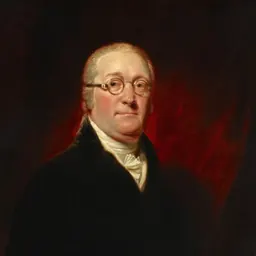
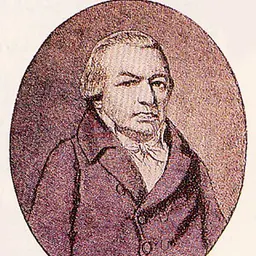

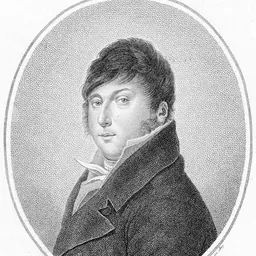

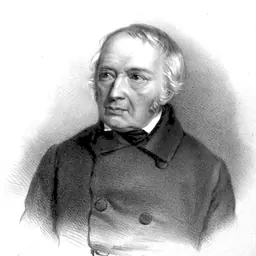
Contemporaries
People whose lives overlapped Emerico Lobo de Mesquita's





Frequently asked questions
Who was Emerico Lobo de Mesquita?
Brazilian composer, music teacher, conductor and organist
When was Emerico Lobo de Mesquita born?
Emerico Lobo de Mesquita was born on 12 October 1746 in Serro.
When did Emerico Lobo de Mesquita die?
Emerico Lobo de Mesquita died on 1 April 1805 in Rio de Janeiro.
What was Emerico Lobo de Mesquita's occupation?
Emerico Lobo de Mesquita was a conductor, composer and musicologist.
What nationality was Emerico Lobo de Mesquita?
Emerico Lobo de Mesquita was Brazilian.
Sources & further reading
· Wikipedia: Emerico Lobo de Mesquita
· DBpedia: Emerico Lobo de Mesquita
Cite this page
APA: Biography.guide. (2026). Emerico Lobo de Mesquita. https://biography.guide/emerico-lobo-de-mesquita/
MLA: "Emerico Lobo de Mesquita." Biography.guide, https://biography.guide/emerico-lobo-de-mesquita/.
Chicago: "Emerico Lobo de Mesquita." Biography.guide. https://biography.guide/emerico-lobo-de-mesquita/.
Data last updated: 2026-09-20 · Spot an error? Report a correction.
Page generated 2026-09-27 05:16 UTC