
About Anton Dumansky
Lived 1880 – 1967 (aged 86–87). Anton Dumansky was a chemist.
Anton Vladimirovich Dumansky (; 20 June 1880 - 14 May 1967) was a Soviet-Ukrainian chemist who pioneered colloidal chemistry in the Soviet Union. He is best known for his early work on ultracentrifugation, which was later expanded by Theodor Svedberg, and for his studies on hydrophilic colloids, bound water in colloidal systems, and the general principles of lyophilization for colloids. For his works, he was awarded the Great Mendeleev Prize, two Order of Lenin, and the Red Banner of Labour.
After receiving his bachelor's in 1903 from the Kyiv Polytechnic Institute, Dumansky later graduated from Kyiv University in 1913 with a master's degree on colloidal solutions, receiving the title of professor. Afterwards, he worked at the Voronezh Agricultural Institute and later the Voronezh Institute of Chemical Technology after they were newly founded, and in 1932 became the inaugural head of the State Research Institute of Colloid Chemistry of the USSR. In 1935, he helped found the "Colloid Journal", which he became an editor of. After working within the Kazakh SSR and later the Ministry of Food Industry during World War II, he moved back to Kyiv in 1945 and became the Director of the Institute of General and Inorganic Chemistry of the Academy of Sciences of the Ukrainian SSR. He worked within the institute until his death in 1967, and also briefly served as a professor from 1946 to 1952 at Kyiv University and the Kyiv Technological Institute of the Food Industry.
Early life Dumansky was born on 20 June 1880 in the village of Ivanovo, which was then part of the Vladimir Governorate in the Russian Empire. The Dumansky family were originally from Transcarpathia, with Anton himself calling his origins "Rusyn" in private conversations. However, the family had fled the region during its Austro-Hungarian rule due to the increase in Magyarization, where the family then settled in Ivanovo. His father was a teacher in a gymnasium, and in 1898 he graduated from the real school there in Ivanovo. He then attended the Chemical-Technological Faculty of the Kyiv Polytechnic Institute, graduating in 1903 with the diploma work called "Colloidal Silver". Dmitri Mendeleev, a famous chemist who was present at the graduation exams, stated that his diploma promised a lot in the future for the Motherland.
Career After graduating, Dumansky remained at the Kyiv Polytechnic Institute as a laboratory assistant, and then later on became an assistant in the Department of Inorganic Chemistry, organising a lab regarding colloid chemistry there, where he conducted studies on the colloidal state of substances in media. Svedberg later noted the decrease in absorbance at the top of the cell during centrifugation and made the first measurements of protein molecular weights by sedimentation equilibrium.
Eventually, Dumansky returned to the Russian Empire in 1912 to deliver lectures on colloid chemistry at Kyiv University. By decree of the Council of People's Commissars of the RSFSR in May 1932 the State Research Institute of Colloid Chemistry was founded, which Dumansky was appointed as director of in addition to his teaching position.
By 1935, in part due to the effort of Dumansky, the "Colloid Journal" was founded which he became an editor of. During the start of World War II, in 1941, Voronezh became occupied by German troops, which led Dumansky to eventually creating a method for producing combustible liquids for anti-tank weapons from the products of synthetic rubber production in order to help with the resistance. However, he soon after left the city during its occupation, and went to Almaty to head the Department of Physical and Colloid Chemistry at the Kazakh University. He was also part-time from 1946 to 1952 the Head of the Department of Colloid Chemistry at Kyiv University and at the Kyiv Technological Institute of the Food Industry. In addition, he was awarded the following honours:
Don’t just read it —
keep it.
Full-length biographies made to live with: read them, listen on the way to work, watch them tonight.
- E-book
- Audio
- Video
Instant download · yours to keep · every purchase keeps this site free
Important facts
People in Anton Dumansky's life
Named in this biography and alive at the same time
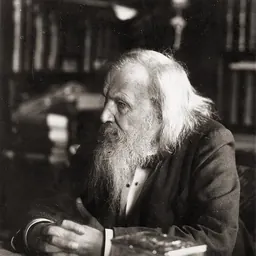
Related people
Same field, nearest in time




Contemporaries
People whose lives overlapped Anton Dumansky's




Frequently asked questions
Who was Anton Dumansky?
Soviet-Ukrainian chemist (1880-1967)
When was Anton Dumansky born?
Anton Dumansky was born in 1880.
When did Anton Dumansky die?
Anton Dumansky died in 1967.
What was Anton Dumansky's occupation?
Anton Dumansky was a chemist.
Sources & further reading
Cite this page
APA: Biography.guide. (2026). Anton Dumansky. https://biography.guide/anton-dumansky/
MLA: "Anton Dumansky." Biography.guide, https://biography.guide/anton-dumansky/.
Chicago: "Anton Dumansky." Biography.guide. https://biography.guide/anton-dumansky/.
Data last updated: 2026-09-20 · Spot an error? Report a correction.
Page generated 2026-09-27 05:00 UTC