
About Antoine-Jean Gros
Lived 1771 – 1835 (aged 64). Antoine-Jean Gros was a French painter and visual artist.
Antoine-Jean Gros (; 16 March 177125 June 1835) was a French painter of historical subjects. He was granted the title of Baron Gros in 1824.
Gros studied under Jacques-Louis David in Paris and began an independent artistic career during the French Revolution. Forced to leave France, Gros moved to Genoa. His portrait of French commander Napoleon Bonaparte at the Battle of Arcole in 1796 brought Gros to public attention and gained the patronage of Napoleon. After traveling with Napoleon's army for several years, he returned to Paris in 1799. In addition to producing several large paintings of battles and other events in Napoleon's life, Gros was a successful portraitist.
Early life and training Born in Paris, Gros began learning to draw at the age of six from his father, Jean-Antoine Gros, who was a miniature painter, and showed himself to be a gifted artist. His mother, Pierrette-Madeleine-Cécile Durand, was also a painter. Towards the close of 1785, Gros, by his own choice, entered the studio of Jacques-Louis David, which he frequented assiduously, continuing at the same time to follow the classes of the Collège Mazarin.
The death of his father, whose circumstances had been embarrassed by the French Revolution, threw Gros upon his own resources in 1791. He now devoted himself wholly to his profession, and he competed (unsuccessfully) in 1792 for the grand prix. Around this time, however, on the recommendation of the École des Beaux Arts, he painted portraits of the members of the National Convention, but as the Revolution developed, Gros left France in 1793 for Italy. to Napoleon's jealousy of Jean-Andoche Junot, the general in the painting. Gros was commissioned to paint Bonaparte Visiting the Plague Victims of Jaffa, which is now in the Louvre. This was followed in 1806 by Gros's Bataille d’Aboukir, 25 Juillet 1799 (Joachim Murat at the Battle of Abukir) now at Versailles; and in 1808 by his Napoléon sur le champ de bataille d'Eylau, le 9 février 1807 (Napoleon at the battlefield after the Battle of Eylau) now in the Louvre.
Salon of 1804 and later life
At the Salon of 1804, Gros debuted his painting Bonaparte Visiting the Plague Victims of Jaffa. The painting launched his career as a successful painter. It depicts Bonaparte in Jaffa visiting soldiers infected with the bubonic plague. He is portrayed reaching out to one of the sick, unfazed by the illness. According to P. Jill Morse, Napoleon commissioned Gros to paint the scene to neutralize British propaganda. The propaganda focused on two episodes of Napoleon's Egyptian campaign (1798–1800). First when he ordered the massacre of Turkish prisoners. Second, when he ordered the death by poison of French soldiers suffering from the plague. The painting showed a compassionate Napoleon visiting the sick at the plague hospital. Morse adds that Gros was probably using the disease as a metaphor for the vanity of Napoleon and his First Empire.
While Bonaparte did actually visit the pesthouse, later, as his army prepared to withdraw from Syria, he ordered the poisoning (with laudanum) of about fifty of his plague-infected men.
In 1810, his Madrid and Napoleon at the Pyramids (Versailles) show that Napoleon had deserted him. His Francis I and Charles V, 1812 (Louvre), had considerable success.
In 1835, alienated by the rising tide of Romanticism and after the failure of his Hercules and Diomedes at the Salon of 1835, Gros committed suicide by drowning. Friendship with Élisabeth Vigée Le Brun Élisabeth Vigée Le Brun formed an intimate friendship, Le Brun had known him since he was seven years old and had painted his portrait when he was at that age, during which she had noticed an artistic inclination in the child. Upon her return to France she was surprised to find Gros had become a successful and famous painter, head of his own school of art. Gros was socially reclusive, and often brusque to others, but he formed a close bond with Vigée Le Brun, who wrote:
She was greatly affected by his suicide in 1835; she had met him the day before and noted him brooding over criticism he had received over one of his paintings Hercules and Diomedes.
Fame Gros was made a member of the Legion of Honour on 22 October 1808 by Napoleon, after the Salon of 1808, where he had exhibited the Battle of Eylau. a professor at the École des Beaux-Arts, and a member of the Order of Saint Michael. He was granted the title of baron in 1824 by King Charles X of France.
M. Delcluze gave a brief notice of his life in Louis David et son temps ("Louis David and his times"), and Julius Meyer's Geschichte der modernen französischen Malerei ("History of Modern French Painting") contains what Britannica cites as an excellent criticism on his works.
Iconography Image Title Date Dimensions Collection frameless|upright Autoportrait 1795 Palace of Versailles frameless|upright Madame Pasteur 1795–1796 The Louvre Portrait of Madame Bruyere 1796 79 × 65 cm Bristol City Museum and Art Gallery frameless|upright Bonaparte at the Pont d'Arcole 1796 130 × 94 cm Palace of Versailles frameless|upright Portrait of the Maistre Sisters 1796 43.2 x 31.2 Art Institute of Chicago The Death of Timophanes 1798 44.4 × 57.6 cm The Louvre frameless|upright Portrait of Christine Boyer c. 1800 214 × 134 cm The Louvre frameless|upright The Battle of Nazareth 1801 136.1 x 196.4 cm Musée des Beaux-Arts de Nantes frameless|upright Sappho at Leucate 1801 122 × 100 cm Musée Baron Gérard, Bayeux frameless|upright Bonaparte, First Consul 1802 205 × 127 cm Musée de la Légion d'honneur frameless|upright Bonaparte Visiting the Plague Victims of Jaffa 1804 715 × 523 cm The Louvre frameless|upright Gérard-Christophe-Michel Duroc, duc de Frioul (1772–1813) 1805 218 × 142 cm Palace of Versailles frameless|upright Battle of Aboukir, 25 July 1799 1806 578 × 968 cm Palace of Versailles frameless|upright Battle of Eylau, 9 February 1807 1807 104.9 × 145.1 cm The Louvre frameless|upright General Lasalle at the Siege of Stettin 1808 248 x 174 cm Army Museum frameless|upright Impératrice Joséphine 1808 Musée des Beaux-Arts de Nice frameless|upright Portrait of the French composer Pierre Zimmermann 1808 118.5 × 91 cm Palace of Versailles frameless|upright Equestrian portrait of Jérôme Bonaparte c. 1808 321 × 265 cm Palace of Versailles frameless|upright Equestrian portrait of Prince Boris Yusupov 1809 321 × 266 cm Pushkin Museum frameless|upright The Battle of the Pyramids 1810 389 × 311 cm Palace of Versailles frameless|upright Napoleon accepts the surrender of Madrid, 4 December 1808 1810 361 × 500 cm Musée de l'Histoire de France (Versailles) frameless|upright The Horse of Mustapha Pasha c. 1810 89 × 175 cm Musée des Beaux-Arts et d'archéologie de Besançon frameless|upright Portrait of General Claude Legrand c. 1810 245 × 172 cm Palace of Versailles frameless|upright Portrait of Second Lieutenant Charles Legrand c. 1810 249 × 162 cm Los Angeles County Museum of Art frameless|upright The Apotheosis of Saint Genevieve 1811–1824 Panthéon de Paris François I and Charles V Visiting the Church of Saint-Denis 1812 The Louvre frameless|upright Interview Between Napoleon and Francis II after the Battle of Austerlitz 1812 Palace of Versailles frameless|upright Equestrian portrait of Joachim Murat 1812 89 × 175 cm Musée des Beaux-Arts et d'archéologie de Besançon frameless|upright General Baston de Lariboisière and his son Ferdinand c. 1815 Musée de l'Armée frameless|upright Honoré-Charles Baston de Lariboisière 1815 73 × 59 cm Private collection frameless|upright Portrait of the Duchess of Angoulême 1816 257 x 182 cm Palace of Versaillesframeless|upright The Departure of Louis XVIII from the Tuileries Palace 1817 405 × 525 cm Palace of Versailles frameless|upright The Embarkation of the Duchess of Angoulême at Pauillac 1818 326 × 504 cm Musée des Beaux-Arts de Bordeaux frameless|upright Bacchus and Ariadne 1820 86 × 100.3 cm Phoenix Art Museum frameless|upright Portrait of Jean-Antoine Chaptal 1824 Musée des Beaux-Arts de Bordeaux frameless|upright Portrait of Madame Récamier 1825 62.3 × 51.2 cm Strossmayer Gallery of Old Masters frameless|upright The Genius of France Giving Life to the Arts and Protecting Humanity c. 1827 The Louvre frameless|upright Hercules and Diomedes 1835 426 × 324 cm Musée des Augustins frameless|upright Portrait of Pierre Daru 19th century 216 × 142 cm Palace of Versailles
Don’t just read it —
keep it.
Full-length biographies made to live with: read them, listen on the way to work, watch them tonight.
- E-book
- Audio
- Video
Instant download · yours to keep · every purchase keeps this site free
Important facts
more
Baron Gros, Antoine Jean, Moussieur Antoine-Jean Gros, Jean-Antoine, Antoine-Jean Gros Baron, Antoine Jean Gros Baron, Monssieur Gros, Monsieur Gros, Gros, Moussieur Gros, Baron Gross, Antoine-Jean GrossPeople in Antoine-Jean Gros's life
Named in this biography and alive at the same time
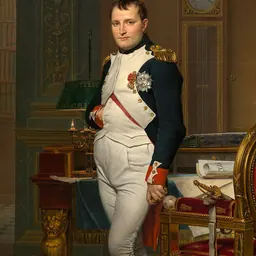
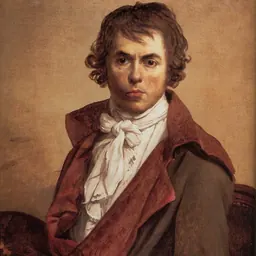
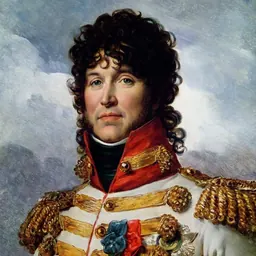

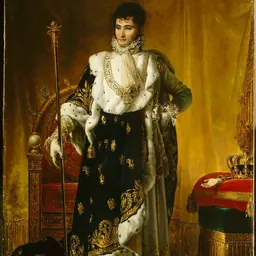


Related people
Same field, nearest in time



Contemporaries
People whose lives overlapped Antoine-Jean Gros's




Frequently asked questions
Who was Antoine-Jean Gros?
French painter of historical subjects (1771–1835)
When was Antoine-Jean Gros born?
Antoine-Jean Gros was born on 16 March 1771 in Paris.
When did Antoine-Jean Gros die?
Antoine-Jean Gros died on 25 June 1835 in Meudon.
What was Antoine-Jean Gros's occupation?
Antoine-Jean Gros was a painter and visual artist.
What nationality was Antoine-Jean Gros?
Antoine-Jean Gros was French.
Sources & further reading
· Wikipedia: Antoine-Jean Gros
Cite this page
APA: Biography.guide. (2026). Antoine-Jean Gros. https://biography.guide/antoine-jean-gros/
MLA: "Antoine-Jean Gros." Biography.guide, https://biography.guide/antoine-jean-gros/.
Chicago: "Antoine-Jean Gros." Biography.guide. https://biography.guide/antoine-jean-gros/.
Data last updated: 2026-09-20 · Spot an error? Report a correction.
Page generated 2026-09-27 05:25 UTC