
About Jean-Andoche Junot
Lived 1771 – 1813 (aged 41). Jean-Andoche Junot was a French military officer and military personnel.
Jean-Andoche Junot, Duke of Abrantès ( , ; 25 September 1771 – 29 July 1813) was a French military officer who served in the French Revolutionary Wars and the Napoleonic Wars. He is best known for leading the French invasion of Portugal in 1807.
Early life and education Junot was born into a bourgeois family in Bussy-le-Grand, Burgundy, on 25 September 1771. He was the fifth son of Michel Junot (1739–1814) and Marie Antoinette Bienaymé (1735–1806). He first attended school in Montbard, then in Châtillon, where he befriended Auguste de Marmont, then studied law in Dijon. Junot embraced the revolutionary cause, and was present at the Fête de la Fédération in Paris on 14 July 1790.
Early career
On 9 July 1791, Junot was one of the founding members of his hometown's National Guard, serving as captain of its 1st company. At the start of the War of the First Coalition, Junot was sent to the Army of the North, receiving the first of many battle wounds at on 11 June 1792. After the siege, Bonaparte was made a general and Junot joined him as his aide-de-camp. In 1795 Junot participated in the suppression of the Royalist revolt of 13 Vendémiaire under Bonaparte, then followed him to the Army of Italy.
Egyptian campaign Junot was one of the first to be informed of Bonaparte's planned expedition to Egypt. Under the consulate, Junot was known for his excesses, throwing money out of his windows and eating three hundred oysters a day.
Junot was made a general of division on 20 November 1801. which was destined for an invasion of Portugal. The army assembled in Bayonne over the next two months, and was later reinforced with a Spanish contingent under the terms of the Treaty of Fontainebleau (27 October 1807). Complications related to this injury were blamed for his later mental decline.
At the beginning of 1812 Junot was on leave to restore his ill health, but at the announcement of the infamous Russian campaign he rejoined the army with hopes of regaining Napoleon's favour. and claimed that his rival Joachim Murat had put the blame on him.
In May 1813, Junot was made Governor of the Illyrian Provinces. His mental state rapidly deteriorated there, and on one infamous occasion he attended a ball, held by Auguste de Marmont in Ragusa, fully nude except for his dancing shoes and decorations. On another occasion he burnt down his residence and ran away to live with a madman. Some time later, Junot suffered a sudden attack of inflammation to the brain, most likely a long term consequence of his numerous head injuries, leaving him incapacitated. Junot ordered for Othello to be brought to France, but he never arrived.
Don’t just read it —
keep it.
Full-length biographies made to live with: read them, listen on the way to work, watch them tonight.
- E-book
- Audio
- Video
Instant download · yours to keep · every purchase keeps this site free
Important facts
People in Jean-Andoche Junot's life
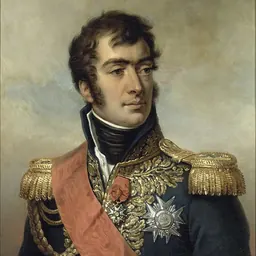
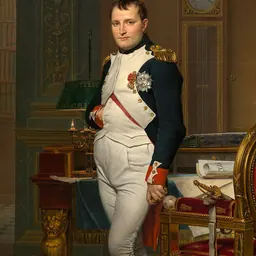
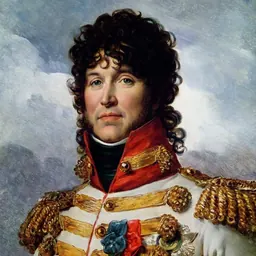
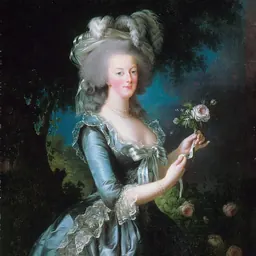
Named in this biography and alive at the same time
Related people
Same field, nearest in time
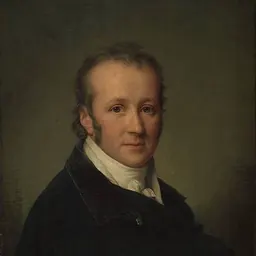
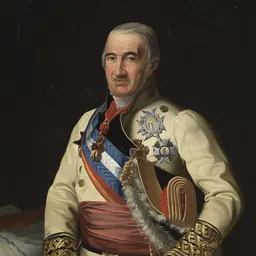
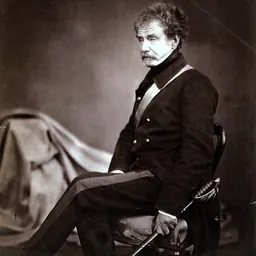
Contemporaries
People whose lives overlapped Jean-Andoche Junot's





Frequently asked questions
Who was Jean-Andoche Junot?
French general (1771–1813)
When was Jean-Andoche Junot born?
Jean-Andoche Junot was born on 25 September 1771 in Bussy-le-Grand.
When did Jean-Andoche Junot die?
Jean-Andoche Junot died on 29 July 1813 in Montbard.
What was Jean-Andoche Junot's occupation?
Jean-Andoche Junot was a military officer and military personnel.
What nationality was Jean-Andoche Junot?
Jean-Andoche Junot was French.
Sources & further reading
· Wikipedia: Jean-Andoche Junot
Cite this page
APA: Biography.guide. (2026). Jean-Andoche Junot. https://biography.guide/jean-andoche-junot/
MLA: "Jean-Andoche Junot." Biography.guide, https://biography.guide/jean-andoche-junot/.
Chicago: "Jean-Andoche Junot." Biography.guide. https://biography.guide/jean-andoche-junot/.
Data last updated: 2026-09-20 · Spot an error? Report a correction.
Page generated 2026-09-27 05:27 UTC