
About Anne Margrethe Qvitzow
Lived 1652 – 1700. Anne Margrethe Qvitzow was a Danish translator, poet and writer.
Anne Margrethe Qvitzow (1652 - c. 1700) was a Danish poet and memoir writer. She is most associated with her translations.
Biography Qvitzow was born and raised at the family estate Sandagergård on the island of Funen, Denmark. She was the daughter of noble officer Erik Qvitzow (1616–78) and Susanne Juel (d. 1685). She was given an unusually high education: at this time, female members of the Danish nobility were normally barely taught to read and write. However, as showed herself to be very gifted early on, her parents hired private teachers to educate her in Danish, German, Latin, Greek, French, grammar, logic, rhetoric, geometry, astronomy, arithmetic, musical science, and also begun studies in Hebrew. In 1669, she translated Lasternis skrabe from German into Danish and Latin. She translated De Officiis by Cicero and Commentarii de Bello Gallico by Julius Caesar) from Latin into Danish in circa 1670.
During the 1670s and 1680s, she was a celebrity. In 1673, Qvitzow rejected the idea that her learning should be considered in any way remarkable because of her sex, and stated that if women were given the same education as men, they would prove themselves to be just as capable. Bishop Erik Pontoppidan (1698–1764) later called her “Heroina longe eruditissima” and compared her to Dutch artist and poet Anna Maria van Schurman (1607–1678).
In 1676, Qvitzow married noble Christian von Pappenheim (d. 1705). Reportedly, her spouse wasted their fortune. In 1685, she wrote elegy to Ove Rosenkrantz Axelsen til Raakilde, a poem dedicated the memory of Ove Rosenkrantz Axelsen. Her writing is no longer heard of after that date. Her late life is not much known and her exact dated of death is unknown.
Qvitzow was included in contemporary dictionaries and work of female scholars and learned women, (gynæcée) by Matthias Henriksen Schacht (1660-1700), Albert Lauritsen Thura (1700–1740) and Fr. Chr. Schønau.
Don’t just read it —
keep it.
Full-length biographies made to live with: read them, listen on the way to work, watch them tonight.
- E-book
- Audio
- Video
Instant download · yours to keep · every purchase keeps this site free
Important facts
People in Anne Margrethe Qvitzow's life
Named in this biography and alive at the same time


Related people
Same field, nearest in time
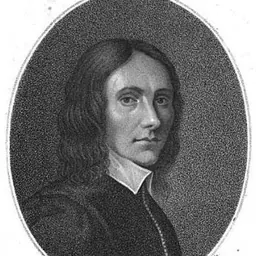
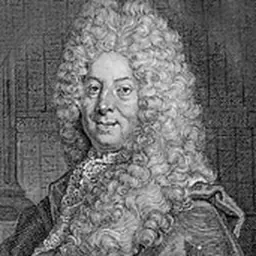
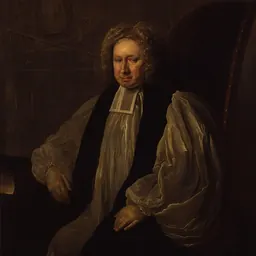
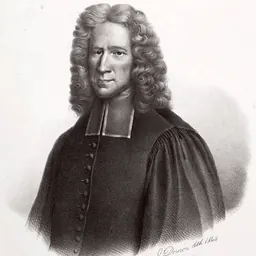
Contemporaries
People whose lives overlapped Anne Margrethe Qvitzow's





Frequently asked questions
Who was Anne Margrethe Qvitzow?
Danish writer
When was Anne Margrethe Qvitzow born?
Anne Margrethe Qvitzow was born on 18 March 1652.
When did Anne Margrethe Qvitzow die?
Anne Margrethe Qvitzow died in 1700.
What was Anne Margrethe Qvitzow's occupation?
Anne Margrethe Qvitzow was a translator, poet and writer.
What nationality was Anne Margrethe Qvitzow?
Anne Margrethe Qvitzow was Danish.
Sources & further reading
· Wikipedia: Anne Margrethe Qvitzow
· DBpedia: Anne Margrethe Qvitzow
Cite this page
APA: Biography.guide. (2026). Anne Margrethe Qvitzow. https://biography.guide/anne-margrethe-qvitzow/
MLA: "Anne Margrethe Qvitzow." Biography.guide, https://biography.guide/anne-margrethe-qvitzow/.
Chicago: "Anne Margrethe Qvitzow." Biography.guide. https://biography.guide/anne-margrethe-qvitzow/.
Data last updated: 2026-09-20 · Spot an error? Report a correction.
Page generated 2026-09-27 05:14 UTC