
Anna Maria van Schurman
Artist, scientist and philosopher from the Northern Netherlands
About Anna Maria van Schurman
Lived 1607 – 1678 (aged 70). Anna Maria van Schurman was a Dutch poet, writer, philosopher, theologian, painter and printmaker.
Life Early life and education Anna Maria van Schurman was born on 5 November 1607 in Cologne, then part of the Holy Roman Empire, to Frederik van Schurman and Eva von Harff de Dreiborn. She learned to read by the age of four. By six, she was making intricate paper cut-outs, and at ten she reportedly learned embroidery in three hours. She also experimented with wax sculpture, later writing that she had been obliged to discover techniques that nobody could teach her. According to one account, a wax self-portrait she made included a necklace so realistic that her friend, the Princess of Nassau, pricked it with a pin to determine whether it was real.
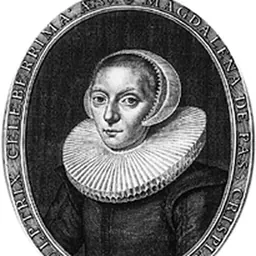
By 1615, when van Schurman was seven, her family had settled in Utrecht, in the Dutch Republic. Her education took place largely at home, where her father and a private tutor taught the children. In the 1630s she studied engraving with Magdalena van de Passe. Combining the techniques of engraving with her skills in calligraphy, her renowned engraved calligraphy pieces gained the attention of all who saw them, including her contemporaries. Despite her playfulness and experimentation, Anna Maria was very serious about her art, and her contemporaries knew it. She herself said that she was "immensely gifted by God in the arts."
Utrecht University Cornelis van Dalen the Younger after Cornelis Jonson van Ceulen, Anna Maria van Schurman, c. 1657, engravingIn 1634, due to her distinction in Latin, she was invited to write a poem for the opening of the University of Utrecht. In the poem she celebrated the city of Utrecht and the new university. She noted the potential for the university to help the city cope with the economic impacts of the floods and the shifting course of the river Rhine.
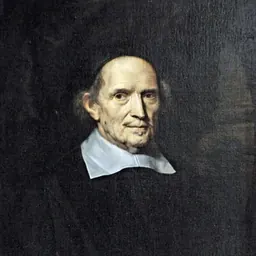
She also challenged the exclusion of women from the university. In response to her complaint, the university authorities allowed her to attend professor Voetius' lectures. In 1636 she became the first female student at the university, or at any Dutch university. Women at that time were not permitted to study at a university in Protestant Netherlands, and when she attended lectures she sat behind a screen or in a curtained booth so that the male students could not see her.
The Labadists
In her 60s, Schurman emerged as one of the principal leaders of the Labadists. In the 1660s Schurman had become increasingly disillusioned with the Reformed Churches in the Netherlands. She made the reformation of the church her goal. Along with corresponding with ministers, she travelled throughout the country and organised meetings with them. She lamented the lack of spiritual devotion and the "exhibits of the ecclesiastics" that occupied the church's pulpits.
In 1661 Schurman's brother studied theology with the Hebrew scholar Johannes Buxtorf in Basel and learned about the defrocked French priest Jean de Labadie. He travelled to Geneva to meet him. In March 1669 she broke with the Reformed Church when she published a 10-page pamphlet On the Reformation necessary at present in the Church of Christ. She denounced the church men for trampling on "celestial wisdom", arguing that the people of God should be separated from the "mondains" through "hatred of the world" and "divine love". In it she derided Gisbertus Voetius's opposition to her admiration for Saint Paula, a disciple of St Jerome, who had helped to translate the Bible into Latin. Voetius argued that women should have a limited public role and that anything else was feminine impropriety.
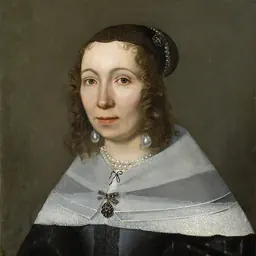
When Labadie died in 1674, Schurman investigated the possibility of moving to England, corresponding with the Latin scholar Lucy Hutchinson and the theologian John Owen on the matter. But the Labadists moved to the village Wieuwerd in Friesland and attracted numerous new members, including Maria Sibylla Merian. About 400 Labadists practiced absolute detachment from worldly values. They attempted to return to early church practices, sharing all property. In the final years of her life Schurman was housebound due to severe rheumatism. She continued to write, keeping up correspondence and working on the second part of Eukleria. She died aged 70 in 1678.
Published writings The title page and frontispiece of van Schurman's The learned maid, printed in 1659.
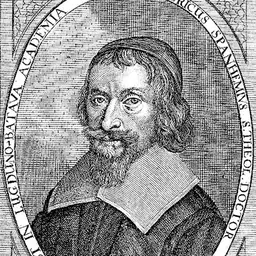
Many of Schurman's writings were published during her lifetime in multiple editions, although some of her writings have been lost. Her most famous book was the Nobiliss. Virginis Annae Mariae a Schurman Opuscula Hebraea Graeca Latina et Gallica, Prosaica et Metrica (Minor works in Hebrew, Greek, Latin and French in prose and poetry by the most noble Anne Maria van Schurman). It was published 1648 by Friedrich Spanheim, professor of theology at Leiden University through the Leiden-based publisher Elzeviers.
Schurman's The Learned Maid or, Whether a Maid may be a Scholar grew out of her correspondence on women's education with theologians and scholars across Europe. In it she advances Jane Grey as an example of the value of female education. Schurman argued that educating women in languages and the Bible would increase their love of God. While an increasing number of royal and wealthy families chose to educate their daughters, girls and women did not have formal access to education. Schurman argued that "A Maid may be a Scholar... The assertion may be proved both from the property of the form of this subject; or the rational soul: and from the very acts and effects themselves. For it is manifest that Maids do actually learn any arts and science." In arguing that women had rational souls she foreshadowed the Cartesian argument for human reason, underpinning her assertion that women had a right to be educated. Schurman and René Descartes corresponded, and while they disagreed on the interpretation of the Bible they both thought that reason was central in the human identity.
The Learned Maid included correspondence with the theologian André Rivet. In reference to The Learned Maid, Rivet cautioned her in a letter that "although you have shown us this with grace, your persuasions are futile... You may have many admirers, but none of them agree with you."
Engravings
When Anna Maria van Schurman demonstrated her artistic talent early on, her father sent her to study with the famous engraver, Magdalena van de Passe, in the 1630s. (Euklēría, or Choosing the Better Part). Translated into Dutch and German. This is a defense of her choice to follow Labadie and a theological tract.
Tributes Judy Chicago's feminist artwork The Dinner Party (1979) features a place setting for van Schurman. Between 2000 and 2018, a marble bust of van Schurman was situated in the atrium of the House of Representatives of the Dutch Parliament in The Hague. Van Schurman's name is shown on a blackboard showing a list of the most worthy people for a new version of The Good Place in episode 11 of the fourth season.
Don’t just read it —
keep it.
Full-length biographies made to live with: read them, listen on the way to work, watch them tonight.
- E-book
- Audio
- Video
Instant download · yours to keep · every purchase keeps this site free
Important facts
more
Madame SeturmanPeople in Anna Maria van Schurman's life
Named in this biography and alive at the same time


Related people
Same field, nearest in time

Contemporaries
People whose lives overlapped Anna Maria van Schurman's






Frequently asked questions
Who was Anna Maria van Schurman?
artist, scientist and philosopher from the Northern Netherlands (1607-1678)
When was Anna Maria van Schurman born?
Anna Maria van Schurman was born on 5 November 1607 in Cologne.
When did Anna Maria van Schurman die?
Anna Maria van Schurman died on 4 May 1678 in Wiuwert.
What was Anna Maria van Schurman's occupation?
Anna Maria van Schurman was a poet, writer, philosopher, theologian, painter and printmaker.
What nationality was Anna Maria van Schurman?
Anna Maria van Schurman was Dutch.
Sources & further reading
· Wikipedia: Anna Maria van Schurman
· DBpedia: Anna Maria van Schurman
Cite this page
APA: Biography.guide. (2026). Anna Maria van Schurman. https://biography.guide/anna-maria-van-schurman/
MLA: "Anna Maria van Schurman." Biography.guide, https://biography.guide/anna-maria-van-schurman/.
Chicago: "Anna Maria van Schurman." Biography.guide. https://biography.guide/anna-maria-van-schurman/.
Data last updated: 2026-09-20 · Spot an error? Report a correction.
Page generated 2026-09-27 05:30 UTC