
Maria Sibylla Merian
German-Dutch entomologist, botanist, naturalist, scientific illustrator, graphic artist, painter, and lepidopterologist
About Maria Sibylla Merian
Lived 1647 – 1717 (aged 69). Maria Sibylla Merian was a Dutch and German entomologist, lepidopterist, botanist, naturalist, painter and illustrator, known for Butterfly.
Maria Sibylla Merian (2 April 164713 January 1717) was a German-Dutch entomologist, naturalist, and scientific illustrator. She was one of the earliest European naturalists to document observations about insects directly; her work established that insects have a life cycle and do not appear by spontaneous generation. Merian was a descendant of the Frankfurt branch of the Swiss Merian family.
Merian received her artistic training from her stepfather, Jacob Marrel, a student of the still life painter Georg Flegel. Merian published her first book of natural illustrations in 1675. She had started to collect insects as an adolescent. At age 13, she raised silkworms. In 1679, Merian published the first volume of a two-volume series on caterpillars; the second volume followed in 1683. Each volume contained 50 plates that she engraved and etched. Merian documented evidence on the process of metamorphosis and the plant hosts of 186 European insect species. Along with the illustrations Merian included descriptions of their life cycles.
In 1699, Merian travelled to Dutch Guiana to study and record the tropical insects native to the region. In 1705, she published Metamorphosis Insectorum Surinamensium. Merian's Metamorphosis has been credited with influencing a range of naturalist illustrators. Because of her careful observations and documentation of the metamorphosis of the butterfly, Merian is considered by David Attenborough to be among the more significant contributors to the field of entomology. She discovered many new facts about insect life through her studies. Until her careful, detailed work, it had been thought that insects were "born of mud" by spontaneous generation. Her pioneering research in illustrating and describing the various stages of development, from egg to larva to pupa and finally to adult, dispelled the notion of spontaneous generation and established the idea that insects undergo distinct and predictable life cycles. Early on, she had access to many books about natural history. Regarding her youth, in the foreword to Metamorphosis Insectorum Surinamensium, Merian wrote:
In May 1665, Merian married Marrel's apprentice, Johann Andreas Graff from Nuremberg; his father was a poet and director of the local high school, one of the leading schools in seventeenth-century Germany. In January 1668, she had her first child, Johanna Helena, and the family moved to Nuremberg in 1670, her husband's home town. While living there, Merian continued painting, working on parchment and linen, and creating designs for embroidery. She also gave drawing lessons to unmarried daughters of wealthy families (her "Jungferncompaney", i.e. virgin group), which helped her family financially and increased its social standing. This provided her with access to the finest gardens, maintained by the wealthy and elite, where she could continue collecting and documenting insects. In 1678, she gave birth to her second daughter Dorothea Maria.
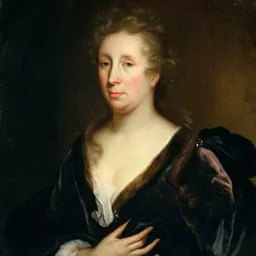
Other women still-life painters, such as Merian's contemporary Margaretha de Heer, included insects in their floral pictures, but did not breed or study them. In 1679, she published her first work on insects, the first of a two-volume illustrated book focusing on insect metamorphosis. At its peak, the religious community numbered around 600, with many more adherents further afield. Visitors came from England, Italy, Poland, and elsewhere, but not all approved of the strict discipline, religious separatism, and community property. Merian's husband was refused by the Labadists, but came back twice.
Amsterdam A 1730 black and white edition of Metamorphosis – after her death the book was reprinted in 1719, 1726, and 1730. An occupational portrait of Maria Sibylla Merian (c. 1700, copperplate by Jacobus Houbraken from a portrait by Georg Gsell). Her status as a scientist is emphasised by the pile of books next to her. The globe and the prints draw attention to her accomplishments. The pair of engraving burins and the emblem of her father emphasise her ancestry. In 1690, Merian's mother had died. A year later, she moved with her daughters to Amsterdam. In 1692, her husband divorced her. In Amsterdam the same year, her daughter Johanna married Jakob Hendrik Herolt, a successful merchant in the Suriname trade, originally from Bacharach. The flower painter Rachel Ruysch became Merian's pupil. Merian made a living selling her paintings. She would later write:
In Holland, with much astonishment what beautiful animals came from the East and West Indies. I was blessed with having been able to look at both the expensive collection of Doctor Nicolaes Witsen, mayor of Amsterdam and director of the East Indies society, and that of Mr. Jonas Witsen, secretary of Amsterdam. Moreover, I also saw the collections of Mr. Fredericus Ruysch, doctor of medicine and professor of anatomy and botany, Mr. Livinus Vincent, and many other people. In these collections I had found innumerable other insects, but found that their origin and their reproduction is unknown, it begs the question as to how they transform, starting from caterpillars and chrysalises and so on. All this has, at the same time, led me to undertake a long-dreamed-of journey to Suriname. travelling throughout the colony and sketching local animals and plants. She recorded local native names for the plants and described local uses. Some believe her journey may have been financed by the directors of the Dutch West India Company. In her subsequent publication on the expedition Merian criticised the actions of the colonial merchants, saying that "the people there have no desire to investigate anything like that; indeed they mocked me for seeking anything other than sugar in the country." Merian also condemned the merchants' treatment of slaves. An enslaved person was forced to assist Merian in her research, and the labour of this person enabled interactions she had with the Amerindian and African slaves in the colony who assisted her in researching the plants and animals of Suriname. Merian also took an interest in agriculture and lamented the colonial merchants' resistance to plant or export anything other than sugar. She later showcased the vegetables and fruits that could be found in Suriname, including the pineapple. Although she is sometimes described as dying impoverished, her funeral was a middle-class one with fourteen pall-bearers. Her daughter Dorothea published Erucarum Ortus Alimentum et Paradoxa Metamorphosis, a collection of her mother's work, after Merian's death.
Work Botanical art Merian first made a name for herself as a botanical artist. In 1675, she started to publish a three-volume series, each with twelve plates depicting flowers. In 1680 she published Neues Blumenbuch, combining the series.
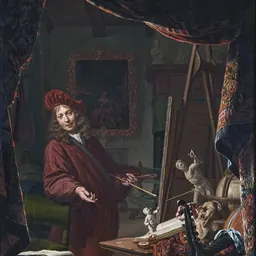
The drawings were decorative and not all were drawn based on observation. Some of the flowers in the three-volume series appear to be based on drawings by Nicolas Robert and her stepfather Jacob Marrel. Merian included insects among the flowers; again she may not have observed them all herself, and some may be copies of drawings by Jacob Hoefnagel. Because of the guild system women were not allowed to paint in oil. Each volume contained 50 plates engraved and etched by Merian, with a description of the insects, moths, butterflies and their larvae she had observed. Der Raupen wunderbare Verwandlung und sonderbare Blumennahrung – The Caterpillars' Marvellous Transformation and Strange Floral Food, was very popular in certain segments of high society as it was written in the vernacular, but her work was largely ignored by scientists of the time. expedition raised many eyebrows. She succeeded, however, in discovering a whole range of previously unknown animals and plants in the interior of Suriname. Merian spent time studying and classifying her findings and described them in great detail. She not only described the insects she found, but also noted their habitat, habits and uses to indigenous people. snakes, spiders, iguanas, and tropical beetles are still collected today by amateurs all over the world. The German word Vogelspinne – (a spider of the infraorder Mygalomorphae), translated literally as bird spider – probably has its origins in an engraving by Merian. The engraving, created from sketches drawn in Suriname, shows a large spider who had just captured a bird. In the same engraving and accompanying text Merian was the first European to describe both army ants and leaf cutter ants as well as their effect on other organisms. Merian's depictions of tropical ants were subsequently cited and copied by other artists. Her depictions of the struggle among organisms predate Charles Darwin and Alfred Russel Wallace's theories on the struggle for survival and evolution. Metamorphosis first was published at her own expense. A technical study of surviving copies shows that some deluxe versions used hand-coloured counterproofs, a process that softened the printed outlines and made the plants and insects appear closer to Merian's watercolour and gouache models. After her death the book was reprinted in 1719, 1726 and 1730, finding a larger audience. An attempt to identify the insects and plants in a recent facsimile edition of her Suriname book was able to determine a number of species, although Merian usually gets the food plants wrong, makes numerous mistakes in depicting the morphology, and usually pairs the wrong species of caterpillar with its imago. Her drawings are part of the scientific exploration by Europeans. Early taxonomy of tropical plants relied on images or specimens. Following her return to Amsterdam the images she had made were used by Carl Linnaeus and others to identify one hundred or so new species. Merian's scientific expedition of Surinam predated Alexander von Humboldt's famous South America expedition by 100 years, and that of Princess Theresa of Bavaria by 200 years. Merian's publication on her expedition was later identified as a key exponent of illustrated geographical publications originating in Holland in the late 17th century, which marketed an exotic but accessible New World to Europeans. When settling in, Merian found support from the artist Michiel van Musscher, who lived not far away. which to this day are kept in academic collections in Saint Petersburg.
Posthumous misattributions Several scholars have traced mistakes that were falsely attributed to Merian after her death. One example revolves around who added colour to first edition plates of her Surinam book. Some first editions included plates that were painted by Merian and others had colourless plates. People later coloured in the black and white plates without following the colour palette used by Merian, similar to the concept of colouring books, and some suspect these later colours made it to the second edition. and in 2018 a rare butterfly Catasticta sibyllae from Panamá.
The Cuban sphinx moth has been named Erinnyis merianae. A Tessaratomidae bug has been named Plisthenes merianae. A genus of mantises has been named Sibylla. Her portrait was printed on the 500 DM note before Germany converted to the euro. Her portrait has also appeared on a 0.40 DM stamp, released on 17 September 1987, and many schools are named after her. In the late 1980s the Archiv imprint of the Polydor label issued a series of new recordings of Wolfgang Amadeus Mozart's piano works performed on period instruments, and featuring Merian's floral illustrations. She was honoured with a Google Doodle on 2 April 2013 to mark her 366th birth anniversary.
The renewed scientific and artistic interest in her work was triggered in part by a number of scholars who examined collections of her works, such as the one in Rosenborg Castle, Copenhagen. In 2005, a modern research vessel named RV Maria S. Merian was launched at Warnemünde, Germany. In 2016, Merian's Metamorphosis insectorum Surinamensium was re-published with updated scientific descriptions and, in June 2017, a symposium was held in her honour in Amsterdam. In March 2017, the Lloyd Library and Museum in Cincinnati, Ohio hosted "Off the Page", an exhibition rendering many of Merian's illustrations as 3D sculptures with preserved insects, plants, and taxidermy specimens.
The Argentine black and white tegu (Salvator merianae), a type of large lizard, was named in honour of Merian after its discovery and classification.
In 2021-2022 Merian’s work was featured in the exhibition Women Artists and Patrons in the Natural Sciences, 1650–1800, at the Morgan Library & Museum.
Poet Jessy Randall's 2022 collection Mathematics for Ladies includes a poem honoring Merian.
In 2024, the Rijksmuseum acquired one of 67 known surviving first editions of Metamorphosis Insectorum Surinamensium.
Daughters Today, while Merian has experienced reinvigorated fame in the eyes of the art and science communities, some of her work has now been re-attributed to her daughters Johanna and Dorothea; Sam Segal has re-attributed 30 of 91 folios in the British Museum.
Gallery
Don’t just read it —
keep it.
Full-length biographies made to live with: read them, listen on the way to work, watch them tonight.
- E-book
- Audio
- Video
Instant download · yours to keep · every purchase keeps this site free
Important facts
more
Maria Sibylla Merian Graff, Maria Sibylla Marian, Maria Sybilla Merian, M. S. Gräffin, Sibilla Merian, Maria Sibylla Gräffin, Sibylla Merian, S. Merian, Sybille Merian, Maria S. Merian, Sibylle Merian, Madame Merian, Sybilla Merian, M.S. Marian, Die Jungfer Merianin, Maria Sibilla Gravio, Anna Maria Sibylla Merian, Anna Maria Sibilla MerianPeople in Maria Sibylla Merian's life
Named in this biography and alive at the same time




Related people
Same field, nearest in time

Contemporaries
People whose lives overlapped Maria Sibylla Merian's



Frequently asked questions
Who was Maria Sibylla Merian?
German-Dutch entomologist, botanist, naturalist, scientific illustrator, graphic artist, painter, and lepidopterologist (1647-1717)
When was Maria Sibylla Merian born?
Maria Sibylla Merian was born on 2 April 1647 in Frankfurt.
When did Maria Sibylla Merian die?
Maria Sibylla Merian died on 13 January 1717 in Amsterdam.
What was Maria Sibylla Merian's occupation?
Maria Sibylla Merian was an entomologist, lepidopterist, botanist, naturalist, painter and illustrator.
What was Maria Sibylla Merian known for?
Maria Sibylla Merian was known for Butterfly.
What nationality was Maria Sibylla Merian?
Maria Sibylla Merian was Dutch and German.
Sources & further reading
· Wikipedia: Maria Sibylla Merian
· DBpedia: Maria Sibylla Merian
Cite this page
APA: Biography.guide. (2026). Maria Sibylla Merian. https://biography.guide/maria-sibylla-merian/
MLA: "Maria Sibylla Merian." Biography.guide, https://biography.guide/maria-sibylla-merian/.
Chicago: "Maria Sibylla Merian." Biography.guide. https://biography.guide/maria-sibylla-merian/.
Data last updated: 2026-09-25 · Spot an error? Report a correction.
Page generated 2026-09-27 05:11 UTC