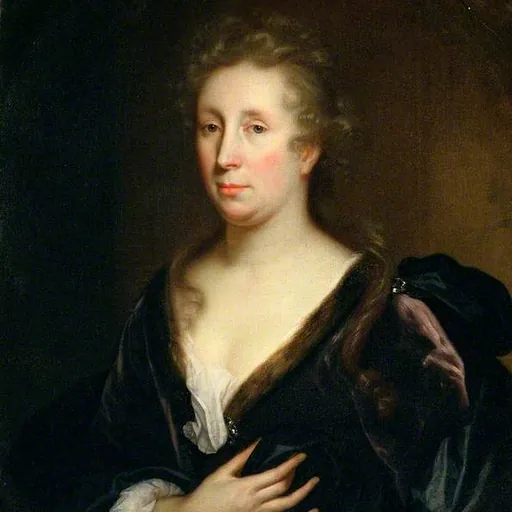
About Rachel Ruysch
Lived 1664 – 1750 (aged 86). Rachel Ruysch was a Dutch botanical illustrator, painter and draftsperson.
Rachel Ruysch (3 June 1664 – 12 October 1750)
Personal life and career The captions translate as "Juriaan Pool and Rachel Pool, born Ruisch" with "aged 84" inscribed above Ruysch's portrait. (Pool was already deceased at the time this picture was made.)
Rachel Ruysch was born on 3 June 1664 in The Hague to the scientist Frederik Ruysch and Maria Post, the daughter of the architect Pieter Post. Her father was also a professor of anatomy and botany and an amateur painter. At a young age she began to paint the flowers and insects of her father's collection in the popular manner of Otto Marseus van Schrieck. Working from these samples Rachel matched her father's ability to depict nature with great accuracy. Rachel and her sister Anna Ruysch learned to draw and paint within their father's extensive scientific collections, which provided abundant botanical and zoological specimens for study. Both sisters pursued painting careers, although Anna appears to have stopped painting after her marriage, while Rachel continued professionally for more than six decades.
In 1679, at age fifteen, Ruysch was apprenticed to Willem van Aelst, a prominent flower painter in Amsterdam. His studio in Amsterdam looked out over the studio of the flower painter Maria van Oosterwijck. Ruysch studied with van Aelst until his death in 1683. Besides painting technique he taught her how to arrange a bouquet in a vase so it would look spontaneous and less formalized. This technique produced a more realistic and three-dimensional effect in her paintings. By the time Ruysch was eighteen she was producing and selling independently signed works. She died in Amsterdam on 12 October 1750, and remains a widely respected artist.
Works
It is unknown whether Ruysch was a member of the Amsterdam Guild of Saint Luke, but early signed works by her in the 1680s show the influence of Otto Marseus van Schrieck. By 1699 she and her family had moved to The Hague, where she was offered membership in the Confrerie Pictura as their first female member. In 1701 she and her husband became members of The Hague Painter's Guild. In 1708, Ruysch was invited to work for the court in Düsseldorf and serve as court painter to Johann Wilhelm, Elector Palatine. Her dated works establish that she painted from the age of 15 until she was 83, a few years before her death. Historians are able to establish this with certainty because she included her age when signing her paintings. Every petal was created painstakingly with delicate brushwork. The background of Ruysch's paintings are usually dark which was the fashion for flower painting in the second half of the 17th century. Her asymmetrical compositions with drooping flowers and wild stems created paintings that seemed to possess a great energy about them.
In her early work Ruysch painted a large number of forest floor pictures that feature small animals, reptiles, butterflies, and fungi. Ruysch's teacher Willem van Aelst introduced her to looser and more spontaneous compositional structures, but she later refined and popularized this manner. Her mature bouquets, with their elaborate layering and rhythmic movement, helped define the evolving taste for more dynamic floral still lifes in the early eighteenth century. She later focused almost exclusively on complex floral bouquets, combining the minute scientific observation learned from her father's collections with imagined arrangements that could not exist in nature, producing an aesthetic that blended naturalism with invention.
The symbolism of each flower was elaborately developed in the 17th century, but most of this concerned the introduction of a single flower into a Vanitas piece.
Reception In 1999 a painting by Ruysch was discovered in a farmhouse in Normandy and was sold at auction for 2.9 million French francs, about US$508,000.
In March 2021, Ruysch's work was added to the "Gallery of Honour" at the Rijksmuseum. Ruysch, Gesina ter Borch, and Judith Leyster are the first women to be included in the gallery.
In 2025, the Toledo Museum of Art, Alte Pinakothek, Munich and the Museum of Fine Arts, Boston organized the exhibition Rachel Ruysch: Nature into Art. It was held at the Alte Pinakothek November 26, 2024 – March 16, 2025; Toledo Museum April 12 – July 27, 2025, Museum of Fine Arts (titled Rachel Ruysch: Artist, Naturalist, and Pioneer), August 23–December 7, 2025. The exhibition was accompanied with a catalog Rachel Ruysch Nature into Art, by Robert Schindler, Bernd Ebert, Anna C. Knaap, et al. The catalog won the 2024 George Wittenborn Memorial Book Award.
Historical context Many of the plants that appear in Ruysch's still lifes reached the Dutch Republic through global trade networks that connected Europe to territories in the Americas, Africa, and Asia. Botanical species from regions such as Suriname and the Cape Colony were collected, transported, and cultivated so that they could be studied or drawn once they arrived in Amsterdam. These plants were often grown in colonial botanical gardens, and recent scholarship has noted that the labor of enslaved workers played a central role in maintaining these sites and supporting the circulation of rare specimens.
The availability of imported plants shaped the botanical variety seen in Ruysch's paintings. Amsterdam's position as a center of global trade created conditions in which artists had access to species from many parts of the world, which were studied in scientific collections and used as models for naturalistic still lifes.
Gallery
Don’t just read it —
keep it.
Full-length biographies made to live with: read them, listen on the way to work, watch them tonight.
- E-book
- Audio
- Video
Instant download · yours to keep · every purchase keeps this site free
Important facts
more
Rachael Ruych, Juffrouw Rachel Ruys Pool, Rachael Ruysch, Rachael Rhuish, Rachel Ruisch, Juffrouw Ruysch, Juffrouw Rachel Ruysch Pool, Rachel Pool Ruysch, Rachel Ruyscht, Rachel Ruis, Ruysh, R. Ruich, R. Ruijsch, Rachel Ruch, Rachaël Reuse, Rochel Ruyech, R. Ruysh, Rachel Ruiysch, Rochel Ruiseh, Rachel Reuseh, Juffr. Rachel Ruys, Rachael Ruys, Reusch, Rachel Reisch, R. Ruych, Ruisch, Ruish, Rushe, Juffr. R. RFamily & relationships
People in Rachel Ruysch's life
Named in this biography and alive at the same time




Related people
Same field, nearest in time
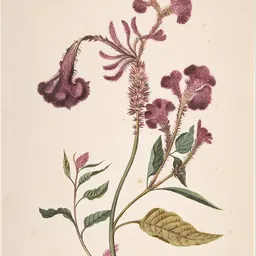

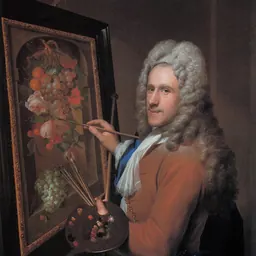


Contemporaries
People whose lives overlapped Rachel Ruysch's


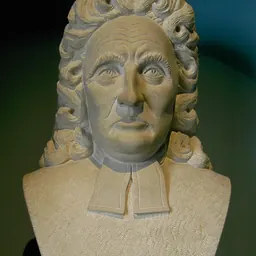
Frequently asked questions
Who was Rachel Ruysch?
Dutch artist (1664–1750)
When was Rachel Ruysch born?
Rachel Ruysch was born on 3 June 1664 in The Hague.
When did Rachel Ruysch die?
Rachel Ruysch died on 12 August 1750 in Amsterdam.
What was Rachel Ruysch's occupation?
Rachel Ruysch was a botanical illustrator, painter and draftsperson.
What nationality was Rachel Ruysch?
Rachel Ruysch was Dutch.
Sources & further reading
Cite this page
APA: Biography.guide. (2026). Rachel Ruysch. https://biography.guide/rachel-ruysch/
MLA: "Rachel Ruysch." Biography.guide, https://biography.guide/rachel-ruysch/.
Chicago: "Rachel Ruysch." Biography.guide. https://biography.guide/rachel-ruysch/.
Data last updated: 2026-09-20 · Spot an error? Report a correction.
Page generated 2026-09-27 05:09 UTC