
About John Oldham
Lived 1653 – 1683 (aged 30). John Oldham was a translator, poet and writer.
John Oldham (9 August 1653 – 9 December 1683) was an English satirical poet and translator. John Dryden, England's first Poet Laureate, was one of his admirers and upon his death wrote an elegy "To the Memory of Mr. Oldham".
Life and work Oldham was born in Shipton Moyne, Gloucestershire, the son of John Oldham, a non-conformist minister, and grandson of John Oldham the staunch anti-papist rector of Shipton Moyne and before that of Long Newnton in Wiltshire. He was educated first at Tetbury Grammar School, then at St Edmund Hall, Oxford, where the Principal was Thomas Tully, an ex-headmaster from Oldham's school at Tetbury. Tully was "a person of severe morals, puritanically inclin'd and a strict Calvinist".
Oldham received a B. A. degree in May 1674. He became an usher at the Whitgift School in Croydon, Surrey (now in Greater London), a position that was poorly paid, monotonous and left little time for him to compose poetry; his discontent at the time was expressed in these lines from one of his satires – "To a friend about to leave University":
But who would be to the vile drudgery bound Where there so small encouragement is found? Where you for recompense for all your pains, Shall hardly reach a common fiddler's gains? For when you've toiled and laboured all you can, To dung and cultivate a barren brain, A Dancing-Master shall be better paid, Tho' he instructs the Heels and you the Head. at a time when popular anger was being stirred up against Catholics in England by the "Popish Plot". In 1680, he became, for a short time, tutor to the son of Sir William Hicks, through whom he made the acquaintance of the notable physician Dr. Richard Lower. Under Lower's influence, Oldham took up the study of medicine for a year, before returning to poetry. written in 1678, and "A Satire against Virtue", written in 1679. During his lifetime, his poetry was published anonymously. His translations of Juvenal were published after his death. Oldham has been criticised for weaknesses in his rhyming and rhythm; but the critic Ken Robinson (1980) notes, "Oldham chose the rugged style of most of his satires: it was not imposed upon him by incapacity or carelessness."
Death
It was here that Oldham died of smallpox at Holme Pierrepont, on 9 December 1683, aged only 30. He may also have suffered from tuberculosis during his lifetime. The Earl of Kingston-upon-Hull had a monument, possibly designed by Grinling Gibbons, erected over Oldham's grave in St Edmund's Church, Holme Pierrepont.
John Dryden was one of Oldham's admirers and in a 1684 elegy "To the Memory of Mr. Oldham" lamented not having met him earlier and that he had died too young.
Don’t just read it —
keep it.
Full-length biographies made to live with: read them, listen on the way to work, watch them tonight.
- E-book
- Audio
- Video
Instant download · yours to keep · every purchase keeps this site free
Important facts
People in John Oldham's life
Named in this biography and alive at the same time





Related people
Same field, nearest in time
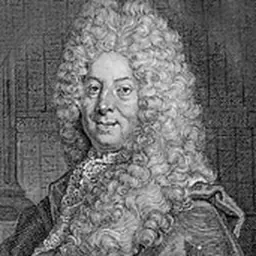
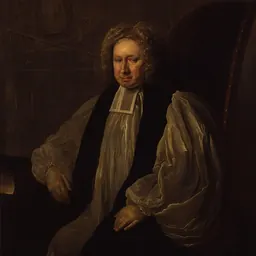
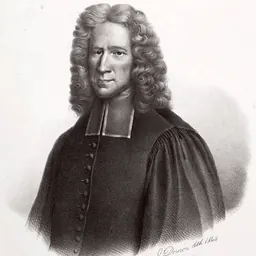
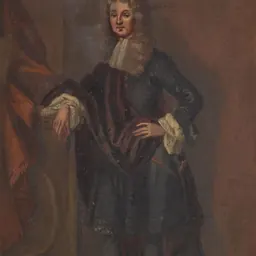
Contemporaries
People whose lives overlapped John Oldham's



Frequently asked questions
Who was John Oldham?
English satirical poet and translator
When was John Oldham born?
John Oldham was born on 9 August 1653.
When did John Oldham die?
John Oldham died on 9 December 1683.
What was John Oldham's occupation?
John Oldham was a translator, poet and writer.
Sources & further reading
Cite this page
APA: Biography.guide. (2026). John Oldham. https://biography.guide/john-oldham/
MLA: "John Oldham." Biography.guide, https://biography.guide/john-oldham/.
Chicago: "John Oldham." Biography.guide. https://biography.guide/john-oldham/.
Data last updated: 2026-09-27 · Spot an error? Report a correction.
Page generated 2026-09-27 05:17 UTC