
About Andrew Crosbie
Lived 1736 – 1785 (aged 48–49). Andrew Crosbie was a British writer.
Andrew Crosbie of Holm FRSE FSAScot (1736–1785) was a Scottish lawyer and antiquarian, and a notable figure of the Scottish Enlightenment. He was a close friend and companion of James Boswell and with him co-wrote the legal song The Justiciary Opera, sung by generations of Scottish advocates.
Life
He was born in the Soutergate, Dumfries, the only surviving son of Andrew Crosbie of Holm (d. 1762), the provost of Dumfries, and his wife, Jean Grierson. His early education was at Dumfries Academy.
He studied law at the University of Edinburgh, and was admitted to the Faculty of Advocates in 1757.
In 1769, together with James Boswell, he helped to fund the Corsican rebels fighting under Pasquale Paoli.
Around 1770, he began building his own house on St Andrews Square at the east end of the then first phase of Edinburgh's New Town. However he was financially ruined in 1772 by the demise of Douglas, Heron & Co, a bank in Ayr in which he was a partner.
As a member of the Edinburgh Philosophical Society when it was awarded a royal charter in 1783, he automatically became a founding Fellow of the Royal Society of Edinburgh.
An office-bearer ('Assassin') of The Poker Club, and a friend of Boswell and Johnson, Crosbie was the basis of the character Councillor Pleydellin Sir Walter Scotts's novel Guy Mannering.
In 1780 he was a co-founder of the Royal Society of Antiquaries of Scotland. In 1783 he was a co-founder of the Royal Society of Edinburgh. He was elected Vice-Dean of the Faculty of Advocates in 1784, two months before his death.
Popular despite being an acknowledged alcoholic (not helped by his financial ruin), he died in impoverished circumstances in rented accommodation, probably of liver disease, on 25 February 1785, and was interred in a now unmarked grave at Greyfriars Kirkyard in Edinburgh.
Family Crosbie was married to Elizabeth Barker, a "woman of ill-repute".
Publications Thoughts of a Layman Concerning Patronage and Presentation (1769) A Treatise on the Office, Duty, and Powers of Judges and Magistrates in Scotland (published by William Creech in 1785)
Artistic recognition Crosbie was painted in his advocate robes, addressing his courtroom, by David Martin. The portrait was donated by his widow to the Faculty of Advocates following his death and hangs in Parliament House, Edinburgh (part of the Edinburgh Law Courts).
Councillor Paulus Pleydell, in Scott's Guy Mannering, is based on Crosbie.
Don’t just read it —
keep it.
Full-length biographies made to live with: read them, listen on the way to work, watch them tonight.
- E-book
- Audio
- Video
Instant download · yours to keep · every purchase keeps this site free
Important facts
People in Andrew Crosbie's life
Named in this biography and alive at the same time
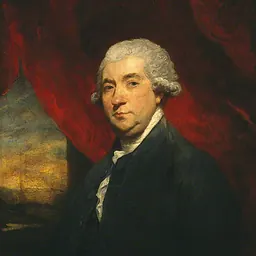
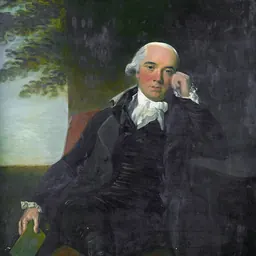
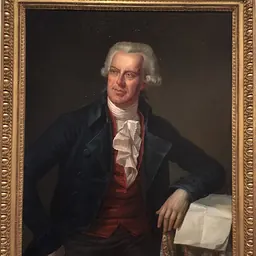
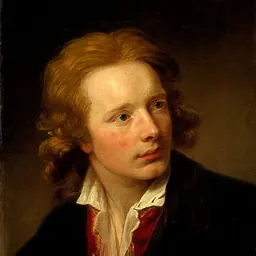
Related people
Same field, nearest in time



Contemporaries
People whose lives overlapped Andrew Crosbie's





Frequently asked questions
Who was Andrew Crosbie?
British lawyer and scholar
When was Andrew Crosbie born?
Andrew Crosbie was born in 1736.
When did Andrew Crosbie die?
Andrew Crosbie died in 1785.
What was Andrew Crosbie's occupation?
Andrew Crosbie was a writer.
What nationality was Andrew Crosbie?
Andrew Crosbie was British.
Sources & further reading
Cite this page
APA: Biography.guide. (2026). Andrew Crosbie. https://biography.guide/andrew-crosbie/
MLA: "Andrew Crosbie." Biography.guide, https://biography.guide/andrew-crosbie/.
Chicago: "Andrew Crosbie." Biography.guide. https://biography.guide/andrew-crosbie/.
Data last updated: 2026-09-20 · Spot an error? Report a correction.
Page generated 2026-09-27 05:31 UTC