
About Amalia Holst
Lived 1758 – 1829 (aged 70–71). Amalia Holst was a writer and pedagogue.
Amalia Holst (née Amalia von Justi; 10 February 1758 – 6 January 1829) was a German writer, intellectual, and early feminist. Her work examined traditional pedagogy and challenged Enlightenment writers such as Jean-Jacques Rousseau. She often is called the German counterpart to Mary Wollstonecraft. Little is known about Amalia Holst's life. She rose to prominence in the late 1700s through her works as a teacher. She became more widely recognized in the 1970s, after her work was rediscovered and republished by Kassel University Press.
Life
Early life Amalia Holst was born in 1758 in Mecklenburg. She is the daughter of Johanna Maria Magdalena Marchand and Johann Heinrich Gottlob von Justi and the oldest of six children from her father's second marriage.
From about 1792–1802, Holst was the headmistress of the preschool that her husband oversaw.
Published works
Observations on the Errors of Our Modern Education by a Practical Teacher Published in 1791, Observations on the Errors of Our Modern Education by a Practical Teacher criticizes widely accepted conservative pedagogical theories, specifically those of Campe and Basedow. Holst analyzes their ideas from the perspective of an educator, and points out the flaws and contradictions within them. She also calls attention to the impractical nature of their ideas.
Letters on Elisa In 1799, Holst responded to the success of the novel Elisa with letters that were included in its fifth edition. She wrote four letters, addressed to the title character criticizing the self-sacrificing and submissive role of women. This seems to be Holst's first public statement for gender equality. According to Holst, a woman's attachment to her spouse did not detract from her autonomy. She emphasized a woman's responsibility to her domestic duty, however, and referred to her own marriage as "a domestic bliss".
On the Purpose of Women’s Advanced Intellectual Development Holst makes the case for the same higher education for men and women alike in On the Purpose of Women’s Advanced Intellectual Development. This notion was very radical: unlike many of the prominent advocates for the education of women before her, such as La Roche, Herder, and Goethe.
Holst rejected the idea of separate curricula for the genders, believing that women could and should learn the same things men do. This was not an accepted idea at the time. Her ideas diverged from most her contemporary equal-education advocates as well, including the likes of Hippel, Wollstonecraft, and Condorcet. While they were in favor of an advanced public coeducation system, Holst insisted on a professional maternal educator who would instruct her children in all academic disciplines from early childhood through adolescence. Asserting that only women who were thoroughly educated themselves were fit to educate the next generation, and thus, Holst reasoned that every woman was to be educated. She advocated for an in-depth knowledge of history, the sciences, philosophy, geography, and the arts. Holst stressed that the most important quality of an effective maternal educator was the ability to draw meaningful connections among all disciplines. She also placed an emphasis on individual perfection, urging women to engage continually in intellectual pursuits throughout the course of their lives.
Holst made several demands for the education of women: Women were to have complete freedom to study every subject. Women were to be given access to original sources, as opposed to those specifically written for women, which she claimed offered “superficial knowledge” and which “treat [women] like overgrown children”. Exceptionally intelligent women were to have access to a formal university education. They were to be free of the pressure to have children. She used the philosophers Kant and Leibniz as examples, noting that both were celibate, but their “immortal works, the offspring of their minds, have enriched the world”. Why then, Holst argued, shouldn't the same apply to women? She demanded acceptance that women were capable of achievements in the most advanced fields of thought. Holst asserts “there exists no proof that a woman’s mind cannot comprehend the higher sciences”.
Don’t just read it —
keep it.
Full-length biographies made to live with: read them, listen on the way to work, watch them tonight.
- E-book
- Audio
- Video
Instant download · yours to keep · every purchase keeps this site free
Important facts
People in Amalia Holst's life
Named in this biography and alive at the same time
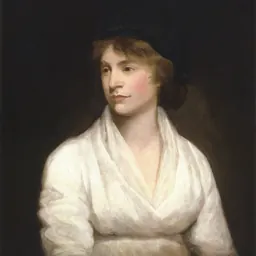
Related people
Same field, nearest in time

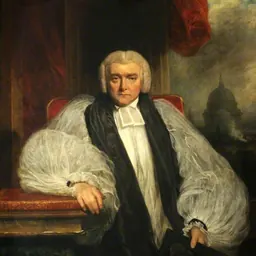


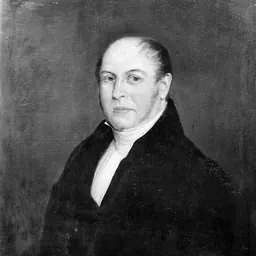
Contemporaries
People whose lives overlapped Amalia Holst's




Frequently asked questions
Who was Amalia Holst?
writer
When was Amalia Holst born?
Amalia Holst was born in 1758 in Mecklenburg.
When did Amalia Holst die?
Amalia Holst died on 6 January 1829 in Teldau.
What was Amalia Holst's occupation?
Amalia Holst was a writer and pedagogue.
What nationality was Amalia Holst?
Amalia Holst's recorded nationality: Grand Duchy of Mecklenburg-Schwerin.
Sources & further reading
Cite this page
APA: Biography.guide. (2026). Amalia Holst. https://biography.guide/amalia-holst/
MLA: "Amalia Holst." Biography.guide, https://biography.guide/amalia-holst/.
Chicago: "Amalia Holst." Biography.guide. https://biography.guide/amalia-holst/.
Data last updated: 2026-09-20 · Spot an error? Report a correction.
Page generated 2026-09-27 05:08 UTC