
About Alfred Heurtaux
Lived 1893 – 1985 (aged 92). Alfred Heurtaux was a French military personnel, aircraft pilot, politician and french Resistance.
Alfred Marie-Joseph Heurtaux (20 May 1893 – 30 December 1985) was a French World War I fighter ace credited with 21 victories. Later in his life, he joined the French Resistance during World War II, and survived imprisonment in Buchenwald death camp to become a brigadier general in the post war Armée de l'Air.
Early military service Born on 20 May 1893 in Nantes, France, Alfred Heurtaux was the son of an artillery officer.
Aerial service He served in Escadrille MS.26 as an aerial observer in Morane-Saulniers. He then passed through pilot's training, being brevetted a pilot on 29 May 1915. He was assigned to Escadrille MS38, another Morane-Saulnier squadron. He was promoted to lieutenant on Christmas Day, 1915. On 5 June 1916, he transferred to a fighter squadron, Escadrille N3, to fly Nieuports. Later, he assumed command of the unit. Another would entail merging his escadrille with three others to form the world's first fighter wing, Groupe de Combat 12 on 16 October 1916. GC 12 would be better known by its nickname, Les Cigognes (the Storks) for the bird portrayed on their planes.
He scored for the first time on 9 July 1916. Following victories on 16 July, 2 and 3 August,
He was flying a new Spad S.VII when he downed his fifth victim on 17 August 1916. Later the next month, on the 25th of September, he shot down another pioneer ace, Leutnant Kurt Wintgens, the very first fighter pilot to ever score a victory on July 1, 1915, with a synchronized machine-gun armed aircraft; for victory number eight. He continued to accumulate victories steadily over the next eight months, reaching 21 on 4 May 1917. On 5 May 1917, he was seriously wounded In a dogfight with nine Albatros D.IIIs, he was hit through both cheeks and both thighs, as well as his head being grazed by a near-miss.
He eventually returned to duty, but did not score again. A second serious wounding in September 1917 sidelined him for the remainder of the war. When he recovered, he toured the United States of America lecturing on fighter tactics.
Between the world wars He later became President of the France Fighter Aces Association.
His next job was with General Motors in Europe, and then finally with Renault.
His employment did not hinder his patriotic activities. He was active in the Association of the Reserve Officers of the Air Force, being its president from 1934 to 1937. He was also appointed a lieutenant colonel in the reserves on 25 June 1935. He was reinstated on active duty a few months later, as Inspector of Fighter Aviation. The Legion of Affairs was formed in August 1940, and he was appointed its vice-president. He used the freedom of movement afforded by this appointment to pass military intelligence to his old Saint Cyr classmate, Colonel Groussard, and to recruit fellow veterans into espionage. The Hector network that resulted was an important constituent of the Resistance in northern France. Colonel Hertaux's son was arrested just before he himself was taken into custody in March 1941. The Gestapo let him go that time, then arrested him again on 3 November. He would spend over three years in a succession of German jails in Düsseldorf, Bielefeld, Hannover, Berlin, and Potsdam. On 13 March 1945, he was shipped off to Buchenwald; on 11 April, he was liberated when the U.S. Army's 6th Armored Division liberated the camp.
He had been promoted to full colonel in 1942, while he was in custody. On 5 July 1945, he was appointed to the military mission for German business. In December 1945, he was promoted to brigadier general.
Death He ended his career working as a consulting engineer. He died 30 December 1985, at Chantilly, Oise and was buried in Paris.
Don’t just read it —
keep it.
Full-length biographies made to live with: read them, listen on the way to work, watch them tonight.
- E-book
- Audio
- Video
Instant download · yours to keep · every purchase keeps this site free
Important facts
People in Alfred Heurtaux's life
Named in this biography and alive at the same time
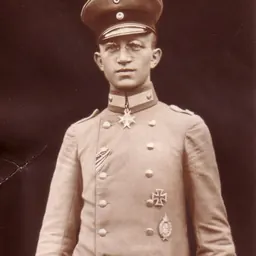
Related people
Same field, nearest in time


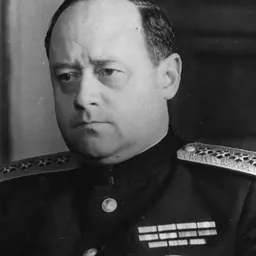



Contemporaries
People whose lives overlapped Alfred Heurtaux's
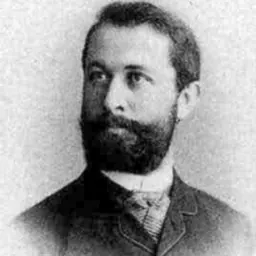
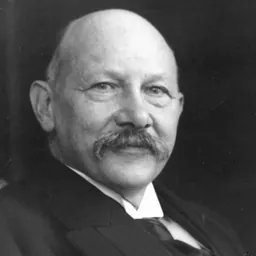

Frequently asked questions
Who was Alfred Heurtaux?
French flying ace (1893-1985)
When was Alfred Heurtaux born?
Alfred Heurtaux was born on 20 May 1893 in Nantes.
When did Alfred Heurtaux die?
Alfred Heurtaux died on 30 December 1985 in Cires-lès-Mello.
What was Alfred Heurtaux's occupation?
Alfred Heurtaux was a military personnel, aircraft pilot, politician and french Resistance.
What nationality was Alfred Heurtaux?
Alfred Heurtaux was French.
Sources & further reading
Cite this page
APA: Biography.guide. (2026). Alfred Heurtaux. https://biography.guide/alfred-heurtaux/
MLA: "Alfred Heurtaux." Biography.guide, https://biography.guide/alfred-heurtaux/.
Chicago: "Alfred Heurtaux." Biography.guide. https://biography.guide/alfred-heurtaux/.
Data last updated: 2026-09-20 · Spot an error? Report a correction.
Page generated 2026-09-27 05:34 UTC