
Alexandru Slătineanu
Romanian scientist
About Alexandru Slătineanu
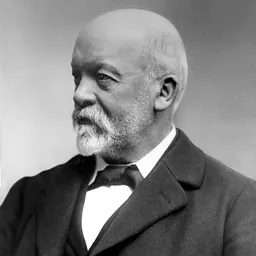
Lived 1873 – 1939 (aged 66). Alexandru Slătineanu was a Romanian bacteriologist.
Alexandru Slătineanu (January 5, 1873 – November 27, 1939) was a Romanian bacteriologist, civil servant, and art collector. From an aristocratic and intellectual background, he embraced socialism while studying in Paris in the 1890s, becoming a lifelong associate of the socialist physician Ioan Cantacuzino. Slătineanu served his country in the Second Balkan War and World War I, creating a medical infrastructure designed to combat cholera and typhus, and improving immunology research. His laboratory continued to set the national standard in the field of bacteriology during the interwar years.
From 1923 to 1926, Slătineanu was rector of the University of Iași, where he fought against antisemitism and curbed attempts at imposing racial segregation. He managed a private clinic and a rural sanitarium, seconded Cantacuzino at the Health Ministry, and set up a model village in Tomești. His large collection of decorative art and manuscripts was opened as a private museum after his death. Managed and enriched by his son, Barbu Slătineanu, it passed into state property during the communist period, when the surviving Slătineanus were exposed to political persecution.
Biography
Origins and education
Born in Bucharest, he came from a prominent Oltenian boyar family. His grandfather Iordache, husband of Princess Safta Brâncoveanu, had translated the works of Metastasio into Romanian, illustrating and printing them at Sibiu in 1797. The doctor's father, also called Alexandru, had helped to set up agricultural education in Wallachia. He himself attended primary school in his native city, followed by Saint Sava National College.
In 1892, he left for the University of Paris, and would remain in the French capital for a decade. At the medical faculty there, his professors included Louis Hubert Farabeuf (anatomy), Mathias-Marie Duval (histology), Paul Georges Dieulafoy, Pierre Potain and Sigismond Jaccoud (internal pathology), Paul Jules Tillaux and Paul Reclus (surgery) and Jean-Martin Charcot (neurology). He also attended Édouard Brissaud's optional course on the history of medicine. In 1894, he began working as an extern in the Paris hospitals.
In his spare time, he visited museums, rare bookshops, and walked along the banks of the Seine, with frequent stops at the book stands. He would purchase rare books, engravings, lithographs and drawings. Together with other young Romanians, he was a regular customer at several cafés, including Procop, Soleil d'Or, and Café Voltaire. It was in this context that both Cantacuzino and Slătineanu became followers of socialism. They drew sympathy from Jean Jaurès, Georges Clemenceau and René Viviani, and were allowed to write in local newspapers about the ongoing controversy regarding the Transylvanian Memorandum signatories. Upon his return home in 1902, he became chief of operations at the experimental medicine department, newly established by Cantacuzino within the University of Bucharest's medical faculty. On Saturdays, he and Cantacuzino lectured at the Hotel de Franța to an audience of proletarians and socialist cadres. From 1907, Slătineanu also wrote in Cantacuzino's left-wing generalist publication Viața Românească; his contributions included stories from the medical, university and social fields.
In addition to his laboratory work, Slătineanu was active as a hospital physician, and, between 1907 and 1912, as health inspector for epidemics, worked with Cantacuzino to reorganize the health service.
Early academic career and World War I service In February 1912, he was hired as a professor at the bacteriology department of the University of Iași medical faculty. The department lacked a physical space and a laboratory, and for nearly thirteen years had been staffed by substitute professors. Working in a room in Corneliu Șumuleanu's chemistry department, he offered a popular course attended by doctors as well as students. In 1913, during the Second Balkan War, he was sent to the front in Bulgaria in order to deal with a cholera epidemic among Romanian Army soldiers. Decorated with the Military Virtue Medal in gold, he returned in 1914 and began to set up a bacteriology laboratory. He trained the first assistants and rented and furnished a house. Although the initial 10,000 lei and the additional 3000 lei per year received from the Education Ministry were woefully inadequate, he supplemented these with personal funds, private donations and substantial grants from the health department of the Interior Ministry, managing to set up a suitable laboratory for a country that had entered World War I by 1916.
Slătineanu headed the 2nd Army's health service, fighting against cholera on the Dobrudja front (where his son also served with distinction) Politically, he supported the Labor Party, a radical socialist group formed by George Diamandy in an attempt to speed up electoral democracy and land reform. Writing at the time, Gheorghe Gh. Mârzescu, of the governing National Liberals, dismissed the enterprise as an "operetta", noting that it had no rooting in "the country's social underclass". Slătineanu, he claims, acted "the Turk" in this production.
From August to November 1917, amidst a deteriorating war situation, Slătineanu took refuge in Kharkov, Russia. There, the director of the local bacteriological institute adopted his method for preparing an anti-cholera vaccine in large quantities and administering it in a single dose. From his return until the following year, he headed Cantacuzino's experimental medicine laboratory, which had been evacuated to Iași from German-occupied Bucharest. The laboratory prepared serums and vaccines for the Romanian, Russian and French armies operating in the area, as well as for the local civilian population and for refugees who had fled from the German-occupied part of the country. Thus, with the need to import the preparations eliminated, the treasury was saved over 3 million lei in gold. For his war efforts, he was granted the Order of Queen Marie, first class (1917); the commander of the Order of the Crown with swords; and the knighthood of the Legion of Honour (1918). He continued developing the laboratory, which eventually had three sections: bacteriology, physical chemistry and biochemistry, and hematology and histopathology. Its professionalism brought success: work contracts brought significant sums; medical, veterinary, military and civilian authorities sought its services; and it certified the quality of laboratory glass manufactured domestically.
This was also a time of significant student disturbances, fomented by the law on Jewish emancipation. In December 1923, Slătineanu stood up to antisemitism and calls for racial segregation, demanding Gendarmerie cordons between Jewish students their Christian attackers, as well as punitive measures against professors who would not teach desegregated classes. A year later, following renewed pressures from his Romanian students, Slătineanu authorized a nationalist demonstration to take place on university grounds, but demanded guarantees that it would not lead to violence, and alerted the Gendarmes to stand by. The meeting degenerated into a riot, and this paralyzed academic life. Slătineanu's subsequent decision to resign was vetoed by other members of the university staff. On the occasion the nationalist philosopher Ion Petrovici alleged that Slătineanu was in part guilty for the riots, having "isolated himself" and "paying no attention to the students' soul." In March 1926, Slătineanu, faced with an antisemitic students' strike and cases of criminal assault on Jewish students, pleaded for the expulsion of confirmed instigators.
Slătineanu was still part of the university senate in 1928-1929 and in 1933. He also became head of the Iași hygiene institute in 1930, and set up a tuberculosis sanatorium in nearby Erbiceni. He served as general secretary under Health Minister Cantacuzino, between 1931 and 1933. His other articles saw print in Grigore T. Popa's Însemnări Ieșene review. His collection of art, comprising decorative objects from France and the Levant, as well as numerous bibliophile items, and enriched with folk art brought in by his son, was opened for the public as the Slătineanu Comparative Art Museum later that year, at the family home in Cotroceni.
With the end of World War II and the imposition of a communist regime, the Slătineanus became victims of political persecution: Alexandru's grandson, Stroe-Constantin Slătineanu, spent some three years in communist prisons; the estate was nationalized in 1949, and the Cotroceni museum was confiscated a year later. The authorities eventually allowed the ailing Barbu Slătineanu to live on the premises, as curator of his and his father's collection. Eventually arrested in 1958, he died a year later, during interrogation in Jilava Prison. His widow, Alexandra, daughter of politician Alexandru Lahovary, donated the remainder of his papers to the state; she died in 1979.
Don’t just read it —
keep it.
Full-length biographies made to live with: read them, listen on the way to work, watch them tonight.
- E-book
- Audio
- Video
Instant download · yours to keep · every purchase keeps this site free
Important facts
People in Alexandru Slătineanu's life
Named in this biography and alive at the same time



Related people
Same field, nearest in time

Contemporaries
People whose lives overlapped Alexandru Slătineanu's

Frequently asked questions
Who was Alexandru Slătineanu?
Romanian scientist
When was Alexandru Slătineanu born?
Alexandru Slătineanu was born on 5 January 1873 in Bucharest.
When did Alexandru Slătineanu die?
Alexandru Slătineanu died on 27 November 1939 in Iași.
What was Alexandru Slătineanu's occupation?
Alexandru Slătineanu was a bacteriologist.
What nationality was Alexandru Slătineanu?
Alexandru Slătineanu was Romanian.
Sources & further reading
· Wikipedia: Alexandru Slătineanu
· DBpedia: Alexandru Slătineanu
Cite this page
APA: Biography.guide. (2026). Alexandru Slătineanu. https://biography.guide/alexandru-slatineanu/
MLA: "Alexandru Slătineanu." Biography.guide, https://biography.guide/alexandru-slatineanu/.
Chicago: "Alexandru Slătineanu." Biography.guide. https://biography.guide/alexandru-slatineanu/.
Data last updated: 2026-09-20 · Spot an error? Report a correction.
Page generated 2026-09-27 05:33 UTC