
Alexander Scotland
British Army officer
About Alexander Scotland
Lived 1882 – 1965 (aged 82–83). Alexander Scotland was a British intelligence officer.
Alexander Paterson Scotland, (1882–1965) was a British Army officer and intelligence officer.
Scotland was noted for his work during and after World War II as commandant of London Cage, an MI19 interrogation facility that was subject to frequent allegations of torture. He wrote about this period in his 1957 book, The London Cage.
Early life and career Scotland was born in England to Scottish parents from Perthshire. His father was a railway engineer. He came from a family of nine children, three girls and six boys. He left school at the age of fourteen, worked as an office boy at a tea merchant's in Mincing Lane, City of London, and then sailed to Australia before returning to England, where he worked in a London grocery business. He returned to England upon his release. In France he was assigned to interrogate German prisoners.
In The London Cage, Scotland says that he used his fluent German and knowledge of the German Army to cajole information from German prisoners. To determine the manpower needs of the German army, for instance, he ordered German noncommissioned officers at a prisoner of war cage to survey their men's health status and age. The purpose was to determine whether the German Army was being forced to return ill soldiers to duty, or to use young and inexperienced soldiers, because of manpower shortages.
World War II and the 'cages' After the First World War, Scotland returned to South West Africa and then obtained what he describes in The London Cage as a "roving job with a famous commercial enterprise." He was assigned to the British Expeditionary Force in France, where he was assigned to organize prisoner of war interrogation centers, and to instruct officers on treatment and interrogation of prisoners. He found British forces ill-equipped to deal with war prisoners, with the staff assigned to such duties consisting of writers and journalists, some with background in security work but none with training or knowledge of military intelligence.
Upon his return to England, Scotland was put in charge of the Prisoner of War Interrogation Section (PWIS). A "cage" for interrogation of prisoners was established in each command area, manned by officers trained by Scotland. The prisoners were sent to prison camps after their interrogation at the cages. Nine cages were established from southern England to Scotland, with the London cage also being "an important transit camp." The cages varied in facilities. The Doncaster cage used a portion of the town's racecourse as a camp, while the Catterick and Loughborough cages were in bare fields. He was formally granted permission to wear this foreign decoration on 25 September 1947 by King George VI.
Torture allegations Scotland was accused by a number of prisoners of the London Cage of extracting confessions by torture. Prior to publication of The London Cage, MI5 pointed out that Scotland had detailed repeated breaches of the Geneva convention, and had admitted "that prisoners had been forced to kneel while being beaten about the head; forced to stand to attention for up to 26 hours; threatened with execution; or threatened with 'an unnecessary operation'." Publication of the book was delayed for years, and these details were excised. Scotland responded by threatening to publish the book in the United States. The New York Times reported that the British government was "unwilling to have the bugbear of German atrocities revived at this time, when official policy is to support the Bonn government and the ratification of the Paris agreements to arm West Germany."
An expurgated version of the book was published in Britain in 1957, with the disclaimer:
Selected publications
Don’t just read it —
keep it.
Full-length biographies made to live with: read them, listen on the way to work, watch them tonight.
- E-book
- Audio
- Video
Instant download · yours to keep · every purchase keeps this site free
Important facts
People in Alexander Scotland's life
Named in this biography and alive at the same time
Related people
Same field, nearest in time


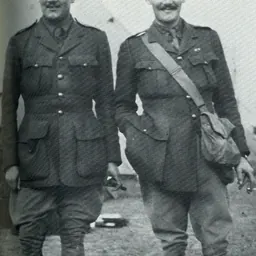
Contemporaries
People whose lives overlapped Alexander Scotland's

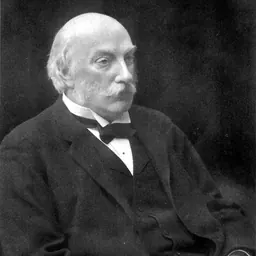



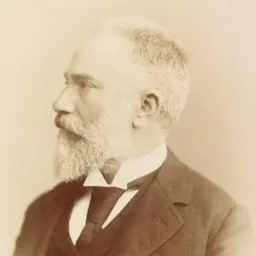
Frequently asked questions
Who was Alexander Scotland?
British Army officer
When was Alexander Scotland born?
Alexander Scotland was born in 1882 in Middlesbrough.
When did Alexander Scotland die?
Alexander Scotland died in 1965 in London.
What was Alexander Scotland's occupation?
Alexander Scotland was an intelligence officer.
What nationality was Alexander Scotland?
Alexander Scotland was British.
Sources & further reading
· Wikipedia: Alexander Scotland
Cite this page
APA: Biography.guide. (2026). Alexander Scotland. https://biography.guide/alexander-scotland/
MLA: "Alexander Scotland." Biography.guide, https://biography.guide/alexander-scotland/.
Chicago: "Alexander Scotland." Biography.guide. https://biography.guide/alexander-scotland/.
Data last updated: 2026-09-20 · Spot an error? Report a correction.
Page generated 2026-09-27 05:14 UTC