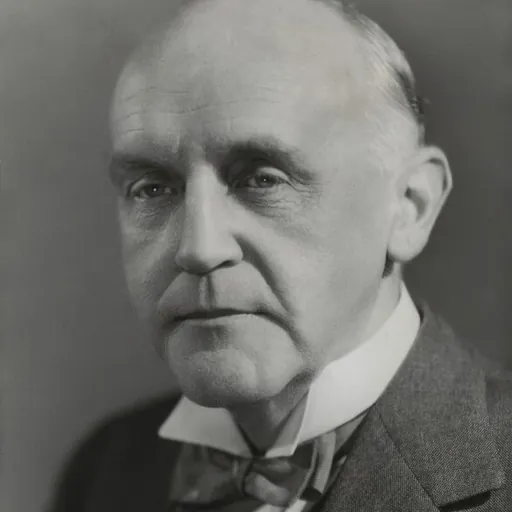
About Alexander Paterson
Lived 1884 – 1947 (aged 62). Alexander Paterson was a military personnel.
Sir Alexander Henry Paterson MC (20 November 1884 – 7 November 1947), known to his friends as Alec Paterson, was a British penologist who as a Prison Commissioner introduced reforms that would provide a humane regime in penal institutions and encourage rehabilitation among inmates. He was the main force behind the development of Borstals and gained an international reputation as a great prison reformer. A quote by Sir Alexander Paterson engraved in the stone wall within the Peace Chapel of the International Peace Garden (in Manitoba Canada and North Dakota, USA). Paterson was born in Bowdon, Cheshire. His parents were staunch Unitarians and Liberals, his father being the young Winston Churchill's electoral agent. Paterson attended Bowdon College, the local private school for boys, and later studied at University College, Oxford where he obtained an honours degree in Greats. During his time at Oxford, he may have become an Anglican although he was not to be confirmed into the Church of England until 1908. Not long after he graduated, Paterson went to work with the Oxford Medical Mission, a Christian charity established by John Stansfeld ('the Doctor') which provided free medical treatment for the locals and ran youth clubs for underprivileged boys in Bermondsey, South London. In his views, the prison system should not dehumanize:
During his long tenure he became the foremost authority on prisons in the world, visited many countries throughout the Empire and beyond to advise on penal matters, and was an expert witness before many parliamentary and departmental committees. In 1935 at the International Penal and Penitentiary Congress held in Berlin he led a successful attempt to thwart the Nazis hijacking the whole conference for propaganda purposes. During the Second World War, apart from visiting the West African colonies and war-blasted Malta, he was sent to Canada to sort the refugee sheep from the Nazi goats among the 'enemy alien' internees' sent there from Britain. His report on this issue is as a compassionate response as it is a searing indictment of their treatment, and, as with so many of his reports, immensely readable and hugely effective. Stricken with malaria and worn out by his exertions, he reluctantly retired at the end of 1946 from his post as Commissioner, although he was retained as a consultant by his colleagues.
Paterson was knighted in 1947 and died shortly afterwards in London at the age of 62.
Don’t just read it —
keep it.
Full-length biographies made to live with: read them, listen on the way to work, watch them tonight.
- E-book
- Audio
- Video
Instant download · yours to keep · every purchase keeps this site free
Important facts
People in Alexander Paterson's life
Named in this biography and alive at the same time
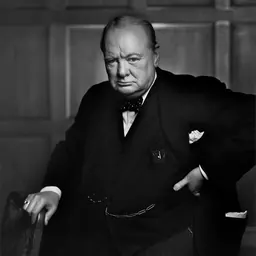



Related people
Same field, nearest in time


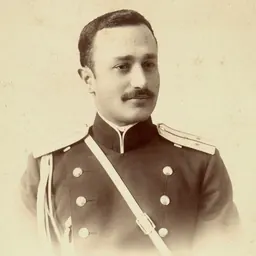



Contemporaries
People whose lives overlapped Alexander Paterson's
Frequently asked questions
Who was Alexander Paterson?
British penologist (1884-1947)
When was Alexander Paterson born?
Alexander Paterson was born on 20 November 1884.
When did Alexander Paterson die?
Alexander Paterson died on 7 November 1947.
What was Alexander Paterson's occupation?
Alexander Paterson was a military personnel.
Sources & further reading
· Wikipedia: Alexander Paterson
· DBpedia: Alexander Paterson (penologist)
Cite this page
APA: Biography.guide. (2026). Alexander Paterson. https://biography.guide/alexander-paterson/
MLA: "Alexander Paterson." Biography.guide, https://biography.guide/alexander-paterson/.
Chicago: "Alexander Paterson." Biography.guide. https://biography.guide/alexander-paterson/.
Data last updated: 2026-09-20 · Spot an error? Report a correction.
Portrait: Wikimedia Commons · author & licence
Page generated 2026-09-27 04:58 UTC