
About Alexander Samoylovich
Lived 1880 – 1938 (aged 57). Alexander Samoylovich was a Russian linguist.
Alexander Nikolaevich Samoylovich (; 29 December 1880 – 13 February 1938) was a Russian Orientalist and Turkologist who served as a member of the USSR Academy of Sciences, Rector of the Leningrad Oriental Institute (1922–1925), academic secretary of the Humanities Branch of the USSR Academy of Sciences (1929–1933), and director of the Institute of Oriental Studies of the USSR Academy of Sciences (1934–1937). He was arrested by the NKVD in October 1937, and was executed on 13 February 1938.
Career Samoylovich was born on 29 December 1880 in Nizhny Novgorod, to the family of the director of the Nizhny Novgorod grammar school. His father was of Ukrainian origin and in Soviet bureaucracy Samoylovich was considered as ethnic Ukrainian. He studied at the Nizhny Novgorod Institute for Nobles, and then in the Oriental department of Saint Petersburg University, where he majored in Arabo-Persian-Turkic-Tatar languages. From 1907 he taught Turkic languages at St. Petersburg University, and in 1920 joined Vasily Bartold and Ivan Zarubin in providing Narkomnats with an ethnographic analysis of Turkestan and the Kirgiz steppe. In 1921 and 1922 he went to Turkestan ASSR, after which he became rector of a "Turkological seminar", which co-ordinated the work of Russian Turkologists. In 1924 he was elected a corresponding member, and in 1929 a full member (Academician), of the USSR Academy of Sciences. In 1927 he took part in an Academy of Sciences anthropological expedition to Kazakhstan which studied the life and the language of ethnic Kazakhs in the Altai Mountains.
Samoylovich's linguistic and ethnographic studies of the Kazakh people are credited with leading to the creation of a scientific definition of the ethnonym "Kazakh". He participated in the Soviet government's campaign to replace the Arabic-script-based writing systems used by Turkic peoples in the USSR with a uniform, Latin-based Turkic alphabet.
After his election as a member of the USSR Academy of Sciences, the Presidium of the academy tasked him with organizational work in the sciences. His position also involved him in state relations with the USSR's non-Russian national regions, and he was named the head of the Kirgiz, Kazakh, and Uzbek sections of a council studying the potential productive capacities of these regions. In 1932 the Presidium of the Academy of Sciences created the "Kazakhstan base", and Samoylovich was appointed its chairman. He continued to live in Leningrad, from where he oversaw studies and planning for the development and expansion of mineral extraction in the Kazakhstan region.
In 1933, under Samoylovich's direction, the Kazakhstan base of the USSR Academy of Sciences held sessions devoted to the development of the Karaganda coal basin and state plans for the creation of the Uralo-Kuznetsk combinate. Further sessions were held for the study of deposits of nonferrous metals in Altai and Zhezkazgan, for the development of the polymetal industry, and for the search and study of minerals (including oil) in Western Kazakhstan. In these scientific forums Samoylovich involved leading scientists of the time, such as academicians Alexander Fersman, Ivan Gubkin, and Andrey Arkhangelsky, geologists V. Nehoroshev and N.Kassin, and engineers K. Satpaev and M. Gutman. These charges were later proven entirely false.
In the post-Stalin era, the Soviet government officially recognized that Samoylovich had been unjustly persecuted and killed. He was declared rehabilitated on 25 August 1956; he was restored to the Academy of Sciences on 14 December 1956 (by decision of the Presidium of the Academy of Sciences, No. 7), and on 5 March 1957 (the decision of the General Meeting, No. 9).
Scientific contribution Samoylovich authored major works on the language, literature, folklore and ethnography of Turkic peoples in Crimea, Volga, North Caucasus, South Caucasus, Middle Asia, Kazakhstan, and Altai. Among dozens of various classifications of the Turkic languages, the classification developed by Samoylovich is most widely recognised; in 1917 Samoylovich was the first European scientist who gave a description of the tamgas and appreciated their historical importance.
References and sources
Don’t just read it —
keep it.
Full-length biographies made to live with: read them, listen on the way to work, watch them tonight.
- E-book
- Audio
- Video
Instant download · yours to keep · every purchase keeps this site free
Important facts
People in Alexander Samoylovich's life
Named in this biography and alive at the same time



Related people
Same field, nearest in time

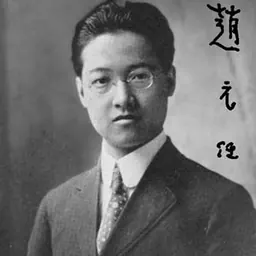
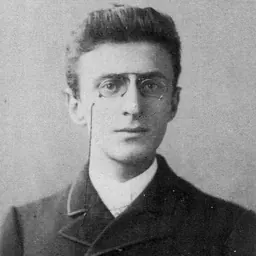
Contemporaries
People whose lives overlapped Alexander Samoylovich's

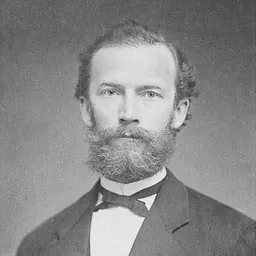

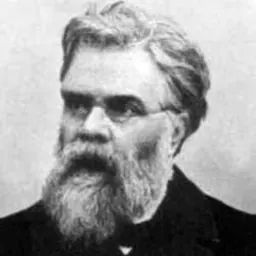


Frequently asked questions
Who was Alexander Samoylovich?
Russian academic
When was Alexander Samoylovich born?
Alexander Samoylovich was born on 17 December 1880 in Nizhny Novgorod.
When did Alexander Samoylovich die?
Alexander Samoylovich died on 13 February 1938 in Moscow.
What was Alexander Samoylovich's occupation?
Alexander Samoylovich was a linguist.
What nationality was Alexander Samoylovich?
Alexander Samoylovich was Russian.
Sources & further reading
· Wikipedia: Alexander Samoylovich
· DBpedia: Alexander Samoylovich
Cite this page
APA: Biography.guide. (2026). Alexander Samoylovich. https://biography.guide/alexander-samoylovich/
MLA: "Alexander Samoylovich." Biography.guide, https://biography.guide/alexander-samoylovich/.
Chicago: "Alexander Samoylovich." Biography.guide. https://biography.guide/alexander-samoylovich/.
Data last updated: 2026-09-25 · Spot an error? Report a correction.
Page generated 2026-09-27 05:12 UTC