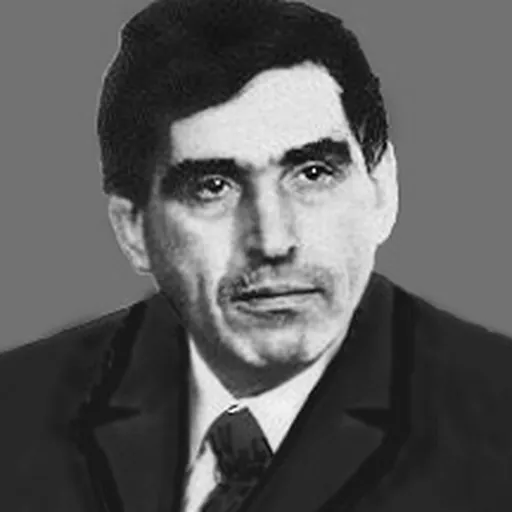
About Alexander Kronrod
Lived 1921 – 1986 (aged 64). Alexander Kronrod was a Russian mathematician, economist and computer scientist.
Aleksandr Semyonovich Kronrod (; October 22, 1921 – October 6, 1986) was a Soviet mathematician and computer scientist, best known for the Gauss–Kronrod quadrature formula which he published in 1964. Earlier, he worked on computational solutions of problems emerging in theoretical physics. He is also known for his contributions to economics, specifically for proposing corrections and calculating price formation for the USSR. Later, Kronrod gave his fortune and life to medicine to care for terminal cancer patients. Kronrod is remembered for his captivating personality and was admired as a student, teacher and leader.
He is the author of several well known books, including "Nodes and weights of quadrature formulas. Sixteen-place tables" and "Conversations on Programming". A biographer wrote Kronrod gave ideas "away left and right, quite honestly being convinced that the authorship belongs to the one who implements them."
Education Kronrod was born on October 22, 1921 in Moscow. Growing up, he studied math with D. O. Shklyarsky in school and in 1938 entered the Department of Mechanics and Mathematics at Moscow State University. This injury made him an invalid of sorts for life.
Kronrod was married and his son was born in 1943. During next four years he continued his studies at the University, simultaneously working, from 1945, in the computational branch of the nuclear energy research and development Kurchatov Institute.
In 1965, ITEP challenged and in 1966–1967 defeated the American chess program Kotok-McCarthy. The developers included Adelson-Velsky who used Alexander Brudno's adversarial search algorithm and a "general recursive search scheme" by Kronrod. They were advised by Russian chess master A.R. Bitman and world champion Mikhail Botvinnik in what was the first test of Shannon brute force vs. selective search.
Kronrod's participation came at great cost. The physics users at ITEP complained, thinking that the lab was being used for game playing, when the division was writing the Crazy Eights card game and chess trying to teach a machine to think.
End of a career When the Communist Party reprimanded him in 1968 for cosigning a letter with many mathematicians in defense of the mathematician and logician Alexander Esenin-Volpin, a son of the poet Sergei Yesenin, the physicists were able to oust him from ITEP. He was also fired from his professorship.
He then directed the mathematics laboratory at the Central Scientific Research Institute of Patent Information (CNIIPI) where he proposed patent reform to stimulate inventions.
Don’t just read it —
keep it.
Full-length biographies made to live with: read them, listen on the way to work, watch them tonight.
- E-book
- Audio
- Video
Instant download · yours to keep · every purchase keeps this site free
Important facts
People in Alexander Kronrod's life
Named in this biography and alive at the same time


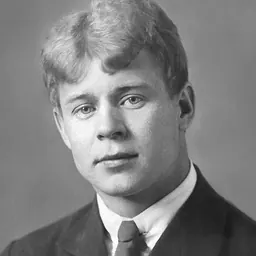
Related people
Same field, nearest in time

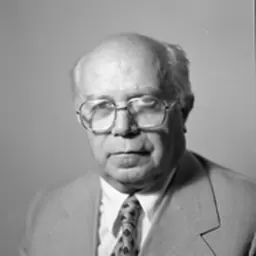
Contemporaries
People whose lives overlapped Alexander Kronrod's


Frequently asked questions
Who was Alexander Kronrod?
Soviet mathematician (1921–1986)
When was Alexander Kronrod born?
Alexander Kronrod was born on 22 October 1921 in Moscow.
When did Alexander Kronrod die?
Alexander Kronrod died on 6 October 1986 in Moscow.
What was Alexander Kronrod's occupation?
Alexander Kronrod was a mathematician, economist and computer scientist.
What nationality was Alexander Kronrod?
Alexander Kronrod was Russian.
Sources & further reading
· Wikipedia: Alexander Kronrod
Cite this page
APA: Biography.guide. (2026). Alexander Kronrod. https://biography.guide/alexander-kronrod/
MLA: "Alexander Kronrod." Biography.guide, https://biography.guide/alexander-kronrod/.
Chicago: "Alexander Kronrod." Biography.guide. https://biography.guide/alexander-kronrod/.
Data last updated: 2026-09-21 · Spot an error? Report a correction.
Portrait: Wikimedia Commons · author & licence
Page generated 2026-09-27 05:01 UTC