
About Alexander Forbes
Lived 1882 – 1965 (aged 82–83). Alexander Forbes was an American physician, explorer, neurophysiologist, teacher, writer and physiologist.
Alexander Forbes (May 14, 1882 – March 27, 1965) was an American electrophysiologist, neurophysiologist, and professor of physiology at Harvard Medical School. He "had an enormous impact on the physiology and neuroscience of the twentieth century."
Early life Born into the Boston Brahmin upper class Forbes family, Alexander Forbes's father was William Hathaway Forbes and his mother was Edith Emerson Forbes, the daughter of Ralph Waldo Emerson. From 1889 to 1899 Alexander Forbes attended Milton Academy. There he particularly liked the physics and advanced Greek taught by James Hattrick Lee. For the academic year 1899–1900, Forbes did not pursue formal education but spent time on the Forbes family's Wyoming cattle ranch, camped in the Bighorn Mountains, worked briefly in a Maine electro-chemical mill, and traveled in the Pacific Coast states until the beginning of summer 1900; during that summer he visited "Switzerland, France, Holland, England, and Scotland."
In the autumn of 1900 he matriculated at Harvard College, where he graduated in 1904 with an A.B. As an undergraduate student, he joined several clubs, including the Institute of 1770, the Hasty Pudding Theatricals, the Signet Society, and Delta Phi. For the academic year 1904–1905, he was a graduate student in zoology, learning rudimentary electrophysiology under the supervision of George Howard Parker. After receiving his A.M. degree in 1905, Forbes spent another year away from formal education. He and one of his brothers camped in a cabin on the shore of Wyoming's Lake Solitude. They chopped wood, hunted elk, and studied books on chemistry and astronomy.
From 1906 to 1910 he studied medicine at Harvard Medical School. During those years he was the coauthor of a paper with William Ernest Castle, the coauthor of a paper with Lawrence Joseph Henderson, and the author of two papers without a coauthor. In 1910 Forbes received his M.D. degree.
He never became a medical intern and was never licensed to practice medicine. For the academic year 1911–1912 on an academic leave of absence, he studied under Charles Sherrington at the University of Liverpool and for a brief time under Keith Lucas at the University of Cambridge. In 1912 Forbes returned to Harvard Medical School with "new ideas, new techniques, and new equipment."
Career In Harvard Medical School's Department of Physiology, Forbes was an instructor from 1910 to 1921, an associate professor from 1921 to 1936, and a full professor from 1936 to 1948, retiring as professor emeritus in 1948.
The two 1915 papers by Forbes and Gregg "were landmarks, because for the first time there was the skilled application of electrical recording to central reflex phenomena." In 1920 he, with Catharine Thacher, used the Einthoven string galvanometer to record the first scientific application of an electron-tube amplifier in nerve physiology. Forbes's most influential paper is perhaps The interpretation of spinal reflexes in terms of present knowledge of nerve conduction (1922), which had many suggestions for experimental tests and goals in neurophysiology. Hallowell Davis, Forbes's main collaborator over many years, that Forbes's 1922 paper on the interpretation of spinal reflexes is "one of the foundations of the new science of cybernetics."
In the summer of 1923, Forbes worked with Edgar Douglas Adrian at the University of Cambridge and occasionally visited Oxford to consult with Sherrington and to take lessons in piloting an airplane.
Forbes was the author or coauthor of over 100 scientific papers. (In addition to his scientific papers and his novel Radio Gunner he wrote a literary memoir entitled Quest for a Northern Air Route and several short stories. When the USA entered WW II, he went on academic leave from 1942 to 1946. At age 58 he returned to U.S. Navy as a lieutenant commander. After a variety of duties, he worked in the Hydrographic Office in Washington, D.C. until the end of WW II. He was promoted to commander in 1943 and to captain in 1945. In 1946 he was sent on the Operation Crossroads mission to map and measure the waves generated by the atomic bomb explosion on Bikini Atoll. Later in 1946, he returned to his professorship at Harvard Medical School.
Awards and honors Forbes was elected in 1910 as a member of the American Physiological Society and served as the society's treasurer from 1927 to 1937. and in 1928 a fellow of the American Physical Society. He was elected in 1931 a member of the American Philosophical Society and in 1936 a member of the United States National Academy of Sciences. The expedition, known as the Forbes–Grenfell expedition, compiled valuable maps of the coast of Labrador. Sir Wilfred Grenfell was the ship's doctor. In 1935 Forbes, as a relief pilot and photographer, accompanied only by a pilot who was also a skilled mechanic, made an eleven-day aerial expedition to photograph the region near Cape Chidley. He continued to attend scientific meetings until the last year of his life.
Don’t just read it —
keep it.
Full-length biographies made to live with: read them, listen on the way to work, watch them tonight.
- E-book
- Audio
- Video
Instant download · yours to keep · every purchase keeps this site free
Important facts
People in Alexander Forbes's life
Named in this biography and alive at the same time




Related people
Same field, nearest in time


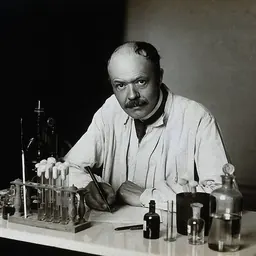
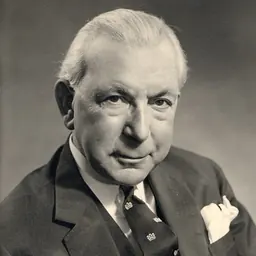

Contemporaries
People whose lives overlapped Alexander Forbes's

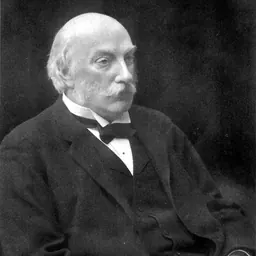



Frequently asked questions
Who was Alexander Forbes?
American neurophysiologist (1882-1965)
When was Alexander Forbes born?
Alexander Forbes was born on 14 May 1882 in Milton.
When did Alexander Forbes die?
Alexander Forbes died in 1965 in Milton.
What was Alexander Forbes's occupation?
Alexander Forbes was a physician, explorer, neurophysiologist, teacher, writer and physiologist.
What nationality was Alexander Forbes?
Alexander Forbes was American.
Sources & further reading
· DBpedia: Alexander Forbes (neurophysiologist)
Cite this page
APA: Biography.guide. (2026). Alexander Forbes. https://biography.guide/alexander-forbes-physician/
MLA: "Alexander Forbes." Biography.guide, https://biography.guide/alexander-forbes-physician/.
Chicago: "Alexander Forbes." Biography.guide. https://biography.guide/alexander-forbes-physician/.
Data last updated: 2026-09-20 · Spot an error? Report a correction.
Page generated 2026-09-27 05:12 UTC