
About Alexander Ewing
Lived 1830 – 1895 (aged 65). Alexander Ewing was a British composer, translator and army officer.
Alexander Ewing (3 January 1830 – 11 July 1895) was a Scottish musician, composer and translator. He was a career officer in the British Army's Commissariat Department and subsequently the Army Pay Corps. He composed the music for the popular hymn "Jerusalem the Golden".
Family and education
Ewing was born in Aberdeen, Scotland. His father, a medical doctor, was a cousin of the clergyman Alexander Ewing, who served as Bishop of Argyll and The Isles from 1847 until 1873. Ewing studied Music and German at Heidelberg University and Law in Aberdeen, but did not qualify as a lawyer. A member of the Aberdeen Harmonic Choir and the Haydn Society of Aberdeen, he was regarded as "the most talented young musician in the city".
"Jerusalem the Golden"
Ewing composed a tune for John Mason Neale's hymn "For Thee, O Dear, Dear Country" which was first performed by the Aberdeen Harmonic Choir. It was published as a leaflet in 1853 and later included in a Manual of Psalm and Hymn Tunes published in 1857. While he was serving overseas with the army, his relative the Bishop of Argyll and the Isles submitted the music to the editor of Hymns Ancient and Modern, where it appeared in 1861 as the tune for "Jerusalem the Golden". The hymn became very popular, but because the Bishop's name was also Alexander Ewing, he was generally believed to have written the tune. later a candidate for Australian National Anthem. From 1860 to 1866 he served in China, returning to England in 1866, and was with the army in Ireland during the 1867 Fenian Rising.
On their arrival in Fredericton the Ewings were befriended by Bishop John Medley and his wife. Ewing played the organ and sang in the choir at Christ Church Cathedral, where, his wife wrote in a letter to her family, "the choir generally are quite as much edified and charmed to see the author of "Jerusalem" & quite as much astonished to find (& still a little sceptical) that Argyll and the Isles is not the composer – as if we were all living in a small English watering place". Ewing also composed hymns for the cathedral choir.
On his return to England, Ewing was stationed at Aldershot Garrison. In 1870 he transferred from the Commissariat to the Army Pay Department. Ewing taught Smyth harmony, analyzed her own compositions, and introduced her to Wagner's operas. In her memoirs she described him as "a real musician" and "one of the most delightful, original, and whimsical personalities in the world".
In 1879 Ewing was posted to Malta and subsequently served in Ceylon (now Sri Lanka) before returning to England. He spent the last six years of his career in Taunton and retired in 1889. Juliana Ewing died in 1885 and Ewing was married a second time to Margaret Elizabeth Cumby (1842–1930). He died in Taunton in 1895.
Ewing's translations of Flowers, Fruit and Thorn Pieces by Jean Paul and The Serapion Brethren by E. T. A. Hoffmann were published by George Bell & Sons.
Don’t just read it —
keep it.
Full-length biographies made to live with: read them, listen on the way to work, watch them tonight.
- E-book
- Audio
- Video
Instant download · yours to keep · every purchase keeps this site free
Important facts
Family & relationships
People in Alexander Ewing's life
Named in this biography and alive at the same time

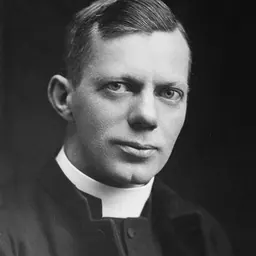

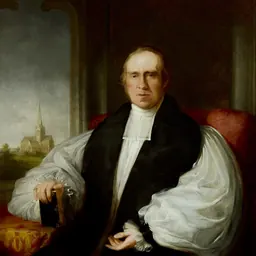
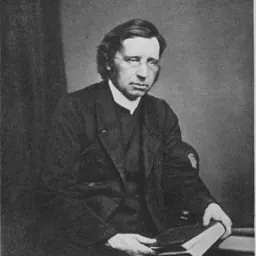
Related people
Same field, nearest in time


Contemporaries
People whose lives overlapped Alexander Ewing's





Frequently asked questions
Who was Alexander Ewing?
Scottish composer (1830-1895)
When was Alexander Ewing born?
Alexander Ewing was born on 3 January 1830 in Aberdeen.
When did Alexander Ewing die?
Alexander Ewing died on 11 July 1895 in Taunton.
What was Alexander Ewing's occupation?
Alexander Ewing was a composer, translator and army officer.
What nationality was Alexander Ewing?
Alexander Ewing was British.
Sources & further reading
· DBpedia: Alexander Ewing (composer)
Cite this page
APA: Biography.guide. (2026). Alexander Ewing. https://biography.guide/alexander-ewing-composer/
MLA: "Alexander Ewing." Biography.guide, https://biography.guide/alexander-ewing-composer/.
Chicago: "Alexander Ewing." Biography.guide. https://biography.guide/alexander-ewing-composer/.
Data last updated: 2026-09-22 · Spot an error? Report a correction.
Page generated 2026-09-27 05:21 UTC