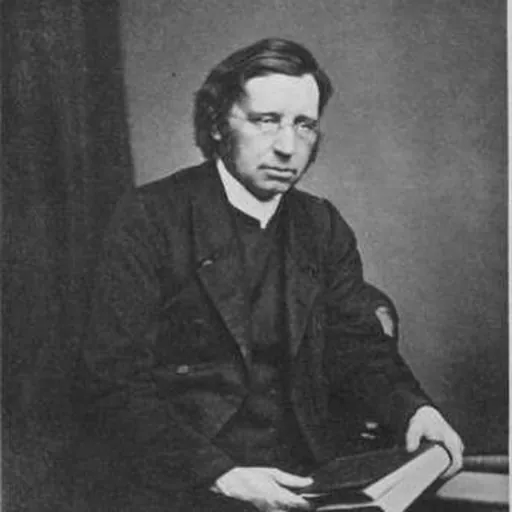
About John Mason Neale
Lived 1818 – 1866 (aged 48). John Mason Neale was a British theologian, priest, writer, hymnwriter, translator and anglican priest.
John Mason Neale (24 January 1818 – 6 August 1866) was an English Anglican priest, scholar, and hymnwriter. He worked on and wrote a wide range of holy Christian texts, including obscure medieval hymns, both Western and Eastern. Among his most famous hymns is the 1853 Good King Wenceslas, set on St. Stephen's day, known as Boxing Day in the UK. An Anglo-Catholic, Neale's works have found positive reception in high-church Anglicanism and Western Rite Orthodoxy.
Life Neale was born in London on 24 January 1818, his parents being the clergyman Cornelius Neale and Susanna Neale, daughter of John Mason Good. A younger sister Elizabeth Neale (1822–1901) founded the Community of the Holy Cross. He was educated at Sherborne School, Dorset, and Trinity College, Cambridge, where (despite being said to be the best classical scholar in his year) his lack of ability in mathematics prevented him taking an honours degree. Neale was named after the Puritan cleric and hymn writer John Mason (1645–94), of whom his mother Susanna was a descendant.
At the age of 22, Neale was the chaplain of Downing College, Cambridge. At Cambridge he was affected by the Oxford Movement and, particularly interested in church architecture, helped to found the Cambridge Camden Society (afterwards known as the Ecclesiological Society). The society advocated for more ritual and religious decoration in churches, and was closely associated with the Gothic Revival. Neale's first published address was made to the society on November 22, 1841. Neale was ordained in 1842. He was briefly incumbent of Crawley in Sussex but was forced to resign due to a chronic lung disease. The following winter he lived in the Madeira Islands, where he was able to do research for his History of the Eastern Church. In 1846 he became warden of Sackville College, an almshouse at East Grinstead, an appointment which he held until his death.
In 1854 Neale co-founded the Society of Saint Margaret, an order of women in the Church of England dedicated to nursing the sick. Many Protestants of the time were suspicious of the restoration of Anglican religious orders. In 1857, Neale was attacked and mauled at a funeral of one of the Sisters. Crowds threatened to stone him or to burn his house. He received no honour or preferment in England, and his doctorate was bestowed by Trinity College (Connecticut).
Neale was strongly high church in his sympathies, and had to endure a good deal of opposition, including a fourteen years' inhibition by his bishop. Neale translated the Eastern liturgies into English, and wrote a mystical and devotional commentary on the Psalms.
"All Glory, Laud and Honour" "A Great and Mighty Wonder" "O Blest Creator of the Light" "O come, O come, Emmanuel" "Of the Father's Heart Begotten" "Sing, My Tongue, the Glorious Battle" "To Thee Before the Close of Day" "Ye Sons and Daughters of the King" "Brief life is here our portion" "To thee, O dear, dear country" "Jerusalem the Golden" The last three are included in the poem of Bernard of Cluny, De Contemptu Mundi, translated by him in full.
Neale and Catherine Winkworth are commemorated together in the Calendar of Saints of the Evangelical Lutheran Church in America on 1 July, the anniversary of Winkworth's death. Neale was buried in St Swithun's churchyard, East Grinstead.
Works Sermons Sermons for the Black Letter Days (1868) Sermons for Children (1869) Sermons Preached in a Religious House (1869), volume one Sermons on the Blessed Sacrament (1870) Sermons on the Passages of the Psalms (1871) Three Groups of Sermons (1871) Occasional Sermons (1873) Sermons for the Church Year (1876) volume one Sermons Preached in Sackville College Chapel (1895) Vol. IV. Minor Festivals of the Church of England Sermons on Passages from the Prophets (1895), volume one
Hymns and carols
Neale's most enduring and widely known legacy is probably his contribution to the Christmas repertoire, most notably: Good Christian Men, Rejoice, Christmas carol Good King Wenceslas, his original legendary Boxing Day carol O come, O come, Emmanuel, Advent hymn translated from the "O Antiphons" for the week preceding Christmas
John Mason Neale also wrote the hymn: A Great and Mighty Wonder, translated from the Greek of St Germanus, although Neale incorrectly attributed it to St Anatolius.
Hymn-books Hymni ecclesiae e breviariis: quibusdam et missalibus gallicanis, germanis, hispanis, lusitanis (1851) Hymnal Noted (Novello, Ewer and Company, 1851) Accompanying Harmonies to The Hymnal Noted by John Mason Neale and Thomas Helmore, published under the sanction of the Ecclesiological society by Novello, Ewer (1852) Sequentiae ex missalibus : Germanicis, Anglicis, Gallicis, Aliisque medii aevi, collectae (1852) Mediaeval Hymns and Sequences, compiled by John Mason Neale, first edition 1851 Seatonian poems (1864) Hymns of the Eastern Church, translated with Notes and an Introduction 1870 edition compiled by John Mason Neale
Theological and historical books A History of the Holy Eastern Church (1847) An Introduction to the History of the Holy Eastern Church (1850, 2 vols) A short commentary on the Hymnal noted; from ancient sources (1852) The Bible, and the Bible only, the religion of protestants, a lecture (1852) The ancient liturgies of the Gallican Church: now first collected, with an introductory dissertation, notes, and various readings, together with parallel passages from the Roman, Ambrosian, and Mozarabic rites (1855) Mediæval preachers and mediæval preaching (1856) A history of the so-called Jansenist church of Holland; with a sketch of its earlier annals, and some account of the Brothers of the common life (1858) Voices from the East, documents on the present state and working of the Oriental Church (1859) Essays on Liturgiology and Church History (1863) A commentary on the Psalms by John Mason Neale and Richard Frederick Littledale (1868) A History of the Holy Eastern Church (1873) A Commentary on the Psalms: From Primitive and Mediaeval Writers by John Mason Neale and Richard Frederick Littledale (1874)
Books related to Cambridge Camden Society The history of pews: a paper read before the Cambridge Camden Society on Monday, November 22, 1841: with an appendix containing a report presented to the Society on the statistics of pews, on Monday, December 7, 1841 (1841) A few words to churchwardens on churches and church ornaments (1842) The symbolism of churches and church ornaments: a translation of the first book of the Rationale divinorum officiorum (1843) by John Mason Neale and Benjamin Webb
Novels Theodora Phranza; or, the Fall of Constantinople (1857)
Poetry Edom: A Seatonian Poem (1849) Sinai: A Seatonian Prize Poem (1857) Ruth: A Seatonian Poem (1860) Seatonian Poems (1864)
Don’t just read it —
keep it.
Full-length biographies made to live with: read them, listen on the way to work, watch them tonight.
- E-book
- Audio
- Video
Instant download · yours to keep · every purchase keeps this site free
Important facts
People in John Mason Neale's life
Named in this biography and alive at the same time





Related people
Same field, nearest in time



Contemporaries
People whose lives overlapped John Mason Neale's



Frequently asked questions
Who was John Mason Neale?
Anglican priest and hymnwriter
When was John Mason Neale born?
John Mason Neale was born on 24 January 1818 in London.
When did John Mason Neale die?
John Mason Neale died on 6 August 1866 in East Grinstead.
What was John Mason Neale's occupation?
John Mason Neale was a theologian, priest, writer, hymnwriter, translator and anglican priest.
What nationality was John Mason Neale?
John Mason Neale was British.
Sources & further reading
Cite this page
APA: Biography.guide. (2026). John Mason Neale. https://biography.guide/john-mason-neale/
MLA: "John Mason Neale." Biography.guide, https://biography.guide/john-mason-neale/.
Chicago: "John Mason Neale." Biography.guide. https://biography.guide/john-mason-neale/.
Data last updated: 2026-09-21 · Spot an error? Report a correction.
Portrait: Wikimedia Commons · author & licence
Page generated 2026-09-27 04:58 UTC