
About Aleksandr Korotkov
Lived 1909 – 1961 (aged 51). Aleksandr Korotkov was a Russian military personnel, bandy player and spy.
Aleksandr Mikhaylovich Korotkov (; 22 November 1909 – 27 June 1961) was a Soviet intelligence officer and operative with the rank of major general. He became chief of foreign reconnaissance in the Soviet occupation zone in Germany in 1947 and chief of the KGB while he was stationed in East Germany in 1957. Korotkov was most notable as the intelligence officer who recruited Arvid Harnack in September 1940 and Harro Schulze-Boysen later in Berlin during the Nazi regime, effectively changing a resistance organisation who fought against Hitler into the espionage organisation known as the Red Orchestra. Korotkov was an associate of Ivan Serov.
Life Korotkov's father, Mikhail Korotkov was a banker who worked before the revolution at the Russo-Asiatic Bank in the Chinese city of Kuldzha. He had left his family even before Korotkov was born. His pregnant wife Anna, returned to Moscow where she brought up Aleksandr and her daughter Nina alone. who later escaped to the West. The task of the group was to develop the Second Bureau (Intelligence) of the French General Staff and conduct recruitment in its most important units. In Paris, he was ordered to enroll in an anthropology course at the Sorbonne as cover and enroll as a student to learn wireless telegraphy. There he received a number of valuable agents, as part of Operation Krona. and in July of the next year – the secretary of the international association of Trotskyists, Rudolf Klement. According to Pavel Sudoplatov, the execution of Georges Agabekov was organised in Paris in August 1937 by Korotkov. However, after sending a letter to Lavrentiy Beria, (an astonishing act) Korotkov was reinstated in the intelligence service. From April 1939 he became the Senior Commissioner, and from May 1939, the Deputy Chief of the 1st (German) Division of the 5th Department of the NKVD Main Directorate of State Security. In the same year he was admitted as a member of the All-Union Communist Party of Bolsheviks.
At the end of 1939, he went on overseas missions to Denmark and Norway At the end of August 1940, he returned to Berlin as deputy chief of staff under the cover of 3rd secretary of the Soviet embassy in Germany. There he intensified his re-established connections, in particular with Willi Lehmann ("Breitenbach"), and established personal contacts with the leaders of the anti-fascist underground, Arvid Harnack ("Corsican") and Harro Schulze-Boysen ("Starshina") where he was known as Alexander Erdberg. From these anti-fascists, the Residency received the most valuable information on the preparation of Germany for an attack on the Soviet Union. During a year of work, Korotkov managed to increase the residence in Germany from one employee to 13 people. For his work he earned the nickname "King of the Illegals". Korotkov was eventually interned as a staff member of the Soviet Union's diplomatic mission in Germany. He eventually returned to Moscow via Turkey as part of the Soviet–German exchange of diplomats. From August 1941 onwards, he was deputy chief and from October 1941 – head of the 1st department (intelligence in Germany and the occupied territories), of the NKVD of the USSR. From 28 May 1953, he was promoted to Head of the Voronezh State University of the Ministry of Internal Affairs of the USSR. From 17 July 1953, he became Head of the Illegal Intelligence Department of the Voronezh State University. From March 1954, Korotkov became acting Head of the Special Administration (HP), Acting Deputy Head of the PSU. From 6 September 1955, he was head of the Special Directorate and deputy head of the PGU under the Council of Ministers of the Soviet Union. On 4 January 1956 Korotkov was awarded the rank of Major General.
Awards and honours On 26 June 1953, Korotkov was awarded the Order of Lenin Six Orders of the Red Banner 5 November 1944 2 March 1945 20 July 1949 26 August 1954, 18 December 1956
21 April 1945, Korotkov was awarded the Order of the Patriotic War, 1st class Korotkov was awarded the Order of the Red Star on 20 September 1943 and again on 3 November 1944
Korotkov was awarded the following badges:
Badge of Honour for Honorary Worker of the VChK-GPU (XV) on 9 May 1938 Badge of "Honoured Worker of the NKVD" awarded on 27 April 1940 Badge "Honorary officer of State Security Czechoslovak Order of the Cross of Battle in 1939 Order of the Partisan Star (Yugoslavia) in 1946 Order of the GDR "For Services to the Fatherland" in gold in 1958 Polish state awards
Don’t just read it —
keep it.
Full-length biographies made to live with: read them, listen on the way to work, watch them tonight.
- E-book
- Audio
- Video
Instant download · yours to keep · every purchase keeps this site free
Important facts
People in Aleksandr Korotkov's life
Named in this biography and alive at the same time



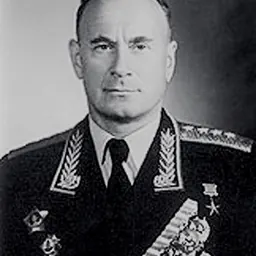

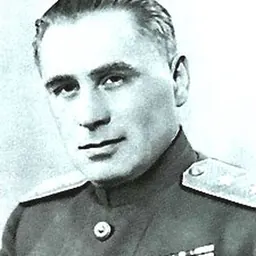


Related people
Same field, nearest in time

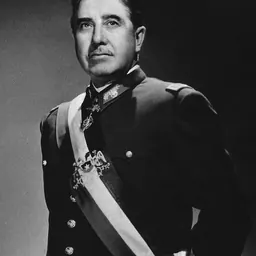

Contemporaries
People whose lives overlapped Aleksandr Korotkov's


Frequently asked questions
Who was Aleksandr Korotkov?
Russian intelligence operative (1909-1961)
When was Aleksandr Korotkov born?
Aleksandr Korotkov was born on 22 November 1909 in Moscow.
When did Aleksandr Korotkov die?
Aleksandr Korotkov died on 27 June 1961 in Moscow.
What was Aleksandr Korotkov's occupation?
Aleksandr Korotkov was a military personnel, bandy player and spy.
What nationality was Aleksandr Korotkov?
Aleksandr Korotkov was Russian.
Sources & further reading
· Wikipedia: Aleksandr Korotkov
· DBpedia: Aleksandr Mikhaylovich Korotkov
Cite this page
APA: Biography.guide. (2026). Aleksandr Korotkov. https://biography.guide/aleksandr-korotkov/
MLA: "Aleksandr Korotkov." Biography.guide, https://biography.guide/aleksandr-korotkov/.
Chicago: "Aleksandr Korotkov." Biography.guide. https://biography.guide/aleksandr-korotkov/.
Data last updated: 2026-09-26 · Spot an error? Report a correction.
Page generated 2026-09-27 05:15 UTC