
Harro Schulze-Boysen
German officer, commentator, and German Resistance fighter
About Harro Schulze-Boysen
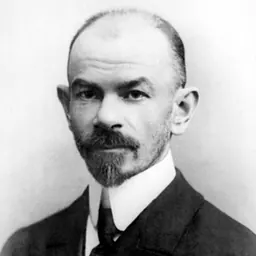
Lived 1909 – 1942 (aged 33). Harro Schulze-Boysen was a German military officer, resistance fighter, jurist, publisher and luftwaffe.
Heinz Harro Max Wilhelm Georg Schulze-Boysen (; Schulze, 2 September 1909 – 22 December 1942) was a left-wing German publicist and Luftwaffe officer during World War II. As a young man, Schulze-Boysen grew up in prosperous family with two siblings, with an extended family who were aristocrats. After spending his early schooling at the Heinrich-von-Kleist Gymnasium and his summers in Sweden, he partly completed a political science course at the University of Freiburg, before moving to Berlin in November 1929, to study law at the Humboldt University of Berlin. At Humboldt, he became an anti-Nazi. After a visit to France in 1931, he moved to the political left. When he returned, he became a publicist on Der Gegner (English: "The Opponent"), a left-leaning political magazine. In May 1932, he took control of the magazine, but it was closed by the Gestapo in February 1933.
In May 1933, Schulze-Boysen trained as a pilot and started working in the Ministry of Aviation. In the summer of 1934, he met the aristocrat Libertas Haas-Heye and married her in July 1936. The couple held regular dinner parties and evening-picnics that became formal meetings where many people from different stratas of society met and who were confessed anti-Nazis. By 1936, their house in Charlottenburg had become a popular meeting place and by 1937 the group began to resist. During the Spanish Civil War, Schulze-Boysen began collecting details of the Wehrmacht's involvement in the war from the ministry. He arranged for the documents to be passed to the Soviet embassy by Gisela von Pöllnitz. As he was promoted in the Ministry, Schulze-Boysen collected information that he used to write savage indictments of the Nazi plans. Their first leaflet was "Der Stoßtrupp" ("The Shock Troop") that criticised the plan for the invasion of Sudetenland. At the time, the documents were taken abroad.
At the beginning of the war, Schulze-Boysen met Arvid Harnack who was the leader of another political faction and they started to work together. As the war progressed their combined undercover political faction, developed from a resistance organisation into an espionage network from a small cadre of close friends, that began to collaborate with Soviet intelligence. The espionage network, led by Schulze-Boysen lasted slightly longer than a year, from just before June 1941 to August 1942 before a blunder by Soviet intelligence exposed their names and addresses to the German Funkabwehr, which resulted in the arrest of many members of the group, including Schulze-Boysen who was arrested on 31 August 1942 and executed later the same year.
Early life Schulze-Boysen was born in Kiel as the son of decorated naval officer and Marie-Luise (née Boysen). On his paternal side he was the grandnephew of Grand Admiral Alfred von Tirpitz and on the maternal side, the German economist and philosopher Ferdinand Tönnies. In 1913, the family moved to Berlin when his father received a posting. He had two siblings: a sister Helga, and a brother, Hartmut (1922-2013).
In 1913, Schulze-Boysen attended primary school and later the Heinrich-von-Kleist-Gymnasium in the district of Schmargendorf in Berlin. From 1920, he regularly spent his summer holidays with the Hasselrot family in Sweden. In 1922 his father was transferred to Duisburg, and Harro followed him in the autumn. As a student at the Steinbart Gymnasium in Duisburg, he participated in the underground struggle against the French occupation of the Ruhr in 1923 and was temporarily imprisoned by the French and Belgian occupying forces. To get him out of this political firing line, his parents organized a slightly longer stay in Sweden. Harro's trip to England in 1926 had inspired comparison and reflection. He had found that his experiences in the country did not match the perception of England within Germany.
In 1927 he wrote his first major newspaper report about a scandal in Duisburg to erect a monument to the sculptor Wilhelm Lehmbruck. On the occasion of the 80th birthday of the Reich President Paul von Hindenburg, Schulze-Boysen gave a commemorative speech at the school. His political involvement in high school was perceived as unusually intense. He passed the Abitur with the overall rating "good". His dexterity was particularly emphasized in the written and oral expression. At the time his spiritual attitude was in agreement with the values and traditions of the family. From then on, he appeared in public and in written statements with the double name Schulze-Boysen.
Political awakening In April 1928 he studied law and political science at the University of Freiburg and later Berlin, without finishing. In the same period he joined the Studentenverbindung Albingia and the Young German Order, a paramilitary organisation that influenced him ideologically at the time. Its goal was to ethically revive the "comradeship from the trenches of the First World War" as a model for the Volksgemeinschaft to be developed. It rejected any form of dictatorship from the ideological left or right.
In the summer of 1929 he participated in an academic fencing club at the university and a course from the Hochsee-Wehrsportverein high sea defense sailing club in Neustadt. In November he moved to the Humboldt University of Berlin to continue his studies in law and joined its International Students' Association. In 1930, Schulze-Boysen supported the intellectual-nationalist group called the Volksnationale Reichsvereinigung ("People's National Reich Association"). During this period, Schulze-Boysen was also a member of the National Socialist Black Front. For the first time during this period he dealt intensively with Nazi ideology and searched for the causes of the sudden victory of the Nazi Party in Reichstag elections in March 1933. He studied the Nazi Party's programme and read Mein Kampf in search of answers, describing it as a "jumble of platitudes" and commenting: "There's nothing here but nonsense". It became clear to him that a further gain in votes by the Nazis would lead to a sharp intensification and polarization in society.
As a publicist In July 1931, during a stay in France, Schulze-Boysen met French intellectuals associated with the magazine Plans, which sought the establishment of a Europe-wide collective economic system and whose influence resulted in him being reorientated politically to the left, though he still maintained his contacts with the nationalists. As time went on, he increasingly distanced himself from the views of the Young German Order as he realised that the daily struggle in Germany should primarily be directed against the emerging fascism and all reactionaries.
In 1932 and 1933, he published the left-liberal political magazine Der Gegner (English: "The Opponent"), that sought an alternative between capitalism and communism. It was founded in 1931 by Franz Jung and modelled on the Plans magazine. The poet Ernst Fuhrmann, the artist Raoul Hausmann, the writers Ernst von Salomon and Adrien Turel and the Marxist theoretician Karl Korsch, among others collaborated in writing the magazine. Their aim was to build a unified front of young people against the "liberal, capitalist and nationalist spirit" in Europe. For the French, Schulze-Boysen was the actor for Germany in this field. He tried to develop an independent German youth movement with the "Gegner-Kreis", which included Robert Jungk, Erwin Gehrts, Kurt Schumacher and Gisela von Pöllnitz and began to organize Enemy Evenings in Berlin cafés. "There was hardly an opposition youth group with which he did not keep in touch with." At the end of 1931, he took a leave of absence from his studies because he had come to the conclusion that the contents discussed here had nothing to do with the daily political disputes. In February 1932, Schulze-Boysen, in coordination with his French partners of Plans, organized the Treffen der revolutionären Jugend Europas or Meeting of Europe's Revolutionary Youth. A total of about 1,000 young people attended the meeting and he formulated the political goals for the German delegation. In view of the crisis in Germany, these consisted of the abolition of the capitalist system and also the assertion of Germany's own role without foreign diktat and interference.
In the search for alternatives to crisis-ridden Western Europe, he became more interested in the Soviet system, which was influenced by his disappointment with the national and conservative parties in Germany, who in his opinion did not fight the nascent Nazis enough. In March 1932, he wrote his first article, "Der Neue Gegner" (English: "The New Opponent") that defined his concept of publication goals, stating: "Let us serve the invisible alliance of thousands, who today are still divided." In April 1932, he wrote a letter to his mother that stated his goal was the intellectual reconciliation of the young generation. Essentially his politics were driven by the idea of a united youth fighting the older generations.
In May 1932, an investigation was opened against Jung and the office premises of the Der Gegner were sealed. Schulze-Boysen took over the business as the new editor and gave the publication a new name, Gegner (English: "opponent"), but with the same network of the most diverse political camps. At the depths of the crisis, he saw a clear opportunity to implement a new policy approach: "Opponents of today – comrades of tomorrow". He had become the leading head and the centre of the "enemy circle". Schulze-Boysen considered the seizure of power by Adolf Hitler to be probable at that time, but believed that he would soon be overthrown by a general strike. After the seizure of power by the Nazis and the Reichstag fire in Berlin, Schulze-Boysen helped several friends and colleagues who were being threatened to escape abroad. As early as February 1933 the Gestapo had rated the actions of the magazine as "radical" in an official communication, and in April 1933, the offices of Der Gegner were destroyed by the Sturmabteilung in a raid and detained all those present. The editorial staff were deported to a special camp of the 6th SS-Standarte. Schulze-Boysen himself was severely abused and detained for several days. The Sturmabteilung tortured his Jewish friend and colleague Henry Erlanger before his eyes, who died shortly afterwards. It had become clear to him, as a self-confessed anti-Nazi that he had to find new ways to implement his convictions. A chance encounter in the street led to Schulze-Boysen meeting the sculptor Kurt Schumacher, who had been working on Gegner with him. This was the beginning of the intellectual discussion group that would change into a direct-action, anti-fascist resistance group.
Military In May 1933, his father organized a pilot training course for him at the German Aviation School in Warnemünde as a sea observer to remove his son from the political front line in Berlin. The place was far away from Berlin and provided enough opportunity to allow Schulze-Boysen to reflect on his past and enable him to prepare plans for the future. Before his departure, he advised his friends and colleagues to look around Nazi Germany and to go into the institutions of the Nazi regime. He read books that the rulers appealed to and tried to return with due caution to his published work. In the spring of 1934, this resulted in an opportunity through a contact with the publisher Erich Röth. He published the magazine Wille zum Reich under a pseudonym and dealt with cultural policy issues but with the goal of undermining the Nazi movement with its own themes.
Every fortnight he held picnic-evenings in his apartment with interested parties in which they discussed philosophical and well as political questions. Under a pseudonym (presumably under the abbreviation E.R. for Erich Röth), Schulze-Boysen wrote individual editorials and essays. It was important for him to explore what possibilities of influence existed with regard to the new situation. From 10 April 1934 onwards, he was employed as an auxiliary officer in the fifth department, in the section Foreign Air Powers of the Ministry of Aviation (RLM) in Berlin. As an adjutant of the head of maritime aviation intelligence, he was responsible for evaluating the foreign literature and press on the subject of air armament. He analysed tactics, organisation, training and technology by studying foreign magazines, lectures, photo collections and journals.
Marriage
To protect himself from further persecution, Schulze-Boysen surrounded himself with a group of politically incorruptible friends who were left-leaning anti-fascists, among them artists, pacifists and Communists. In the summer of 1934, he met 20-year-old Libertas Haas-Heye while they were sailing on the Wannsee, who worked at Metro-Goldwyn-Mayer in Berlin as a press officer.
They married on 16 July 1936. The wedding took place in the chapel of under a painting of Guido Reni, with Hermann Göring giving away the bride. Liebenberg Castle was the ancestral estate of her parents. Schulze-Boysen spent his honeymoon in Stockholm as a language study trip for his employer and he submitted a confidential report upon his return. Haas-Heye was an impulsive woman of great personal ambition: she held evening discussions at her house, where she sought to influence her guests on behalf of Schulze-Boysen. She was fully aware of his activities in the resistance and supported the group by taking part in writing pamphlets, acting as a courier and helping to establish social contacts. Schulze-Boysen considered himself a libertine and the couple had an open marriage.
Schulze-Boysen's friends
In 1935, Walter Küchenmeister joined the group. Küchenmeister had known Schulze-Boysen since 1930, but had been reintroduced to him through Kurt Schumacher. Küchenmeister very quickly became an important member of the group and assumed the position of writer. In the same year, Schulze-Boysen visited Geneva, disguised as a private trip, for a series of lectures on international legal issues. The playwright Günther Weisenborn had known Schulze-Boysen since 1932 when he had met him at a left-wing student gathering and had become good friends. In 1937 Weisenborn had introduced the actor Marta Wolter to Schulze-Boysen and became part of the group. Walter Husemann, who at the time was in the Buchenwald concentration camp, would marry Marta Wolter and join the group. Other friends were found by Schulze-Boysen among former students of a reform school on the island of Scharfenberg in Berlin-Tegel. They often came from communist or social democratic workers' families, e.g. Hans and Hilde Coppi, Heinrich Scheel, Hermann Natterodt and Hans Lautenschlager. Some of these contacts existed before 1933, for example through the German Society of Intellectuals. John Rittmeister's wife Eva was a good friend of Liane Berkowitz, Ursula Goetze, Friedrich Rehmer, Maria Terwiel and Fritz Thiel who met in the 1939 abitur class at the secondary private school, Heil'schen Abendschule at Berlin W 50, Augsburger Straße 60 in Schöneberg. The Romanist Werner Krauss also joined. Through discussions, an active resistance to the Nazi regime grew. Ursula Goetze, who was part of the group, provided contacts with the communist groups in Neukölln.
Approaching war In January 1936, Schule-Boyzen completed basic military training in the 3rd Radio Intelligence Teaching Company in Halle and was promoted to corporal. In order to be promoted, he had to either prove an academic degree or take part in a reservist exercise. However, the Luftwaffe Personnel Office blocked this possibility because he was registered in the files as "politically unreliable". In September 1936 Hermann Göring asked the head of the human resources department, Colonel General Hans-Jürgen Stumpff, what reports they had on Schulze-Boysen. When he learned that Schulze-Boysen's political activities from the Weimar Era "would offer no guarantee of a positive attitude towards the National State", Göring replied that "the old calibre of new appointments should be accepted" and sent him on an aviator course. He completed his course in November in List on Sylt and was subsequently promoted to sergeant of the Reserve. Further courses followed in May and July 1936. In the meantime, he was also commissioned by the Reich Aviation Ministry to work on the handbook of the military sciences and the Luftwaffe magazine.
While he was taking his basic military training in Halle, he learned of the ban on the magazine Wille zum Reich. The atelier that he and Libertas had purchased together in Charlottenburg as their wedding apartment gradually became a popular meeting place for people who wanted to maintain social interactions with one another. A second discussion group developed in Libertas' parents' estate, in Liebenberg. Many former acquaintances from Der Gegner were also present. To safeguard these covered activities, some basic conspiratorial rules were agreed. Schulze-Boysen's code name was Hans when he attended these regular discussion groups.
Resistance
During the summer of 1936, Schulze-Boysen had become preoccupied by the Popular Front in Spain and through his position at the Reich Aviation Ministry, had collected detailed information of the support that Germany was providing. The documents were passed to the Antimilitarist Apparatus or AM-Apparat (Intelligence organisation) of the Communist Party of Germany.
At the end of 1936, Libertas Schulze-Boysen and Walter Küchenmeister, on the advice of Elisabeth Schumacher—wife of Kurt Schumacher—sought out Elfriede Paul, a doctor, who became a core member of the group.
The Spanish Civil War galvanised the inner circle of Schulze-Boysen's group. Kurt Schumacher demanded that action should be taken and a plan that took advantage of Schulze-Boysen's position at the ministry was formed. In February 1937, Schulze-Boysen compiled a short information document about a sabotage enterprise planned in Barcelona by the German Wehrmacht. It was an action from "Special Staff W", an organisation established by Luftwaffe general Helmuth Wilberg to study and analyse the tactical lessons learned by the Legion Condor during the Spanish Civil War. The unit also directed the German relief operations that consisted of volunteers, weapons and ammunition for General Francisco Franco's FET y de las JONS. The information that Schulze-Boysen collected included details about German transports, deployment of units and companies involved in the German defence. The group around Schulze-Boysen did not know how to deliver the information to the Soviets, but discovered that Schulze-Boysen's cousin, Gisela von Pöllnitz, was planning to visit the Exposition Internationale des Arts et Techniques dans la Vie Moderne that was held in Paris from 25 May to 25 November 1937. Von Pöllnitz fulfilled her mission and placed the letter in the mailbox of the Soviet Embassy on the Bois de Boulogne.
On 15 December 1942, Harro and Libertas, along with many close friends including the Harnacks, the Schumachers, Hans Coppi, John Graudenz and Horst Heilmann, were tried in the Reichskriegsgericht, the highest military court in Nazi Germany. The group was prosecuted by Manfred Roeder and tried by five military judges consisting of a vice admiral, two generals and two professional judges. Evidence was presented to the court by Roeder along with an indictment that contained a juridical estimation of the case. There was no jury and prosecution witnesses were Gestapo agents. At the end of the trial, Roeder demanded the death sentence. On 19 December, the couple were sentenced to death for "preparation for high treason" and "war treason".
Harro Schulze-Boysen was executed by hanging on 22 December 1942 at 19:05 in Plötzensee Prison in Berlin. Libertas Schulze-Boysen was executed by guillotine 90 minutes after her husband.
Their bodies were released to Hermann Stieve, an anatomist at what is now Humboldt University, to be dissected for research. When Stieve was finished with them, their remains were taken to the Zehlendorf crematorium. Their final resting place is unknown.
Honours
In 1964, the German Democratic Republic issued a special stamp series on the Communist Resistance, the 20+5-penny stamp that was dedicated to Schulze-Boysen. In 1967, The National People's Army News Regiment 14 was named after Schulze-Boysen. In 1969, Schulze-Boysen was posthumously awarded the Order of the Red Banner by the Soviet Union. In 1972 in the Berlin borough of Lichtenberg, a street is named after the Schulze-Boysens. The German Federal Finance Ministry has the following quote by Schulze-Boysen: "Wenn wir auch sterben sollen, So wissen wir: Die Saat Geht auf. Wenn Köpfe rollen, dann Zwingt doch der Geist den Staat." "Glaubt mit mir an die gerechte Zeit, die alles reifen lässt!" "Even if we should die, We know this: The seed Bears fruit. If heads roll, then The spirit nevertheless forces the state." "Believe with me in the just time that lets everything ripen." There is also a Schulze-Boysen-Strasse in Duisburg, Leipzig, Rostock, Magdeburg and Ludwigsfelde.
In 1983, the GDR issued a block of stamps in memory of the Schulze-Boysen/Harnack resistance group. In 1984, the sculpture Freedom Fighter by Fritz Cremer in Bremen was erected in memory of Mildred Harnack and Harro Schulze-Boysen at the Wilhelm Wagenfeld House in Bremen's Wallanlagen. In 1991, the picture Red Chapel Berlin (Tempera auf Nessel, 79 × 99 cm), painted by in 1941, was the picture of the month for July in the Westphalian State Museum of Art and Cultural History in Münster. In 2009, the Harro Schulze-Boysen-Weg was inaugurated on November 26 on the occasion of his 100th birthday in Kiel. In 2017, two Stolperstein were laid at Liebenberg Castle in memory of Harro and Libertas Schulze-Boysen.
Don’t just read it —
keep it.
Full-length biographies made to live with: read them, listen on the way to work, watch them tonight.
- E-book
- Audio
- Video
Instant download · yours to keep · every purchase keeps this site free
Important facts
Family & relationships
People in Harro Schulze-Boysen's life
Named in this biography and alive at the same time


Related people
Same field, nearest in time



Contemporaries
People whose lives overlapped Harro Schulze-Boysen's



Frequently asked questions
Who was Harro Schulze-Boysen?
German officer, commentator, and German Resistance fighter (1909–1942)
When was Harro Schulze-Boysen born?
Harro Schulze-Boysen was born on 2 September 1909 in Kiel.
When did Harro Schulze-Boysen die?
Harro Schulze-Boysen died on 22 December 1942 in Plötzensee Prison, Berlin.
What was Harro Schulze-Boysen's occupation?
Harro Schulze-Boysen was a military officer, resistance fighter, jurist, publisher and luftwaffe.
What nationality was Harro Schulze-Boysen?
Harro Schulze-Boysen was German.
Sources & further reading
· Wikipedia: Harro Schulze-Boysen
· DBpedia: Harro Schulze-Boysen
Cite this page
APA: Biography.guide. (2026). Harro Schulze-Boysen. https://biography.guide/harro-schulze-boysen/
MLA: "Harro Schulze-Boysen." Biography.guide, https://biography.guide/harro-schulze-boysen/.
Chicago: "Harro Schulze-Boysen." Biography.guide. https://biography.guide/harro-schulze-boysen/.
Data last updated: 2026-09-22 · Spot an error? Report a correction.
Page generated 2026-09-27 05:26 UTC