
About Walter Küchenmeister
Lived 1897 – 1943 (aged 46). Walter Küchenmeister was a German writer, machinist, communist, turner, editing staff and editing.
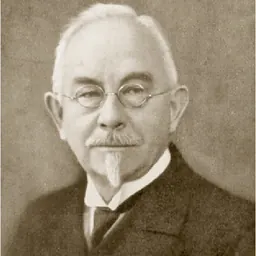
Walter Küchenmeister (9 January 1897 – 13 May 1943) was a German machine technician, journalist, editor, writer and resistance fighter against the Nazi regime. Küchenmeister was a member of the anti-fascist resistance group, that was later called the Red Orchestra by the Abwehr. Küchenmeister was notable for being part of the close group that constituted the Schulze-Boysen group of individuals.
Life Küchenmeister was the son of a shoemaker. After leaving elementary school, as a young man he worked ironworker and a miner, eventually gaining an apprenticeship as a turner.
Küchenmeister married Anna Auguste Küchenmeister née Lasnowski in Ahlen in 1926. They had two sons from the marriage, Rainer Küchenmeister who was born in 1926 and who would later be an artist and university professor and Claus Küchenmeister who was born in 1930 and was a writer.
Career In 1917 he volunteered to become a sailor the Imperial German Navy during World War I and on 3 November 1918 was part of the Kiel mutiny. At the end of the first world war he joined the Social Democratic Party of Germany. He also edited the communist newspaper, the Ruhr Echo in Essen, a position he held until 1926. To earn a living he became an advertiser and freelance writer. In the six years that followed he wrote a biography of the German preacher and radical theologian Thomas Müntzer and the German sculptor and woodcarver Tilman Riemenschneider. and tuberculosis
In 1935, Küchenmeister joined the resistance group in Berlin that was run by Harro Schulze-Boysen. Küchenmeister had known Schulze-Boysen since 1930, He was tasked with writing the content for the production of leaflets and pamphlets for the resistance group. This was often mixed with additional content from KPD sources. He also collaborated in producing the leaflets, as well as organising fundraising amongst friends and collaborators to raise money to help political prisoners and provide political education to Berlin students.
In 1937 Gisela von Pöllnitz was arrested by the Gestapo and the resistance group fearing discovery and arrest, temporarily disbanded. Küchenmeister travelled to Cologne to be close to the Netherlands border, in case he had to flee across the border but the group's fears were unfounded as Pöllnitz was released after a few months without giving up any details of the group. In 1937 and 1938 Küchenmeister continued his resistance activities. For example, in October 1938 Küchenmeister together with Schulze-Boysen wrote the leaflet entitled Der Stoßtrupp The Shock Troop for the imminent affiliation of the Sudetenland. Around 50 copies were mimeographed and distributed.
By April 1939 Küchenmeister's tuberculosis has advanced so much that Paul advised him to attend a sanatorium, recommending alpine air. Paul had obtained a guarantee of a cure for Küchenmeister and hoped he would recover completely. Both Küchenmeister, Paul and the Schumacher's travelled to Leysin in Switzerland, finding the trip to be less suffocating than the Berlin under Nazi rule. The trip had a secondary agenda in that the small group were sent to meet the German actor, theatre and film director Wolfgang Langhoff, who represented the KPD in exile. The meeting did not go as planned as the KPD members were scattered to the wind due to Nazi purges and less inclined to listen to the message offered by the group of building and reactivating mass protests and building up their factory and regional bases. Indeed, they were dismissive of the group, calling them Ideologically dubious.
While he was based in Switzerland, Küchenmeister had extensive contact with Fritz Sperling, one of the founders of the Free-Germany Movement the section head of the Southern section of the KPD. Sperling maintained contact with Paul, reporting the slow progress of his treatment.
"Stolperstein" (stumbling block), Walter Küchenmeister, Sächsische Straße 63a, Berlin-Wilmersdorf, Germany. In early 1940, Küchenmeister returned to Germany to continue his resistance activities. In October and November 1940, Schulze-Boysen in conversation with the economist Arvid Harnack who also ran a resistance organisation in Berlin and the journalist Adam Kuckhoff about information sheets that he prepared weekly on the situation in Germany, his connections in Germany and the leaflets that he received from those connections. Küchenmeister continued to resist the Nazi state in the next two years as a core member of the Schulze-Boysen group up until his arrest.
Death Küchenmeister and Paul were arrested on 16 September 1942. On 6 February 1943 Küchenmeister was sentenced to death by the 2nd Senate of the Imperial War Court for belonging to the resistance organisation, the Red Orchestra. Küchenmeister was executed on 13 May 1943 in Plötzensee Prison in Berlin. KLK Calling PTZ is the initial wireless telegraphy calling sequence that was used by members of the Red Orchestra when they needed to transmit information to Soviet intelligence.
Don’t just read it —
keep it.
Full-length biographies made to live with: read them, listen on the way to work, watch them tonight.
- E-book
- Audio
- Video
Instant download · yours to keep · every purchase keeps this site free
Important facts
People in Walter Küchenmeister's life
Named in this biography and alive at the same time



Related people
Same field, nearest in time



Contemporaries
People whose lives overlapped Walter Küchenmeister's



Frequently asked questions
Who was Walter Küchenmeister?
German writer and machinist (1897–1943)
When was Walter Küchenmeister born?
Walter Küchenmeister was born on 9 January 1897 in Waldheim.
When did Walter Küchenmeister die?
Walter Küchenmeister died on 13 May 1943 in Plötzensee Prison.
What was Walter Küchenmeister's occupation?
Walter Küchenmeister was a writer, machinist, communist, turner, editing staff and editing.
What nationality was Walter Küchenmeister?
Walter Küchenmeister was German.
Sources & further reading
· Wikipedia: Walter Küchenmeister
· DBpedia: Walter Küchenmeister
Cite this page
APA: Biography.guide. (2026). Walter Küchenmeister. https://biography.guide/walter-kuchenmeister/
MLA: "Walter Küchenmeister." Biography.guide, https://biography.guide/walter-kuchenmeister/.
Chicago: "Walter Küchenmeister." Biography.guide. https://biography.guide/walter-kuchenmeister/.
Data last updated: 2026-09-20 · Spot an error? Report a correction.
Page generated 2026-09-27 05:09 UTC