
About Albert Paul Weiss
Lived 1879 – 1931 (aged 51). Albert Paul Weiss was an American psychologist, scientist and experimental Psychology, known for Behaviorism and Linguistics.
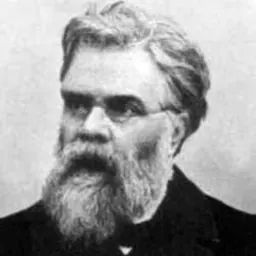
Albert Paul Weiss (September 15, 1879 – April 3, 1931) was a German American behavioral psychologist, theorist, scientist, and experimentalist. He was born in Steingrund, Germany. His family moved to the United States shortly after his birth and lived in St. Louis, MO. He was raised in a household of scholarly and philosophical interests although neither of his parents were highly educated. He attended University of Missouri for both undergraduate and graduate school and eventually earned his PhD there in 1916. Weiss initially planned on majoring in physics, mathematics, and philosophy until he was inspired by his professor Max Meyer to become a psychologist. After earning his PhD, he went to Ohio State University where he did research and taught up until his death. While in school, Weiss became interested in the physiological and sociological aspects of philosophy. He was interested in the role of language in human behavior and used biology, physics, and chemistry to examine human behaviors. He died of heart disease in 1931.
Professional accomplishments
As a scientist, Weiss emphasized the importance of applying scientific methods to studying non-physical concepts. He used his scientific background to change how psychological research methods were previously done. Weiss redefined the subject manner and problem being studied in more scientific terms. His language studies were one of the first of the time and as a result he is highly regarded by the Linguistic Society of America. In 1918 he was named Professor of Experimental Psychology, a title that he held until his death. He became the president of the Ohio Academy of Science in 1922 and also went on to become president of the Midwestern Psychological Association in 1929. He was a member of many academic societies including Phi Beta Kappa, Sigma Xi, Phi Delta Kappa, and Alpha Psi Delta. He was also an associate editor for The Journal of General Psychology.
Role in behavioral psychology
Weiss published A Theoretical Basis of Human Behavior in 1925 and went on to publish a second edition in 1929. Before him, no other researcher questioned what was parts of the nervous system were inherited and which (if any) were developed later on. He examined the anatomical central nervous system of various embryos to compare to human ones. He found that all human infants are born with the same sensori-motor pathways that make up the nervous system. He and a group of graduate students designed an apparatus meant to produce pure tones, control tone intensity, and control phase relations. The purpose of experiments using this apparatus was to determine how different types of sounds are produced and how they relate to each other. He also wanted to determine the threshold (limen) for intensities that can be perceived while measuring the amplification of the intensity.
Philosophies
Mind-body problem
Before becoming a scientist, Weiss was interested in philosophy. He sought to use his materialist and monist views to explain questions regarding the mind that were still being debated. He criticized psychologists for avoiding the mind-body problem and believed that using psychology was not enough to fully understand it. He used mechanics as an analogy to explain his understanding of the mind-body problem. He compared the mind to the pressure of a car steering wheel, which is able to change directions when the car is in motion. From there, he realized that there were internal and external conditions that were beyond our capabilities to perceive.
Consciousness
Weiss narrowed consciousness down to three elements: sensations, images, and feelings. These elements had psychical properties that were able to attribute to physical properties. The elements of physical properties were quality, intensity, extent and duration. Very few psychologists agreed with Weiss' physical elements. Weiss believed defining consciousness as experience was lacking because there was no way to expand upon this definition. Weiss proposed that consciousness was a motion, tying back into his automobile analogy.
Publications
Weiss has been widely published on a national and global scale. His first published work, A Theoretical Basis of Human Behavior, consisted mostly of his theoretical essays. After its publication, Weiss felt it was incomplete and later came out with a second edition of A Theoretical Basis of Human Behavior in 1929 which was an expansion and revision on the first edition. His studies have also been published in Journal of General Psychology, where he was an associate editor, and The Psychologies of 1930. He also published Psychological Monograph, which discussed his work in acoustics and included the patents of his sound apparatus. After observing infant anatomy, he wrote The Behavior of the Newborn Infant. One of the most unusual works that Weiss wrote was Psychological Principles of Automotive Driving, based on his studies done on human-machine relationships.
Don’t just read it —
keep it.
Full-length biographies made to live with: read them, listen on the way to work, watch them tonight.
- E-book
- Audio
- Video
Instant download · yours to keep · every purchase keeps this site free
Important facts
People in Albert Paul Weiss's life
Named in this biography and alive at the same time


Related people
Same field, nearest in time



Contemporaries
People whose lives overlapped Albert Paul Weiss's


Frequently asked questions
Who was Albert Paul Weiss?
Behavioral psychologist
When was Albert Paul Weiss born?
Albert Paul Weiss was born on 15 September 1879.
When did Albert Paul Weiss die?
Albert Paul Weiss died on 3 April 1931.
What was Albert Paul Weiss's occupation?
Albert Paul Weiss was a psychologist, scientist and experimental Psychology.
What was Albert Paul Weiss known for?
Albert Paul Weiss was known for Behaviorism and Linguistics.
What nationality was Albert Paul Weiss?
Albert Paul Weiss was American.
Sources & further reading
· Wikipedia: Albert Paul Weiss
Cite this page
APA: Biography.guide. (2026). Albert Paul Weiss. https://biography.guide/albert-paul-weiss/
MLA: "Albert Paul Weiss." Biography.guide, https://biography.guide/albert-paul-weiss/.
Chicago: "Albert Paul Weiss." Biography.guide. https://biography.guide/albert-paul-weiss/.
Data last updated: 2026-09-25 · Spot an error? Report a correction.
Page generated 2026-09-27 05:13 UTC