
About Albert Dunstan
Lived 1882 – 1950 (aged 67). Albert Dunstan was an Australian politician.
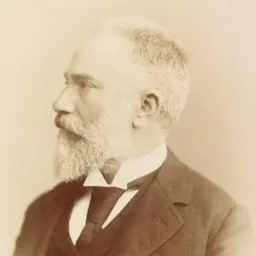
Sir Albert Arthur Dunstan, KCMG (26 July 1882 – 14 April 1950) was an Australian politician who served as the 33rd premier of Victoria from 1935 to 1943 and from 1943 to 1945 and as the third deputy premier of Victoria for five days in March 1935. A member of the Country Party, now the National Party, his term as premier was the second-longest in the state's history and the longest of any third-party premier. He was the first person to hold the office of premier in its own right, and not an additional duty taken up by the Treasurer, Attorney-General or Chief Secretary.
Early life Dunstan was born on 26 July 1882 at Donald East, a rural locality in the Mallee region of the colony of Victoria. He was the tenth son and thirteenth child born to Sarah (née Briggs) and Thomas Dunstan. His parents were immigrants from England, his father born in Cornwall and his mother in Norfolk.
Dunstan was educated at the local state school, leaving at a young age to work on the family's selection at Cope Cope where they grew wheat. In 1907 he moved to Queensland where he took up a "pioneer block" at Jondaryan, living in a tent. He returned to Victoria in 1909 and farmed at Goschen near Swan Hill. He later farmed at Kaneira, before establishing a sheep property at Kamarooka in 1918; he and his family lived in nearby Bendigo. Dunstan became Premier of Victoria when he and the Country Party unexpectedly withdrew his party's support for the Argyle Government.
Premier Argyle had fought the March 1935 election with an improving economy, a record of sound, if unimaginative, management. With the Labor Party opposition still divided and demoralised, he was rewarded with a second comfortable majority, his United Australia Party winning 25 seats and the Country Party 20, while Labor won only 17. But at this point he was unexpectedly betrayed by his erstwhile Country Party allies. Dunstan was a close friend of the gambling boss John Wren, who was also very close to the Labor leader Tom Tunnecliffe (in the view of most historians, Tunnecliffe was, in fact, under Wren's control).
Wren, aided by the Victorian Labor Party president, Arthur Calwell, persuaded Dunstan to break off the coalition with Argyle and form a minority Country Party government, which Labor would support in return for some policy concessions. Dunstan agreed to this deal, and on 28 March 1935 he moved a successful no-confidence vote in the government from which he had just resigned.
When the Attorney-General and Solicitor-General Lou Bussau resigned in 1938, Henry Bailey became Attorney-General while Dunstan added the portfolio of Solicitor-General to his offices of Premier and Treasurer.
The UAP (and later its successor the Liberal Party) never forgave the Country Party for this treachery. Henry Bolte, later Victoria's longest-serving premier, was 27 in 1935, and Dunstan's betrayal of Argyle lay behind his lifelong and intense dislike of the Country Party, whom he called "political prostitutes".
On 14 September 1943, Dunstan resigned when his government lost a vote of no confidence in the Victorian Legislative Assembly on the issue of electoral redistribution. For the next four days, Labor formed minority government with John Cain Sr. as Premier. On 15 September, the Cain government was defeated in the Legislative Assembly. Cain's motion to adjourn the parliament for over a week was defeated by the Country Party and the UAP, and Dunstan moved that Parliament resume the next day, giving notice that he would move a motion of no confidence against Cain's government, confident it would be carried by the CP–UAP alliance. Cain indicated that he would request a dissolution of parliament from the Governor, but if his request was refused, he would resign as Premier. On 17 September, Cain visited the Governor who refused his request for a dissolution, Cain then resigned and the Governor commissioned Dunstan to form a coalition government with the UAP, which was sworn in on Saturday 18 September.
Defeat and aftermath At the end of September 1945, the Dunstan government was defeated in the Legislative Assembly, when it voted to refuse Supply to his government. Five Liberal Party (successor of the UAP) members, two Country Party members and one Independent voted with the Labor Opposition, on the grounds of dissatisfaction with the government's legislative program and opposition to Dunstan's leadership. When it became clear that the Assembly would not grant Supply to the Dunstan Ministry, the Governor commissioned Ian Macfarlan, who was the Deputy Leader of the Liberal Party, as Premier on 2 October, ending Dunstan's term as Premier.
Dunstan resigned as leader of the Country Party after the 1945 state election, which saw the ALP make significant gains. He was succeeded by John McDonald. At McDonald's insistence, he returned to the ministry following the 1947 state election, which saw a Liberal–Country coalition government headed by Thomas Hollway. He was appointed Minister for Health, but served only until the coalition collapsed in November 1948.
Personal life In 1911, Dunstan married Jessie Chisholm, with whom he had six children. The family lived in Bendigo until 1943, when they moved to Melbourne. He died of coronary vascular disease at his home in Camberwell on 14 April 1950, aged 67.
Legacy A statue of Dunstan can be found at Treasury Place, East Melbourne. It is one of four statues in Premier's Lane honouring the longest-serving premiers of Victoria.
Don’t just read it —
keep it.
Full-length biographies made to live with: read them, listen on the way to work, watch them tonight.
- E-book
- Audio
- Video
Instant download · yours to keep · every purchase keeps this site free
Important facts
People in Albert Dunstan's life
Named in this biography and alive at the same time





Related people
Same field, nearest in time



Contemporaries
People whose lives overlapped Albert Dunstan's




Frequently asked questions
Who was Albert Dunstan?
Australian politician (1882–1950)
When was Albert Dunstan born?
Albert Dunstan was born on 26 July 1882 in Donald.
When did Albert Dunstan die?
Albert Dunstan died on 14 April 1950 in Camberwell.
What was Albert Dunstan's occupation?
Albert Dunstan was a politician.
What nationality was Albert Dunstan?
Albert Dunstan was Australian.
Sources & further reading
Cite this page
APA: Biography.guide. (2026). Albert Dunstan. https://biography.guide/albert-dunstan/
MLA: "Albert Dunstan." Biography.guide, https://biography.guide/albert-dunstan/.
Chicago: "Albert Dunstan." Biography.guide. https://biography.guide/albert-dunstan/.
Data last updated: 2026-09-20 · Spot an error? Report a correction.
Page generated 2026-09-27 05:21 UTC