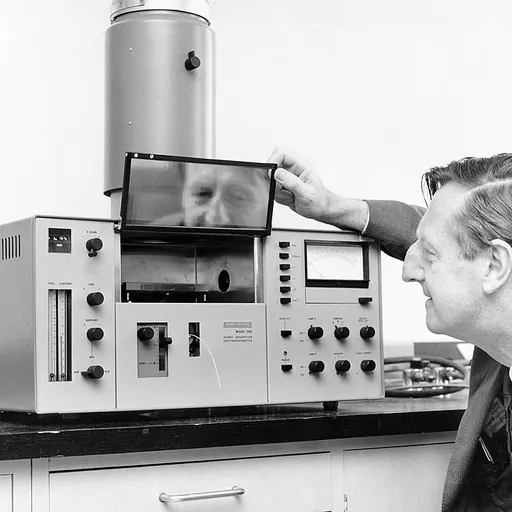
About Alan Walsh
Lived 1916 – 1998 (aged 81). Alan Walsh was an Australian physicist and chemist, known for Atomic absorption spectroscopy.
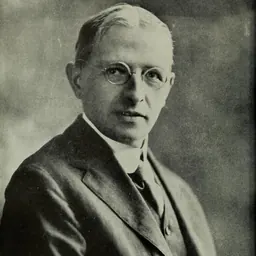
Sir Alan Walsh FAA FRS (19 December 1916 – 3 August 1998) was a British-Australian physicist, famous for being the originator and developer of a method of chemical analysis called atomic absorption spectroscopy.
Biography Walsh was born on 19 December 1916 and brought up in Hoddlesden, a small village about twenty miles from Manchester. He was the eldest son of Thomas Haworth Walsh, cotton mill manager, and Betsy Alice (née Robinson).
From the age of ten Walsh attended the local grammar school in the nearby town of Darwen, where he passed the Northern Universities Matriculation examination in 1933 and the Higher School Certificate examination in 1935. He then went to the University of Manchester to read physics. On graduation in 1938 he was also awarded a research scholarship, which he took up in the physics department, where he was particularly influenced by Henry Lipson’s suggestion that he work on the structure of β-carotene. Walsh spent on year at Manchester working on this, before moving to the physics section of the British Non-Ferrous Metals Research Association (BNF) in London, where he continued the theoretical work on the analysis. He was awarded an MSc (Tech) in 1944. While developing the method he discovered that it could not always be transferred uniformly from one laboratory to another, so he set about devising a General Purpose Source Unit. This generated a stable and reproducible source of discharge, essential in spectrographic emission work. He then assisted Hilger & Watts Ltd to develop a commercial version.
In 1945 Alan applied for the post of Research Officer for Spectroscopic Investigations at the Council for Scientific and Industrial Research (CSIR) in Melbourne. After a long delay, he was offered the job in March 1946, but he first had to spend 3–4 months in Gordon Sutherland’s lab in Cambridge, to gain experience in the new field of infrared molecular spectroscopy. This led to a paper on the structure of phthiocerane, the hydrocarbon derived from phthiocerol, found in tubercle bacilli.
Walsh arrived at CSIR, via laboratory visits in the USA, in April 1947. He set about installing the first operating infrared spectrometer in Australia, a Perkin-Elmer Model 12B. He soon realised that its resolution was insufficient for any but the lightest molecules, so he devised and patented a double-pass system, which was licensed to Perkin-Elmer.
Walsh is probably best known for his development of atomic absorption spectroscopy as an analytical tool. This is a complex story, recounted in detail by Hannaford. He retired from CSIRO on 5 January 1977, and in June was created a Knight Bachelor. In 1982 he was invited back to CSIRO as a senior research fellow.
Honours, awards, affiliations and degrees Medals and awards
Academic affiliations
Honorary degrees
The Australian Institute of Physics Alan Walsh Medal, awarded for significant contributions in physics by an Australian industrial physicist, is named in his honour.
Family
Soon after he emigrated to Australia Walsh met Sunderland-born nurse Audrey Dale Hutchinson, whom he married in 1949. They had two sons, Thomas Haworth and David Alan.
Alan Walsh died in Melbourne on 3 August 1998.
Don’t just read it —
keep it.
Full-length biographies made to live with: read them, listen on the way to work, watch them tonight.
- E-book
- Audio
- Video
Instant download · yours to keep · every purchase keeps this site free
Important facts
People in Alan Walsh's life
Named in this biography and alive at the same time



Related people
Same field, nearest in time



Contemporaries
People whose lives overlapped Alan Walsh's



Frequently asked questions
Who was Alan Walsh?
British-Australian physicist
When was Alan Walsh born?
Alan Walsh was born on 19 December 1916 in Hoddlesden.
When did Alan Walsh die?
Alan Walsh died on 3 August 1998 in Melbourne.
What was Alan Walsh's occupation?
Alan Walsh was a physicist and chemist.
What was Alan Walsh known for?
Alan Walsh was known for Atomic absorption spectroscopy.
What nationality was Alan Walsh?
Alan Walsh was Australian.
Sources & further reading
· DBpedia: Alan Walsh (physicist)
Cite this page
APA: Biography.guide. (2026). Alan Walsh. https://biography.guide/alan-walsh/
MLA: "Alan Walsh." Biography.guide, https://biography.guide/alan-walsh/.
Chicago: "Alan Walsh." Biography.guide. https://biography.guide/alan-walsh/.
Data last updated: 2026-09-21 · Spot an error? Report a correction.
Portrait: Wikimedia Commons · author & licence
Page generated 2026-09-27 05:00 UTC