
About Akaki Tsereteli
Lived 1840 – 1915 (aged 74). Akaki Tsereteli was a Russian and Georgian poet, writer, opinion journalist, translator and public figure.
Count Akaki Tsereteli (; 1840–1915), often mononymously known as Akaki, was a prominent Georgian poet and national liberation movement figure.
Early life and education Tsereteli was born in the village of Skhvitori, Imereti region of western Georgia on June 9, 1840, to a prominent Georgian aristocratic family. His father was Prince Rostom Tsereteli, his mother, Princess Ekaterine, a daughter of Ivane Abashidze and a great-granddaughter of King Solomon I of Imereti.
Following an old family tradition, Tsereteli spent his childhood years living with a peasant’s family in the village of Savane. He was brought up by peasant nannies, all of which made him feel empathy for the peasants’ life in Georgia. He graduated from the Kutaisi Classical Gymnasium in 1852 and the University of Saint Petersburg Faculty of Oriental Languages in 1863.
Career and legacy Tsereteli was a close friend of Ilia Chavchavadze, a Georgian progressive intellectual youth leader. The young adult generation of Georgians during the 1860s, led by Chavchavdze and Tsereteli, protested against the Tsarist regime and campaigned for cultural revival and self-determination of the Georgians.
He is an author of hundreds of patriotic, historical, lyrical and satiric poems, also humoristic stories and autobiographic novel. Tsereteli was also active in educational, journalistic and theatrical activities.
The famous Georgian folk song Suliko is based on Tsereteli’s lyrics. He died on January 26, 1915, and was buried at the Mtatsminda Pantheon in Tbilisi. He had a son, Russian opera impresario Alexey Tsereteli. A major boulevard in the city of Tbilisi is named after him, as is one of Tbilisi's metro stations.
Tsereteli is known for his Armenophobia. He attacked Armenians for their perceived mercantilism and portrayed them as a flea sucking Georgian blood in one fable.
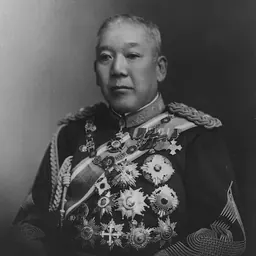
During the Russo-Japanese War (1904–1905), Akaki Tsereteli with the rest of the Georgian national movement celebrated Japan's victory through allegorical poetry designed to evade Russian censorship. In April 1905, Tsereteli published the poem Gurian Nana in the newspaper Iveria. Presented as a lullaby dedicated to a newborn child, the poem ends each stanza with the phrase "Oi amas venatsvale" ("I cherish this one" or "God bless this one"). However, the phrase "Oi amas" ("this one") also phonetically echoes the name of Ōyama Iwao, the Japanese commander, allowing the poem to covertly praise and glorify him. The motif of the newborn child further serves as an allegory for Japan itself — a young and rising power on the world stage.
Tsereteli translated The Internationale into Georgian in 1906.
Don’t just read it —
keep it.
Full-length biographies made to live with: read them, listen on the way to work, watch them tonight.
- E-book
- Audio
- Video
Instant download · yours to keep · every purchase keeps this site free
Important facts
Family & relationships
People in Akaki Tsereteli's life
Named in this biography and alive at the same time

Related people
Same field, nearest in time





Contemporaries
People whose lives overlapped Akaki Tsereteli's


Frequently asked questions
Who was Akaki Tsereteli?
Georgian writer (1840-1915)
When was Akaki Tsereteli born?
Akaki Tsereteli was born on 9 June 1840 in Skhvitori.
When did Akaki Tsereteli die?
Akaki Tsereteli died on 26 January 1915 in Sachkhere.
What was Akaki Tsereteli's occupation?
Akaki Tsereteli was a poet, writer, opinion journalist, translator and public figure.
What nationality was Akaki Tsereteli?
Akaki Tsereteli was Russian and Georgian.
Sources & further reading
Cite this page
APA: Biography.guide. (2026). Akaki Tsereteli. https://biography.guide/akaki-tsereteli/
MLA: "Akaki Tsereteli." Biography.guide, https://biography.guide/akaki-tsereteli/.
Chicago: "Akaki Tsereteli." Biography.guide. https://biography.guide/akaki-tsereteli/.
Data last updated: 2026-09-20 · Spot an error? Report a correction.
Page generated 2026-09-27 05:19 UTC