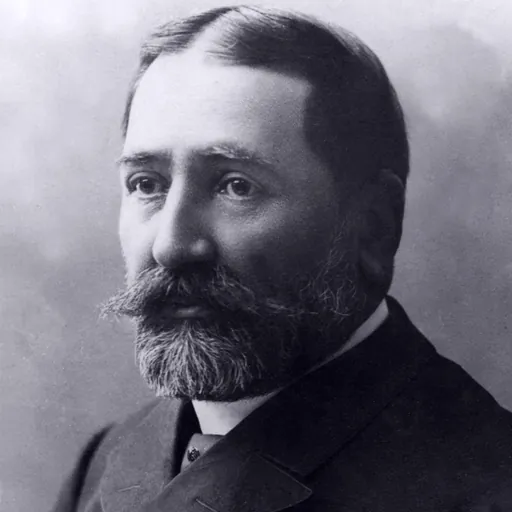
Ilia Chavchavadze
Georgian public figure and writer; a saint of Georgian Orthodox Church
About Ilia Chavchavadze
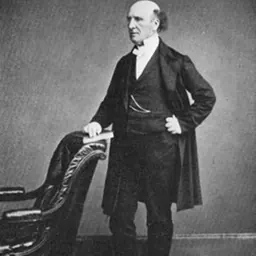
Lived 1837 – 1907 (aged 69). Ilia Chavchavadze was a Georgian politician, poet, publisher, philosopher, writer and historian.
Tavadi (Prince) Ilia Chavchavadze (; – 12 September 1907) was a Georgian journalist, publisher, writer and poet who spearheaded the revival of Georgian nationalism during the second half of the 19th century in the period of Tsarist rule. To this day, he has been called Georgia's "most universally revered hero"
He was a leader of contemporary youth intellectual movement named "Tergdaleulebi" which spread modern and European liberal ideals in Georgia. Chavchavadze founded two modern newspapers: Sakartvelos Moambe and Iveria.
He coined the phrase "Ena, Mamuli, Sartsmunoeba" ("Language, Homeland, Faith"), a slogan of Georgian nationalism.
After the 1905 Russian Revolution Chavchavadze's developed a keen interest in the national liberation movement for which he was elected as a representative of the Georgian nobility to the imperial State Council.
Chavchavadze was an outspoken critic of the Bolsheviks and considered the most influential Georgian writer in his day. Because of his great popularity he drew many people among the peasant class away from the idea of radical socialism, which is why many suspect was the reason for his assassination.
Chavchavadze was killed in Tsitsamuri, near Mtskheta, by a gang of assassins In 1907. It was generally believed that the Bolsheviks and the social Democrats were responsible for his death, but they were able to divert some suspicion against the Tsarist secret police. Local sources were scrutinized, leaving little doubt that the Bolshevicks were responsible for Chavchavadze's brutal death.
Biography
Early life Chavchavadze was born in Qvareli, a village in Kvareli, located in the Alazani Valley, in the Kakheti province of Georgia, which was part of the Russian Empire at that time. His mother, Mariam, died on 4 May 1848, when he was ten years old, and his father asked his sister, Makrine, to help bring up the children. After 1852, when his father Grigol died, she was the only remaining caretaker of the family.
The new generation of Georgian intellectuals, educated at Russian universities and exposed to European ideas, promoted national culture against assimilation by the Imperial center. Led by Chavchavadze, their program attained more nationalist colors as the nobility declined and capitalism progressed, further stimulated by the rule of the Russian bureaucracy and economic and demographic dominance of the Armenian bourgeoisie in the capital city of Tbilisi. Chavchavadze prominently founded "The Bank of the Nobility" of Tbilisi, to keep Georgian land from being sold off by poor Georgian nobles to Armenian bourgeoisie. In his work Outcrying Stones, Chavchavadze said Armenians falsified Georgian history, buying up Georgian land and appropriating Georgian churches, as well as indebting poor Georgian peasant families.
Chavchavadze said in his newspaper Iveria they were "eating the bread baked by someone else or drinking that which is created by another's sweat", and "sly moneylenders and unscrupulous traders". He also created slogan "Language, Homeland, Religion", which was a motto of Georgian nationalism. Chavchavadze and his associates called for the unity of all Georgians and put national interests above class and provincial divisions. They did not envisage an outright revolt for independence, demanding autonomy within the reformed Russian Empire, with greater cultural freedom, promotion of the Georgian language, and support for Georgian educational institutions and the national church, whose independence had been suppressed by the Russian government.
Chavchavadze knew Joseph Stalin when Stalin was an Orthodox seminarian in Tbilisi. According to historian Simon Sebag Montefiore: "The Prince was sufficiently impressed to show the teenager's work to his editors. He admired Stalin's verse, choosing five poems to publish – quite an achievement. Prince Chavchavadze called Stalin the 'young man with the burning eyes.'"
Death
After serving as a member of the Upper House in the first Russian Duma, Ilia decided to return to Georgia in 1907 where he advocated for a religious Georgian national identity. However, his views were considered to be in serious opposition and threat to those who felt compromised by the idea of a religious Georgian nationality, many of whom held an atheist ideology. Subsequently, on 28 August 1907, while traveling with his wife Olga from Tbilisi to Saguramo, Chavchavadze was ambushed and murdered by a crew of six assassins in the small village of Tsitsamuri, near Mtskheta. The assailants were ultimately captured and sentenced to death, where Chavchavadze's wife pleaded for their forgiveness, feeling that this is what Chavchavadze would have done.
The news coverage of his assassination was primarily limited to a single newspaper called Isari (ისარი).
Investigation In 1907, the Tsarist authorities launched investigation into Chavchavadze's death and arrested four suspects: Giorgi Khizanishvili, Ivane Inashvili, Gigola Modzghvrishvili and Tedo Labauri.
Theories The assassination of Ilia Chavchavadze remains controversial today. The Tsarist investigation concluded that the murderers were part of Bolshevik "Red Squad", while the Soviet investigation blamed the Tsarist secret police and administration for being involved in the assassination. The unofficial versions mostly blame Bolsheviks as well as Mensheviks for orchestrating the murder.efn Bolshevik unpopularity in Georgia was in part due to the widely held suspicion that they had been behind the murder of Ilia Chavchavadze in August 1907. Chavchavadze had publicly and very successfully undermined the growth of both Bolshevik and Menshevik factions of the Social Democratic Labour Party.
In 1998 Stephen Kinzer wrote: "Today leftists in Georgia embrace Chavchavadze for his hatred of injustice, centrists love him for his nonviolent humanism, and right-wing nationalists have adopted his slogan Motherland, Language, Faith." Faith, in this context, exclusively means Georgian Orthodoxy.
In 2006, Ilia State University was named after Ilia Chavchavadze. Streets and avenues named after him include Tbilisi's central avenue, Ilia Chavchavadze Avenue.
Published works Georgian Poetry: Rustaveli to Galaktion: A Bilingual Anthology. Translations by Lyn Coffin, with the assistance of Gia Jokhadze, featuring an introduction by Dodona Kiziria. Slavica, Bloomington, Indiana, 2013. Georgische Dichter. Translated and compiled by Arthur Leist, Dresden-Leipzig, 1887 (Poems of Ilia Chavchavadze and other Georgian poets, in German) The Hermit by Chavchavadze. Translated from the Georgian by Marjory Wardrop, London: Bernard Quaritch, 1895
Don’t just read it —
keep it.
Full-length biographies made to live with: read them, listen on the way to work, watch them tonight.
- E-book
- Audio
- Video
Instant download · yours to keep · every purchase keeps this site free
Important facts
more
Chavchavadze, I., Ilya, I. (Ilia), Cmida, Martʻali, Ilʹi︠a︡ Grigorʹevich, kni︠a︡zʹPeople in Ilia Chavchavadze's life
Named in this biography and alive at the same time


Related people
Same field, nearest in time





Contemporaries
People whose lives overlapped Ilia Chavchavadze's



Frequently asked questions
Who was Ilia Chavchavadze?
Georgian public figure and writer; a saint of Georgian Orthodox Church (1837-1907)
When was Ilia Chavchavadze born?
Ilia Chavchavadze was born on 27 October 1837 in Kvareli.
When did Ilia Chavchavadze die?
Ilia Chavchavadze died on 30 August 1907 in Tsitsamuri.
What was Ilia Chavchavadze's occupation?
Ilia Chavchavadze was a politician, poet, publisher, philosopher, writer and historian.
What nationality was Ilia Chavchavadze?
Ilia Chavchavadze was Georgian.
Sources & further reading
· Wikipedia: Ilia Chavchavadze
Cite this page
APA: Biography.guide. (2026). Ilia Chavchavadze. https://biography.guide/ilia-chavchavadze/
MLA: "Ilia Chavchavadze." Biography.guide, https://biography.guide/ilia-chavchavadze/.
Chicago: "Ilia Chavchavadze." Biography.guide. https://biography.guide/ilia-chavchavadze/.
Data last updated: 2026-09-20 · Spot an error? Report a correction.
Page generated 2026-09-27 05:10 UTC