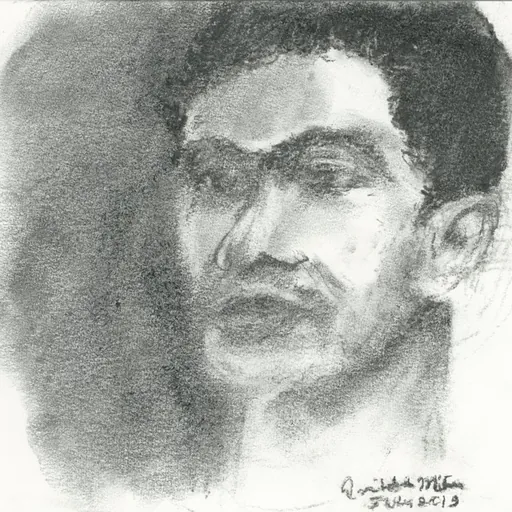
About Ahmed Timol
Lived 1941 – 1971 (aged 29). Ahmed Timol was a South African revolutionary and anti-apartheid activist, known for Internal resistance to South African apartheid.
Ahmed Timol (3 November 1941 – 27 October 1971) was an anti-apartheid activist in the underground South African Communist Party. He died at the age of 29 from injuries sustained when he fell from the top floor of John Vorster Square police station in Johannesburg. The claim was widely disbelieved in anti-apartheid circles, and in the movement Timol's death became symbolic of the broader phenomenon of deaths in police custody, as well as of the abuses and dishonesty of the apartheid state.
In 2017, the inquest into Timol's death was reopened. It found that Timol had been tortured in custody and had fallen from the window because he was pushed by police officers, not because he jumped. Timol was one of six children, with two sisters, Zubeida and Aysha, and three brothers, Ismail, Mohammed and Haroon. His father, a shopkeeper, came to South Africa in 1918, at the age of 12, from the Kholvad district of Surat in western India. Timol joined a semi-clandestine Roodepoort Youth Study Group while still a student at Johannesburg Indian High School, and became friends at school with the brothers Aziz Pahad and Essop Pahad, both of whom would become prominent anti-apartheid activists. left After working as a clerk for some years, Timol received a scholarship from the Kholvad Madressa in Surat to pursue a teaching course at the Johannesburg Training Institute for Indian Teachers, the only institution of higher education for Indians in the Transvaal at the time. He was Vice-Chairman of the Student Representative Council from 1962 to 1963, and the SRC became an affiliate of the National Union of South African Students in 1963.
After teaching for some time at a school in Roodepoort, in 1966 Timol left South Africa for Mecca for the Hajj. In Saudi Arabia, he met and was inspired by Yusuf Dadoo, leader of the Transvaal Indian Congress and later the Chairman of the South African Communist Party (SACP), and Moulvi Cachalia, an African National Congress (ANC) stalwart. He took up a teaching post at the Immigration School at Slough, which provided him with funds, became an active member of the National Union of Teachers and met Ruth Longoni, who worked for the Labour Monthly, a journal run by Rajani Palme Dutt of the Communist Party of Great Britain. The two came close to marrying, but Timol left for Moscow in the Soviet Union in 1969, as he had been selected to study at the International Lenin School. He was trained in Marxist-Leninist ideology, along with three fellow South Africans, one of them Thabo Mbeki, then a communist, later South African state president. After completing his training, Timol returned to London and received additional training for four weeks from Jack Hodgson, an SACP member in exile.
In February 1970, Timol returned to Roodepoort and resumed teaching. He was active in the SACP and in Umkhonto we Sizwe (MK), the paramilitary wing of the ANC, though both had been banned in 1960. His political work included recruitment for the ANC, MK and SACP, producing and distributing pamphlets, and procuring equipment for underground structures. He died on 27 October, five days after his arrest, from injuries sustained when he fell from the tenth floor of John Vorster Square police station in Johannesburg. He was the first political detainee to die in Security Branch custody at John Vorster Square. The police claimed that he had jumped from a window, which his family disputed in the press. His death sparked nationwide shock, anger and demands for an inquiry. Support for such an inquiry came from a broad spectrum of the South African population that included the United Party (UP), various churches, the black South African Students Association, the Coloured Labour Party, and the Indian Congresses. In Durban, a packed meeting attended by people of all races called for a national day of mourning, which was observed on 10 November 1971.
An official inquest in 1972 ruled that his death had been a suicide. The presiding magistrate suggested that Timol had killed himself after disclosing sensitive information during interrogation, because he feared imprisonment, and because the SACP had instructed its members to kill themselves before betraying the party. George Bizos was part of the team representing Timol's family, as he had been in the original 1972 inquest. In October 2017, the second inquest found that Timol had been pushed out the window or off the roof by members of the Security Branch. The inquest also heard evidence that Timol had been tortured during his detention, including from Salim Essop, who had been detained and tortured alongside Timol but whose testimony had been excluded from the original inquest. The presiding Judge said that the officers holding Timol in custody were collectively responsible for his death, and that there was a prima facie case of murder under dolus eventualis against the two officers who had interrogated Timol that day, both of whom had died years earlier.
Legacy On 29 March 1999, President Nelson Mandela attended a ceremony at which Azaadville Second School in Krugersdorp was renamed after Timol. President Jacob Zuma posthumously awarded him the Order of Luthuli (Silver) in 2009,"for his excellent contribution and selfless sacrifice in the struggle against apartheid."
In the media The Chris Van Wyk poem "In Detention" (1979) is a satire of the explanations given to cover up Timol's Death Indians Can't Fly (2015), directed by Enver Samuel and edited by Nikki Comninos, is a documentary about Timol. The follow-up Someone to Blame – The Ahmed Timol Inquest (2018), also directed by Samuel, focuses on the reopening of the inquest.
Don’t just read it —
keep it.
Full-length biographies made to live with: read them, listen on the way to work, watch them tonight.
- E-book
- Audio
- Video
Instant download · yours to keep · every purchase keeps this site free
Important facts
People in Ahmed Timol's life
Named in this biography and alive at the same time




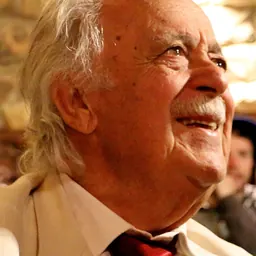

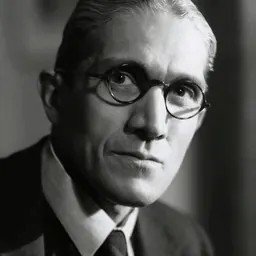

Related people
Same field, nearest in time

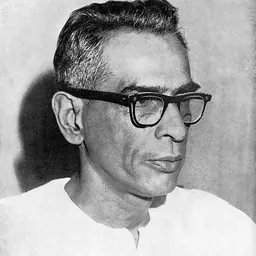




Contemporaries
People whose lives overlapped Ahmed Timol's


Frequently asked questions
Who was Ahmed Timol?
South African revolutionary
When was Ahmed Timol born?
Ahmed Timol was born on 3 November 1941 in Breyten.
When did Ahmed Timol die?
Ahmed Timol died on 27 October 1971 in Johannesburg, Johannesburg Central Police Station.
What was Ahmed Timol's occupation?
Ahmed Timol was a revolutionary and anti-apartheid activist.
What was Ahmed Timol known for?
Ahmed Timol was known for Internal resistance to South African apartheid.
What nationality was Ahmed Timol?
Ahmed Timol was South African.
Sources & further reading
Cite this page
APA: Biography.guide. (2026). Ahmed Timol. https://biography.guide/ahmed-timol/
MLA: "Ahmed Timol." Biography.guide, https://biography.guide/ahmed-timol/.
Chicago: "Ahmed Timol." Biography.guide. https://biography.guide/ahmed-timol/.
Data last updated: 2026-09-22 · Spot an error? Report a correction.
Portrait: Wikimedia Commons · author & licence
Page generated 2026-09-27 04:57 UTC