
About Rajani Palme Dutt
Lived 1896 – 1974 (aged 77–78). Rajani Palme Dutt was a British and Indian journalist, politician, communist and workers' Weekly (UK).
Rajani Palme Dutt (; 19 June 1896 – 20 December 1974) was a British political figure, journalist and theoretician who served as the fourth general secretary of the Communist Party of Great Britain during World War II from October 1939 to June 1941. His classic book India Today heralded the Marxist approach in Indian historiography.
Early life and family Rajani Palme Dutt was born in 1896 on Mill Road in Cambridge, England. His father, Dr. Upendra Dutt, was a Bengali surgeon, his mother Anna Palme was Swedish. Dr. Upendra Dutt belonged to the family of Romesh Chunder Dutt. Anna Palme was a great aunt of the future Prime Minister of Sweden Olof Palme. Rajani's sister was the statistician Elna Palme Dutt, who went on to become an official of the International Labour Organization in Geneva. He, along with his older brother Clemens Palme Dutt, was a founding member of the Communist Party of Great Britain.
Dutt was educated at the Perse School, Cambridge and Balliol College, Oxford where he obtained a first-class degree in Classics, after being suspended for a time because of his activities as a conscientious objector in World War I, during which his writing was deemed subversive propaganda.
On 5 August 1924, Palme Dutt married Salme Pekkala-Dutt, an Estonian-British communist politician, essayist, writer and translator, in Stockholm. Palme Dutt had come to Great Britain in 1920 as a representative of the Communist International.
Political career
alt=India Today, 1947 Edition, published by People’s Publishing House, Bombay, India. India Today, 1947 Edition, published by People’s Publishing House, Bombay, India. Dutt made his first connections with the Socialist Movement in England during his school days, before the outbreak of the First World War. He was expelled from Oxford University in October 1917 for organising a socialist meeting. He joined the British Labour Movement as a full time worker in 1919, when he joined the Labour Research Department, a left-wing statistical bureau. Together with Harry Pollitt he was one of the founder members of the Communist Party of Great Britain (CPGB) in 1920. In 1921 he founded a monthly magazine called Labour Monthly,
Dutt first visited the Soviet Union in 1923, where he attended deliberations of the Executive Committee of the Communist International (ECCI) relating to the British movement.
After Stalin's death, Palme Dutt's reaction to Nikita Khrushchev's Secret Speech played down its significance, with Dutt arguing that Stalin's "sun" unsurprisingly contained some "spots". A hardliner in the party, he disagreed with its criticisms of the Soviet invasion of Czechoslovakia in 1968 and opposed its increasingly Eurocommunist line in the 1970s. He retired from his party positions but remained a member until his death in 1974. According to the historian Geoff Andrews, the Communist Party of the Soviet Union was still paying the CPGB around £15,000 a year "for pensions" into the 1970s, recipients of which "included Rajani Palme Dutt".
The Labour History Archive and Study Centre at the People's History Museum in Manchester has Palme Dutt's papers in its collection, spanning from 1908 to 1971.
India visit
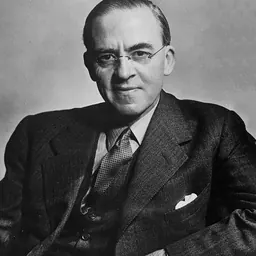
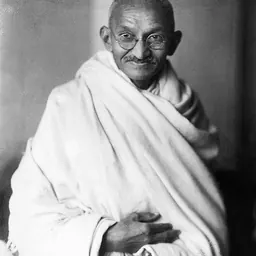
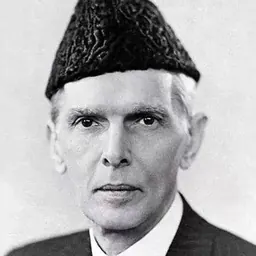
In 1946 the British Indian Government permitted RPD to visit his father's country for the first time since 1921, this time as a special correspondent for the Daily Worker. The visit lasted four months, during which he spoke at several rallies in different cities of India, all organised by the Communist Party of India. During this time he also interacted with many of that Party's workers, along with senior leaders including PC Joshi. During this visit he also met several important leaders of India including Mahatma Gandhi, Jawaharlal Nehru, Vallabhbhai Patel, Mohammad Ali Jinnah and Stafford Cripps. He was also invited by newly-built All India Radio for a broadcast. His visit had such a profound effect upon Indian Communists that when they established the headquarters of their “People’s Publishing House (PPH)” in Jhandewalan, Delhi, between 1956 and 1958 they named the building the “R. Palme Dutt Bhawan” (Bhawan meaning Building) after RPD. On that building's second floor stairwell hung a portrait of RPD taken during his 1946 visit to India, remaining there until very recently and now possibly hanging in the Party's headquarters at Ajoy Bhawan.
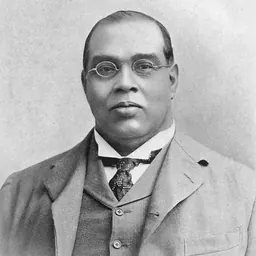
Works 1920: The Sabotage of Europe 1920: The Two Internationals 1921: Back to Plotinus, Review of Shaw's Back to Methusela: A Metaphysical Pentateuch 1921: Psycho-Analysing the Bolshevik, Review of Kolnai's Psycho-analysis and Sociology 1922: The End of Gandhi 1923: The British Empire 1923: The Issue in Europe 1925: Empire Socialism (pamphlet) 1926: The Meaning of the General Strike (pamphlet) 1926: Trotsky and His English Critics 1928: Indian Awakening 1931: India 1931: Capitalism or Socialism in Britain? (pamphlet) 1933: Democracy and Fascism (pamphlet) 1933: A Note on the Falsification of Engels' Preface to "Marx’s 'Class Struggles in France" 1934: Fascism and Social Revolution 1935: The Question of Fascism and Capitalist Decay 1935: British Policy and Nazi Germany 1935: The British-German Alliance in the Open 1935: For a united Communist Party : an appeal to I.L.P'ers and to all revolutionary workers 1936: In Memory of Shapurji Saklatvala 1936: Anti-Imperialist People's Front in India, written with Ben Bradley 1936: Left Nationalism in India Spain Organises for Victory: The Policy of the Communist Party of Spain.: On the Eve of the Indian National Congress, with Harry Pollitt and Ben Bradley 1936: "World Politics, 1918-1936" 1938: Review of Marx & Engels on the U.S. Civil War 1939: Why this War? (pamphlet) 1940: Twentieth Anniversary of the Communist Party of Great Britain 1940: India Today 1947: Declaration on Palestine, at the Empire Communist Parties Conference, London on 26 February to 3 March 1947 1949: Introductory Report on Election Programme 1953: Stalin and the Future 1953: The crisis of Britain and the British Empire (new and revised edition 1957) 1955: India Today and Tomorrow 1963: Problems of Contemporary History 1964: The Internationale 1967: Whither China?
Footnotes
Don’t just read it —
keep it.
Full-length biographies made to live with: read them, listen on the way to work, watch them tonight.
- E-book
- Audio
- Video
Instant download · yours to keep · every purchase keeps this site free
Important facts
Family & relationships
People in Rajani Palme Dutt's life
Named in this biography and alive at the same time




Related people
Same field, nearest in time



Contemporaries
People whose lives overlapped Rajani Palme Dutt's



Frequently asked questions
Who was Rajani Palme Dutt?
British communist and journalist (1896–1974)
When was Rajani Palme Dutt born?
Rajani Palme Dutt was born on 19 June 1896 in Cambridge.
When did Rajani Palme Dutt die?
Rajani Palme Dutt died in 1974 in London.
What was Rajani Palme Dutt's occupation?
Rajani Palme Dutt was a journalist, politician, communist and workers' Weekly (UK).
What nationality was Rajani Palme Dutt?
Rajani Palme Dutt was British and Indian.
Sources & further reading
· Wikipedia: Rajani Palme Dutt
Cite this page
APA: Biography.guide. (2026). Rajani Palme Dutt. https://biography.guide/rajani-palme-dutt/
MLA: "Rajani Palme Dutt." Biography.guide, https://biography.guide/rajani-palme-dutt/.
Chicago: "Rajani Palme Dutt." Biography.guide. https://biography.guide/rajani-palme-dutt/.
Data last updated: 2026-09-27 · Spot an error? Report a correction.
Page generated 2026-09-27 05:16 UTC