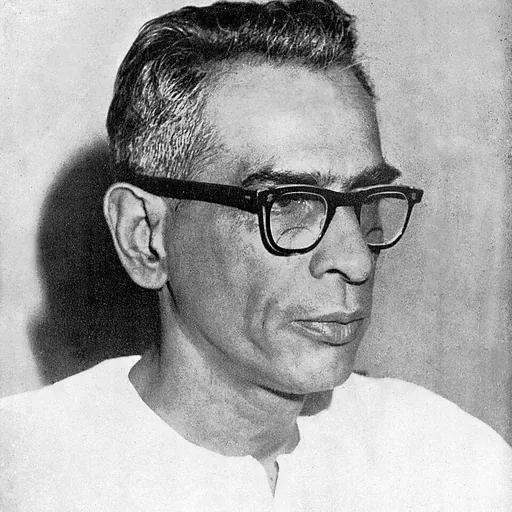
About Hare Krishna Konar
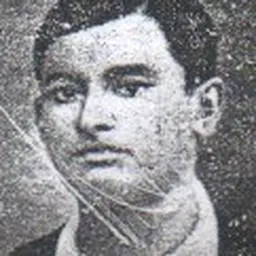
Lived 1915 – 1974 (aged 58). Hare Krishna Konar was an Indian revolutionary, politician and writer.
Hare Krishna Konar (ISO: Harē Kr̥iṣṇā Kōṅār, ; 5 August 191523 July 1974), also known as H. K. Konar, was an Indian Marxist revolutionary, agricultural theorist, peasant leader, and politician who was one of the founding members of the Communist Party of India (Marxist) and was the chief architect of India's first and largest agrarian reform in West Bengal. Between the 1960s and 1970s, he became one of the principal leaders of Communist movements in India. In 1932, Konar was deported to the Cellular Jail of the Andamans for 6 years at the age of 18 for his involvement in the Begut Robbery case of the Jugantar Party; there he took part in the first hunger strike, and in 1935 he founded the Communist Consolidation and led the historical second hunger strike.
Early life and nationalism (1915–1932) Hare Krishna Konar was born to a Bengali Ugra Kshatriya family on August 5, 1915, in Kamargoria, a village across the Damodar River in the Bardhaman district of the Bengal Presidency, British India. His father, Sarat Chandra Konar, was a well-known businessman and landlord of Burdwan who had a very close relationship with the ruler of Bardhaman Raj, Bijay Chand Mahtab, while his mother, Satyabala Konar, was a housewife. As Konar was born to a Zamindar family, eventually he grew up in a very privileged manner in an Indian-style joint family with his young siblings, as he was the eldest son of Sarat Chandra Konar and Satyabala Konar. There were no political or anti-government activists associated with his family; moreover, his father had good connections with British officials for his trade purposes.
Six years in Cellular jail (1932–1938) Hare Krishna Konar became known as the youngest face of the Indian Proletarian Revolutionary Party and was a firebrand mastermind behind many cases, but on September 15, 1932, he was caught and arrested in the Begut Robbery Case, despite the fact that Konar had been tracked by British officials for many months over his activities. Konar's detention came as a tremendous shock to his family, as Sarat Konar had already made all possible arrangements for Konar to move to London, England, for his further studies at the University of Oxford.
Konar was brutally tortured by police after his arrest and throughout his custody period. However, he tolerated all of the torture inflicted by the British police and never spoke about any revolutionaries or their future plans. In the special tribunal case, the police charged Hare Krishna Konar with robbery and murder under Sections 694 and 398 of the Indian Public Penal Code, respectively. Following his arrest, he was taken to Midnapore Central Jail, and the tribunal's decision was given in Calcutta High Court on January 20, 1933. During his court trial, Konar was asked whether he was guilty of his revolutionary activities against the British Empire. Konar replied:
After his address to the court, the judge stated:
After announcing the rigorous imprisonment, Hare Krishna Konar had no remorse for it. Again for a month he was kept in Midnapore Central Jail, and in February 1933, the Central Government, in consultation with the Government of Bengal, decided that all prisoners who had been sentenced for 5 years or more would be sent to the Kālā Pānī, that is, the Cellular Jail. As a result of the government's decision to give him the highest punishment of Kālā Pānī, at the age of 18, Konar was sent to the Cellular Jail of the Andaman and Nicobar Islands in April 1933 by the Maharaja ship of the British Empire. As a companion on the ship, Hare Krishna Konar got revolutionaries like Satish Pakrashi, Niranjan Sengupta, Dr. Narayan Roy, and Dr. Bhupal Basu convicted in the Mechuabazar Bomb Case or Dalhousie Bomb Case.
In 1937, the revolutionaries of the cellular jail began to feel the atmosphere of a world war, and the freedom fighters believed that before the war began, we should return to the mainland India to be with our people and take an active role in the Anti-war movement. After studying Marxism, Communism, and Socialism, the freedom fighters in jail identified themselves as political prisoners and wanted to seek treatment similar to those in other jails. On July 9, 1937, Shiv Verma and Hare Krishna Konar petitioned Viceroy and Governor-General, The Marquess of Linlithgow, stating:
But the viceroy, The Marquess of Linlithgow, did not respond, so on July 25, 1937, the 385 political prisoners went on hunger strike. Some of the other 80 prisoners were released by telling the jail authorities that they were going on personal business, but in reality they were going to propagate and encourage Indians to protest against the British government to transfer the prisoners from Andaman to the mainland, creating noise and protesting the forced feeding by the jailers. The prisoners also arranged to get information about Indian reactions to the hunger strike; it had already been agreed that newspapers containing Indian reactions would be smuggled into the jail via some warders and other contacts made with some of the local peoples. A nationwide movement on the mainland in support of demands of the Andaman freedom fighters began to be treated similarly to other political prisoners in other jails. There was a mass demonstration of working people, intellectuals, and students. This upsurge clearly showed that their people on the mainland did not forget them. After four weeks, telegrams from leaders of the nation, Jawaharlal Nehru, Subhas Chandra Bose, Mahatma Gandhi, etc., poured in imploring the freedom fighters to end their hunger strike. Even poet Rabindranath Tagore sent a letter to The Viceroy on 3 August 1937 stating that:
Letter to Hare Krishna Konar on 28 August 1937 by Mahatma Gandhi and the Congress Working Committee stating that:
After a lot of deliberation and discussion, this historic 36-day hunger strike of 200 revolutionary freedom fighters ended. The process of repatriation started on 29 November 1937. There were a total of 385 freedom fighters in jail at the time. 339 from Bengal, 19 from Bihar, 11 from Uttar Pradesh, 5 from Assam, 3 from Punjab, 2 from Delhi, and 2 from Madras, and most of the members of this organization, along with Hare Krishna Konar, were previously members of Jugantar and Anushilan Samiti or from Pro-Marxist groups. By January 1938, Konar was back in Bengal from the Cellular Jail of the Andaman and Nicobar Islands. At first, Hare Krishna Konar was kept in Dumdum Central Jail for some time and transferred to Burdwan Jail, from where he was finally released on 27 March 1938.
After being released from jail in 1938, he met with Muzaffar Ahmed, Abdul Halim, Bankim Mukherjee, and Bhupendranath Datta, with whom Konar worked before being imprisoned in 1932. After his release, he met with them again and became a member of the Communist Party of India, as well as being involved in mainstream Indian politics. From that year on, Konar's Communist movement and path of anti-capitalism and struggle for the rights of workers, peasants, and hardworking people began. He was one of the co-founders of Communist Party of India (Marxist) when it was formed from Communist Party of India in 1964. From 1957 he was a member of the West Bengal State Council of CPI. From 1964 until his death he was a member of West Bengal State Committee of CPI(M). From 1958 he was a member of National Council of CPI and from 1964 until his death he was a member of Central Committee of CPI(M). From 1954 until his death he was the Secretary of West Bengal Provincial Kisan Sabha (part of All India Kisan Sabha) and Member of central council of All India Kisan Sabha CPI. From 1968 until his death he was the General Secretary of All India Kisan Sabha CPI(M). He was also the Member of Chinese Communist Party, Communist Party of Vietnam, Communist Party of the Soviet Union and the Member of Trade Unions International of World Federation.
In West Bengal government
1957–1962In the West Bengal Legislative Assembly election of 1957, Hare Krishna Konar and Jamadar Majhi was elected as the representative of the Kalna constituency and the Communist Party returned as the second largest party with an increased representation. This platform enabled the Communist Party under the leadership of Jyoti Basu in West Bengal to exacerbate agitations against the prevalent food crisis in West Bengal by acting as the principal opposition on the floor of the assembly, increasing public awareness and providing a united front for agitators to rally around. In the following period the Communist Party underwent a vertical split with a section of the party including Hare Krishna Konar going on to form the Communist Party of India (Marxist). There were several ongoing ideological conflicts between sections within the Communist Party with regards to the nature of the Indian State and the characterisation and method of interaction with the Indian National Congress, with regards to the approach towards the ongoing debate between the Soviet Union and China and with regards to the handling of the border disputes between India and China. These debates were further exacerbated by the food movement in West Bengal and brought to the forefront by the rising border tensions between India and China. The Communist Party had also become the second largest party in the Lok Sabha following the 1962 Indian general election with nearly 10% vote share which is described to have brought prominence to the internal divisions of the party. Communist Party of India (Marxist) led United Left Front and the Communist Party of India and Bangla Congress (splinter of the Congress party formed in 1966) led People's United Left Front. The Communist Party of India (Marxist) became the second largest party outstripping its former party, the Communist Party of India. Following the election, the two alliances joined forces to form the United Front government in West Bengal. During the negotiations between the two alliances, Jyoti Basu was denied the position of chief minister due to opposition to the idea from the Communist Party of India and Bangla Congress, all of whom eventually settled for Ajoy Mukherjee of the Bangla Congress as the consensus candidate for the position while Jyoti Basu became the deputy chief minister and in-charge of the finance department and Hare Krishna Konar as the Minister of Land and Land Revenue.
1969–1971For the mid term West Bengal Legislative Assembly election of 1969, the United Front Committee was formed consisting of all the coalition partners of the previous government which agreed upon a pre-poll alliance to contest the election together under a 32-point programme. In addition during the negotiations Basu was able to secure the portfolios of fisheries, food, excise, labour, civil defence and education for the CPI-M as well as Minister of Land and Land Revenue was changed his name to Minister of Land and Land Reforms and the minister was Hare Krishna Konar.
The second United Front government however too fell within a short period of time, on this occasion the chief minister Ajoy Mukherjee resigned in March 1970 after facing an aggravated and dysfunctional government where smaller member parties were in confrontation with the Communist Party of India (Marxist), the largest among them on various issues. The government continued to be operational until the dissolution of the assembly by presidential proclamation on 30 July.
1971–1972In the following West Bengal Legislative Assembly election of 1971, the parties contested alone but Communist Party of India (Marxist) remained as the single largest party while increasing its number of seats from 80 to 113.
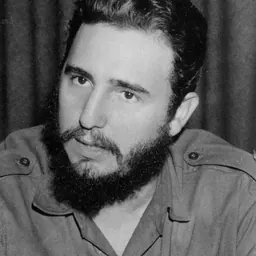
International Communist movement Konar knew many international languages, which include Chinese, German, Korean, Russian, Spanish, Vietnamese, etc. He was a member of the International Department of the Chinese Communist Party and a member of the International Department of the Communist Party of Vietnam. He attended the Communist Party of Cuba's conference at Havana, Cuba in 1970 and met with Fidel Castro; He attended the Progressive Party of Working People's conference at Nicosia, Cyprus in 1970; He has also attended the Communist Party of the Soviet Union's conference at Moscow, Soviet Union in 1971; He attended the Romanian Communist Party's conference and met with Nicolae Ceaușescu at Bucharest, Romania in the 1960s; He had also attended Workers' Party of Korea's conference at Pyongyang, North Korea in 1971 and met with Kim Il Sung; He attended Italian Communist Party's conference at Rome, Italy in 1971; He attended the Mexican Communist Party's conference at Mexico City, Mexico in 1973 and Socialist Unity Party of Germany's conference at Berlin, Germany in 1973. Konar was invited to several universities throughout the world for his contributions to land reform policy, including the University of Oxford, the University of Cambridge, Brown University in the United States, and many more.
It was a strange quirk of history that at each stage of West Bengal's two-phase land reforms, there was a stalwart to guide and lead the program. One was Hare Krishna Konar, the other Benoy Choudhury; both of them were totally committed to the cause, profound believers in the principles of Scientific socialism. The fearsome volatility of Konar was necessary to remove the immobility of the administration and to break the stranglehold of the landed gentry of West Bengal on society and the political establishment in the late sixties. The amiable Gandhian mode of accommodation of Benoy Choudhury was equally essential in another socio-political setting to carry a large majority of people with him for the success of the massive "Operation Barga". Each performed his unique role to carry out land reforms in two different historical situations. Soon after the first United Front (UF) government came to power in 1967, the first arrow of the now-famous Naxalbari movement was shot, killing inspector Wangeli of the West Bengal Police. The countryside was seething with discontent. It was a troubled time when Hare Krishna Konar became the land and land revenue minister. His talks with his old compatriot Kanu Sanyal, held in a jungle about 6 km away from the Sukna forest bungalow from midnight to early morning, had failed. The new government faced a militant peasant movement. Konar was convinced that any attempt to suppress the movement by the brute force of the repressive machinery of the state would help spread the movement through underground channels. Being a practitioner of the militant peasant movement himself, he knew the fish-in-the-water tactics of armed partisan action. He was determined to evaporate the water by weaning away the landless and land-poor peasantry by substantially meeting their land hunger. And that could be done only through the vesting of ceiling surplus land held clandestinely by the landed gentry of the state. Shortly after assuming power, Hare Krishna Konar appointed Parimal Bandyopadhyay as director of land records and surveys and put him in charge of unearthing land held "Benami" in excess of the ceiling and vesting it in the state through due process of law.
Ingenious strategy of Konar and Choudhury Though the United Front came to power with tremendous electoral support, it had to function strictly within the rigid parameters of the Indian Constitution, the established basic laws, judicial review of executive action, and set legal and administrative procedures and practices. Any threat to any of the established parameters would have led to a summary dismissal by the not-so-friendly central government. The political genius of Hare Krishna Konar lay in his ability to play his own ball game with the same set of rules that were apparently set against it. The Constitution of India guarantees the right to form associations and unions and to assemble peaceably. The Indian Evidence Act permits disbelief of documentary evidence on the strength of overwhelmingly reliable oral evidence. The Criminal Procedure Code (CrPC) (u/s 110) allows some sort of public participation for gathering evidence against a person allegedly engaged in "bad livelihood" in order to bind him down for good behavior. Nowhere is it stated that the restraining powers under the CrPC should always be used against the peasantry and workers. If the agricultural workers and sharecroppers assemble peacefully to espouse a cause, if public order was threatened by landowners, the latter could be restrained under the CrPC in the interest of maintenance of public order. Combine the essence of these constitutional and legal rights and procedures, and you have the "Konar" recipe of legal reform with popular participation. It was so simple, so bold, and so novel. Konar did not approve of the seizure and occupation by force of private property by peasants, even though such lands had in many cases been held 'benami'. Peasants, according to him, were conservative by nature. In their psyche, private property was inviolable. Having lost their land through the process of exploitation, they hankered for their land as their own property. Hence, illegal occupation of even illegally held land would not absolve them of the sense of guilt for an illegal and even immoral action. Therefore, they would not have the courage and determination to fight for their rights if threatened with eviction in a changed political situation. Konar, therefore, favored the legal way of vesting land in the state. Once the land became the property of the state, what would happen to it would be a matter of state policy, and no individual's property rights would be involved. It may look strange for a revolutionary, but being a hard-headed realist, it made sense to Konar.
Second phase
After the death of Konar in 1974, the land reform movement was carried out by Benoy Choudhury, and after the remarkable victory of the Left Front in the 1977 West Bengal Legislative Assembly election. After 1977, to implement land reform quickly, it was renamed Operation Barga. To implement Operation Barga, the government adopted the principle of people's participation in land reforms and collective action by the stakeholders. This movement was launched with the active assistance of not only the bargadars themselves but also of rural workers' organizations and self-governing institutions. To begin with, group meetings between officials and bargadars were organized during "settlement camps" (also called "reorientation camps"), where the bargadars could discuss their grievances. The first such camp was held at Halusai in the Polba taluk in the Hooghly district from 18 to 20 May 1978. Later, this became one of the most successful land reforms in India by carving out the legacy of Konar.
Konar's sister-in-law, Maharani Konar (wife of Benoy Krishna Konar), was a veteran communist leader and politician and one of the founding leaders of the All India Federation of Anganwadi Workers and Helpers. She was a member of the West Bengal State Committee of the Centre of Indian Trade Unions. Maharani Konar served as a member of the West Bengal Legislative Assembly, representing the Memari Assembly constituency for over 13 years.
Death In 1974, Konar was diagnosed with neck cancer because of his excessive smoking of cigarettes and cigars, and due to his critical condition, he immediately traveled to the United States for treatment. In the States, the doctors strictly mentioned to him not to smoke or speak loudly. He came back to India and was in a routine for a few months. However, throughout the 1970s, Indian and West Bengal politics were at their peak. So he initially ignored doctors' advice and began attending meetings and oratory.
After being released from jail in 1938, Konar joined India's mainstream communist movement, and during the 1964 split in the Communist Party of India, he stood for the leftist faction and became a founding member of the Communist Party of India (Marxist). Konar was a hardline believer in Karl Marx's social-political-economic philosophy, also known as Scientific socialism. According to Konar, scientific socialism deals with social, economic, and material phenomena by examining their historical trends through the use of the scientific method in order to derive probable outcomes and probable future developments, establishing seemingly rational propositions for organizing society and convincing others of their rationality or desirability. Konar sees social and political developments as being largely determined by economic conditions. Konar believes that social relations and notions of morality are context-based relative to their specific stage of economic development. He further noted that economic systems, socialism, and capitalism are not social constructs that can be established at any time based on the subjective will and desires of the population but instead are the products of social evolution. Konar described scientific socialism as a more practical-based theory that focuses on all aspects of land and other socioeconomic values in India, as well as the rural structure. Hence, his land reform effort followed the socialistic formula. He says towards this agrarian revolution that:
According to Konar, fundamental land reform is impossible in this state structure. So the campaign began to seek as much legally feasible and fundamental land reform in the state of West Bengal. The liberation of the country sparked a new surge of activity in the struggle for the liberation of exploited people. Konar turned down any prospects for comfort in his personal life. He knew how to read the minds of the villagers; agriculture was their primary source of income, and he was well-versed in agricultural issues. And because of his remarkable oratory, exceptional ability to understand the mindset of rural India, desire to reform Indian agricultural beliefs, and positive impact on working-class people's mindsets. Even the Union Cabinet Ministers used to fear him on any form of agricultural disagreements and issues, including Ashok Mitra, the Chief Economic Advisor to the Government of India, who once said:
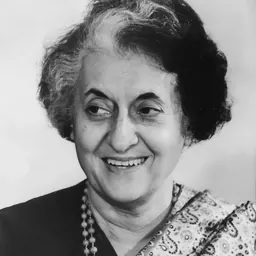
Despite the differences in ideology, the Prime Minister of India and Congress leader, Indira Gandhi, maintained to seek advice from Konar on land-related decisions. Even Indira Gandhi once sent Konar to the Lal Bahadur Shastri National Academy of Administration to conduct a seminar with the professors, faculties, and students about land reform implementation and other agricultural difficulties. Member of the National Council of the Communist Party of India 1960–1965 Elected to the 3rd West Bengal Legislative Assembly Member of the Central Committee of the Communist Party of India (Marxist) Member of the West Bengal State Committee of the Communist Party of India (Marxist) Member of the West Bengal State Secretariat of the Communist Party of India (Marxist) 1965–1974 Elected to the 4th West Bengal Legislative Assembly Minister of Land & Land Revenue of West Bengal General Secretary of All India Kisan Sabha Elected to the 5th West Bengal Legislative Assembly Minister of Land & Land Revenue of West Bengal Elected to the 6th West Bengal Legislative Assembly
Published books Pathera sandhāna(Published in 1976 by National Book Agency of India). Agrarian Problems of India(Published in 1977 by National Book Agency of India). Selected Works of Hare Krishna Konar(Published in 1977 by National Book Agency of India and it is a selected articles, letters and political background of Hare Krishna Konar).
Legacy
Recognition There was a major argument between MP Basudeb Acharia and MPs of the Bharatiya Janata Party in the Indian Parliament in 2002 when Andaman's Port Blair Airport was decided to be renamed as Veer Savarkar International Airport over the argument that Savarkar was a fake nationalist who had submitted numerous mercy petitions to the British government, and as a result, the airport shouldn't be named after Savarkar. This airport should be named after India's topmost leader, Hare Krishna Konar, who spent a ridiculous amount of time there and later became a national communist leader, so this airport ought to be dedicated in his honor. Although Acharia's demands were later ignored by the BJP, and the airport was named after Savarkar.
The headquarters of the West Bengal Provincial Kisan Sabha in Sealdah, Kolkata, was named after Hare Krishna Konar as the "Harekrishna Konar Smriti Bhavan".
A bridge on the Damodar River in Purba Bardhaman district was named after Hare Krishna Konar as "Harekrishna Konar Setu".
Three government libraries were named after Hare Krishna Konar as "Harekrishna Konar Smriti Pathagar": one in Natherdanga, Bankura district; one in Gangarampur, Dakshin Dinajpur district; and another one in his birthplace, Kamargoria, Purba Bardhaman district.
Many government schools have been named after him, such as "Hare Krishna Konar Smriti F P" in North 24 Parganas, "Harekrishna Konar Shiksha Niketan" in Purba Bardhaman, and many others in Purba Medinipur, Hooghly, Maldah, and Nadia.
Many streets have been named after Konar, such as "Hare Krishna Konar Road" in Kolkata, "Hare Krishna Konar Sarani" in Durgapur, and many others around West Bengal.
In popular culture In 1979, the Department of Information & Cultural Affairs of the Government of West Bengal made a biographical documentary film named "Comrade Harekrishna Konar", which was produced by Gour Saha and the Harekrishna Konar Memorial Agrarian Research Centre. This documentary was screened several times in Kolkata and Delhi during various campaigns. The film covers Konar's childhood days, revolutionary life, and political career and also includes an interview video of revolutionary Ganesh Ghosh.
Don’t just read it —
keep it.
Full-length biographies made to live with: read them, listen on the way to work, watch them tonight.
- E-book
- Audio
- Video
Instant download · yours to keep · every purchase keeps this site free
Important facts
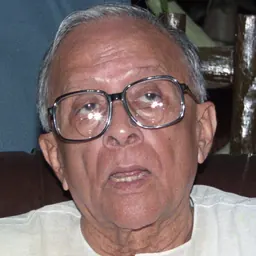
People in Hare Krishna Konar's life
Named in this biography and alive at the same time


Related people
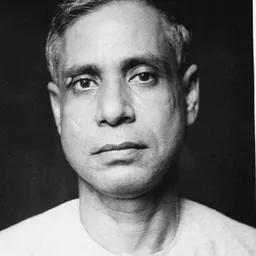
Same field, nearest in time



Contemporaries
People whose lives overlapped Hare Krishna Konar's




Frequently asked questions
Who was Hare Krishna Konar?
Indian revolutionary and politician (1915–1974)
When was Hare Krishna Konar born?
Hare Krishna Konar was born on 5 August 1915 in Kamargoria.
When did Hare Krishna Konar die?
Hare Krishna Konar died on 23 July 1974 in Kolkata.
What was Hare Krishna Konar's occupation?
Hare Krishna Konar was a revolutionary, politician and writer.
What nationality was Hare Krishna Konar?
Hare Krishna Konar was Indian.
Sources & further reading
· Wikipedia: Hare Krishna Konar
Cite this page
APA: Biography.guide. (2026). Hare Krishna Konar. https://biography.guide/hare-krishna-konar/
MLA: "Hare Krishna Konar." Biography.guide, https://biography.guide/hare-krishna-konar/.
Chicago: "Hare Krishna Konar." Biography.guide. https://biography.guide/hare-krishna-konar/.
Data last updated: 2026-09-22 · Spot an error? Report a correction.
Portrait: Wikimedia Commons · author & licence
Page generated 2026-09-27 05:02 UTC