
About Ahmed Sékou Touré
Lived 1922 – 1984 (aged 62). Ahmed Sékou Touré was a French politician.
Ahmed Sékou Touré (var. Sheku Turay or Ture; N'Ko: ; 9 January 1922 – 26 March 1984) was a Guinean political leader and African statesman who was the first president of Guinea from 1958 until his death in 1984. Touré was among the primary Guinean nationalists involved in gaining independence of the country from France. He died in the United States in 1984.
A devout Muslim from the Mandinka ethnic group, Sékou Touré was the great-grandson of the powerful Mandinka Muslim cleric Samori Ture who established an independent Islamic polity in part of West Africa. In 1960, he declared his Democratic Party of Guinea (Parti démocratique de Guinée, PDG) the only legal party in the state, and ruled from then on as a virtual dictator. He was re-elected unopposed to four seven-year terms in the absence of any legal opposition. Under his rule many people were killed, most notably at Camp Boiro.
Childhood and family background Samori Ture, Touré's great-grandfather was the founder of the Wassoulou Empire, an Islamic state in present-day Guinea that resisted French colonial rule in West Africa from 1882 until his capture in 1898.
Sékou Touré was born on 9 January 1922, into a Muslim family in Faranah, French Guinea, part of French West Africa. Faranah is a town deep inside Guinea situated on the banks of the Niger River. He was one of seven children born to Alpha Touré and Aminata Fadiga, who were subsistence farmers. He was an aristocratic member of the Mandinka ethnic group. His great-grandfather was Samori Ture (Samory Touré), a noted Muslim Mandinka king who founded the Wassoulou Empire (1861–1890) in the territory of Guinea and Mali, defeating numerous small African states with his large, professionally organized and equipped army. He resisted French colonial rule until his capture in 1898, and died while held in exile in Gabon.
His father Alpha Touré was originally from the French Sudan (now Mali), and had migrated to the traditional gold mining town of Siguiri with his brothers. He eventually continued to Kankan, Kouroussa, Kissidougou, and then settled in Faranah. Aminata was not his first wife. She bore three babies, including Sékou and a brother who died in childhood, then she died giving birth to a third child, a girl named Nounkoumba. Sékou's birth supposedly coincided with an omen - a baby elephant was brought to Faranah and presented to the French colonial authorities.
Sékou Touré attended the École Coranique (Qur'anic school) in his hometown and later a French lower-primary school in Kankan. He allegedly failed the exams to enter the École normale supérieure William Ponty for refusing to write an essay critical of his ancestor Samori Toure. Also the same year, he was a founding member of the African Democratic Rally (French: Rassemblement Démocratique Africain, RDA), an alliance of political parties and affiliates in French West and Equatorial Africa.
In 1952, he became the leader of the PDG. The RDA agitated for the decolonization of Africa, and included representatives from all the French West African colonies. The party forged alliance with labor unions and Touré was elected as secretary-general.
His greatest success as a trade union leader was when workers across French Guinea went on a 71-day general strike (longer than any other territories in the French West Africa) in 1953 to force the implementation of a new overseas labor code. He was later elected to Guinea's Territorial Assembly the same year. As a result, he was elected as one of the three secretaries-general of the French Communist Party's Confédération Générale du Travail (General Confederation of Labour; CGT) in 1954.
The PDG-RDA under Sékou Touré's leadership participated in the 1954 by-election, held after the death of Yacine Diallo. He lost to Diawadou Barry. The election was, however, marred with irregularities. The French minister Robert Buron admitted in 1968 that it had been rigged by France to prevent Sékou Touré from winning.
In 1957, he organized the Union Générale des Travailleurs d'Afrique Noire, a common trade union centre for French West Africa. He was a leader of the RDA, working closely with Félix Houphouët-Boigny, who later was elected as president of the Ivory Coast. In 1956, Touré was elected Guinea's deputy to the French National Assembly and mayor of Conakry, positions he used to criticize the French colonial regime. The French also threatened to cut off all their aid to Guinea in the event that the colony voted to become independent of France. The Washington Post observed how brutal the French were in tearing down all what they thought was their contributions to Guinea: "In reaction, and as a warning to other French-speaking territories, the French pulled out of Guinea over a two-month period, taking everything they could with them. They unscrewed light bulbs, removed plans for sewage pipelines in Conakry, the capital, and even burned medicines rather than leave them for the Guineans."
Presidency (1958–1984)
In 1960, Touré declared the PDG to be the only legal party, though the country had effectively been a one-party state since independence. For the next 24 years, Touré effectively held all governing power in the nation. He was elected to a seven-year term as president in 1961; as leader of the PDG he was the only candidate. He was reelected unopposed in 1968, 1974 and 1982. Every five years, a single list of PDG candidates was returned to the National Assembly.
During his presidency, Touré's policies were strongly based on socialism, with the nationalization of foreign companies and centralized economic plans. He won the Lenin Peace Prize as a result in 1961. His early actions to reject the French and then to appropriate wealth and farmland from traditional landlords angered many powerful forces, but the increasing failure of his government to provide either economic opportunities or democratic rights angered more. Famously, he stated that "Guinea prefers poverty in freedom to riches in slavery."
Touré argued that Africa had lost much during colonization, and that Africa ought to retaliate by cutting off ties to former colonial nations. However, in 1978 Guinea's ties with the Soviet Union soured, and, as a sign of reconciliation, President of France Valéry Giscard d'Estaing visited Guinea, the first state visit by a French president.
Throughout Touré's dispute with France, he maintained good relations with several socialist countries. However, Touré's attitude toward France was not generally well received by his own people He also declared Guinea to be in a "state of war" with Ghana, and that Guinean troops would march into Ghana to reinstate Nkrumah. Although such a war (which would have required the invasion of the Ivory Coast) never took place, Guinea still initiated hostilities, detaining several Ghanaian citizens. Ghana's assets in Guinea were also seized by Touré's government for Nkrumah's use. Major conflict was only halted after Ghana seized a flight carrying Foreign Minister Béavogui in October 1966, prompting the intervention of the Organisation of African Unity.
Sékou Touré with US President John F. Kennedy in October 1962
Touré had good relations with the United States under President John F. Kennedy. However, after Kennedy's assassination, the relationship with Washington somewhat soured. When a Guinean delegation was imprisoned in Ghana after the overthrow of Nkrumah, Touré blamed Washington. They succeeded in the rescue but the FLNG failed to dislodge Touré's regime.
During its first three decades of independence, Guinea developed into a militantly socialist state, which merged the functions and membership of the PDG with the various institutions of government, including the public state bureaucracy. This unified party-state had nearly complete control over the country's economic and political life. Guinea expelled the US Peace Corps in 1966 because of their alleged involvement in a plot to overthrow President Touré. Throughout that year, a major government purge and mass campaign was launched against "imperialism" and the supposed "SS-Nazi network" of West Germany, implicating many high-ranking officials and generals.
An ongoing source of contention between Guinea and its French-speaking neighbors was the estimated half-million expatriates in Senegal and Ivory Coast; some were active dissidents who, in 1966, formed the National Liberation Front of Guinea (Front de Libération Nationale de Guinée, or FLNG).
In Le Français est à nous! (French language belongs to us! ), French university teachers Maria Candéa an Laélia Véron praise Touré for having made official eight local languages of Guinea. They describe his linguistic policy as "très ambitieuse" (very ambitious).
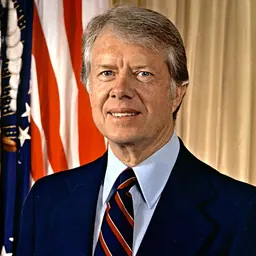
Between 1969 and 1976, according to Amnesty International, 4,000 persons in Guinea were detained for political reasons, with the fate of 2,900 unknown. After an alleged Fulani plot to assassinate Touré was disclosed in May 1976, Diallo Telli, a cabinet minister and formerly the first secretary-general of the OAU, was arrested and sent to prison. He died without trial in November of that year. U.S. President Jimmy Carter welcoming Sékou Touré outside the White House, Washington, D.C., 1979 In 1977, protests against the regime's economic policy, which dealt harshly with unauthorized trading, led to riots in which three regional governors were killed. Touré responded by relaxing restrictions on trading, offering amnesty to exiles (thousands of whom returned), and releasing hundreds of political prisoners. Relations with the Soviet bloc grew cooler, as Touré sought to increase Western aid and private investment for Guinea's sagging economy.
He imprisoned or exiled his strongest opposition leaders. Large numbers of suspected political opponents were imprisoned in concentration camps, such as the notorious Camp Boiro in Conakry. In 2002, mass graves were discovered near Kindia containing hundreds of bodies. Most of the victims were killed on 17 and 18 October 1971 by Touré's regime. One grave reportedly contained 400 bodies. Some scholars and international agencies have provided significantly lower estimates, with a US House of Representatives report placing the number at around 5,000 killed.
Once Guinea began its rapprochement with France in the late 1970s, Marxists among Touré's supporters began to oppose his government's shift toward capitalist liberalisation. In 1978, Touré formally renounced Marxism and reestablished trade with the West.
Single-list elections for an expanded National Assembly were held in 1980.
Desecration of Touré's tomb On July 14, 2020, his grave was desecrated by an unknown person. According to a relative of the CEO of the GDR who went to the scene of the desecration, the individual set fire to the tricolor which was in the grave. Then he began to pour liquid into the burial place. The next day his widow lamented the act of desecration. She herself clarified that the mausoleum belongs to her clan and that it is abandoned without security. She considered hiring security personnel.
Awards and honours
Foreign awards and honours
Ribbon Distinction Country Date Reference 80px Grand Cross of the Order of Merit of the Federal Republic of Germany 1959 80px Collar of the Order of the White Lion 30 November 1959 80px Order of the Yugoslav Great Star 7 January 1961 80px Lenin Peace Prize 30 April 1961 80px Grand Cross of the Legion of Honour 20 December 1978 80px Collar of the Order of Civil Merit 10 May 1979 80px Supreme Companion of the Order of the Companions of O. R. Tambo 16 June 2004(posthumously) 80x80px Grand Officer of the Order Agostinho Neto 6 November 2025(posthumously)
Works by Touré (partial) Ahmed Sékou Touré. 8 novembre 1964 (Conakry) : Parti démocratique de Guinée, (1965) A propos du Sahara Occidental : intervention du président Ahmed Sékou Touré devant le 17e sommet de l'OUA, Freetown, le 3 juillet 1980. (S.l. : s.n., 1980) Address of President Ahmed Sékou Touré, President of the Republic of : suggestions submitted during the West Africa consultative regional meeting held at Conakry, during 19 and 20 November 1971. (Cairo : Permanent Secretariat of the Afro-Asian Peoples' Solidarity Organization, 1971) Afrika and imperialism. Newark, N.J. : Jihad Pub. Co., 1973. Conférences, discours et rapports, Conakry : Impr. du Gouvernement, (1958–) Congres général de l'U.G.T.A.N. (Union général des travailleurs de l'Afrique noire) : Conakry, 15–18 janvier 1959 : rapport d'orientation et de doctrine. (Paris) : Présence africaine, c1959. Discours de Monsieur Sékou Touré, Président du Conseil de Gouvernement des 28 juillet et 25 aout 1958, de Monsieur Diallo Saifoulaye, Président de l'Assemblée territoriale et du Général de Gaulle, Président du Gouvernement de la Républ (Conakry) : Guinée Française, (1958) Doctrine and methods of the Democratic Party of Guinea (Conakry 1963). Expérience guinéenne et unité africaine. Paris, Présence africaine (1959) Guinée-Festival / commentaire et montage, Wolibo Dukuré dit Grand-pére. Conakry : Commission Culturelle du Comité Central, 1983. Guinée, prélude à l'indépendance (Avant-propos de Jacques Rabemananjara) Paris, Présence africaine (1958) Hommage à la révolution Cubaine; Message du camarade Ahmed Sekou Toure au peuple Cubain à l'occasion du 20e anniversaire de l'attaque de la Caserne de Moncada (Juillet 1973). Conakry : Bureau de Presse de la Presidence de la Republique, (1975). Ahmed Sékou Touré. International policy and diplomatic action of the Democratic Party of Guinea; extracts from the report on doctrine and orientation submitted to the 3d National Conference of the P.D.G. (Cairo, Société Orientale de Publicité-Press, 1962) Ahmed Sékou Touré. Opening speech of the Summit of Heads of State and Government by President Ahmed Sékou Touré, chairman of the Summit (November 20, 1980). (S.l. : s.n., 1980) Ahmed Sékou Touré. Poèmes militants. (Conakry, Guinea) : Parti démocratique de Guinée, 1964 Ahmed Sékou Touré. Political leader considered as the representative of a culture. (Newark, N. J. : Jihad Productions, 19--) Ahmed Sékou Touré. Pour l'amitié algéro-guinéenne. (Conakry, Guinea : Parti démocratique de Guinée, 1972) Rapport de doctrine et de politique générale, Conakry : Imprimerie Nationale, 1959. Strategy and tactics of the revolution, Conakry, Guinea : Press Office, 1978. Unité nationale, Conakry, République de Guinée (B.P. 1005, Conakry, République de Guinée) : Bureau de presse de la Présidence de la République, 1977.
Don’t just read it —
keep it.
Full-length biographies made to live with: read them, listen on the way to work, watch them tonight.
- E-book
- Audio
- Video
Instant download · yours to keep · every purchase keeps this site free
Important facts
Family & relationships
People in Ahmed Sékou Touré's life
Named in this biography and alive at the same time




Related people
Same field, nearest in time




Contemporaries
People whose lives overlapped Ahmed Sékou Touré's

Frequently asked questions
Who was Ahmed Sékou Touré?
President of Guinea (1922-1984)
When was Ahmed Sékou Touré born?
Ahmed Sékou Touré was born on 9 January 1922 in Faranah.
When did Ahmed Sékou Touré die?
Ahmed Sékou Touré died on 26 March 1984 in Cleveland.
What was Ahmed Sékou Touré's occupation?
Ahmed Sékou Touré was a politician.
What nationality was Ahmed Sékou Touré?
Ahmed Sékou Touré was French.
Sources & further reading
· Wikipedia: Ahmed Sékou Touré
Cite this page
APA: Biography.guide. (2026). Ahmed Sékou Touré. https://biography.guide/ahmed-sekou-toure/
MLA: "Ahmed Sékou Touré." Biography.guide, https://biography.guide/ahmed-sekou-toure/.
Chicago: "Ahmed Sékou Touré." Biography.guide. https://biography.guide/ahmed-sekou-toure/.
Data last updated: 2026-09-20 · Spot an error? Report a correction.
Page generated 2026-09-27 05:25 UTC