
About Agnès Ullmann
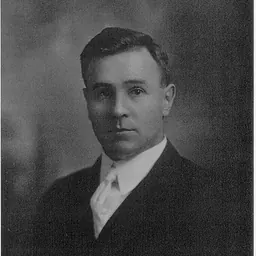
Lived 1927 – 2019 (aged 91). Agnès Ullmann was a Romanian, Hungarian and French microbiologist.
Agnes Ullmann (14 April 1927 – 25 February 2019) was a Hungarian-French microbiologist who worked at the National Centre for Scientific Research (CNRS) and the Pasteur Institute. Ullmann pioneered research into the ailosteric properties of muscle-specific proteins and the role of cAMP in bacteria, She is regarded as a key figure in education at the Institute and she is known for her pioneering work in understanding the regulation of gene expression in operon systems.
Early life and education Agnes Ullmann was born on 14 April 1927 in Satu Mare, Transylvania, at the time classed as Hungary, now in Romania. Her family were Jewish Hungarian. She became interested in microbiology after her father's birthday gift of Paul de Kruif ’s book Microbe Hunters. She briefly studied at the University of Cluj, but left to earn her doctorate in microbiology from the University of Budapest.
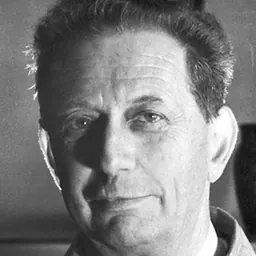
Career After a research visit to Institut Pasteur in 1958/59 working with Jacques Monod, she moved to France in 1960 with the support of Monod, who smuggled her and her husband over the Austria/Hungary border in a Hungarian caravan. At the Institut Pasteur, she also worked with François Jacob and Elie Wollman. In 1967 she showed that cAMP reverses catabolite repression in the bacterium E. coli. She went on to revolutionize gene cloningby developing the alpha-complementation in the enzyme beta-galactosidase.
Later in her career, while at the Cellular Regulations unit of the CNRS (1979 to 1996), Ullmann dealt with the mode of action of the whooping cough pathogen, investigating the adenylate cyclase toxin produced by the bacterium *Bordetella pertussis".
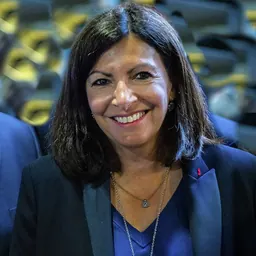
Legacy In 2026, Ullman was announced as one of 72 historical women in STEM whose names have been proposed to be added to the 72 men already celebrated on the Eiffel Tower. The plan was announced by the Mayor of Paris, Anne Hidalgo following the recommendations of a committee led by Isabelle Vauglin of Femmes et Sciences and Jean-François Martins, representing the operating company which runs the Eiffel Tower.
Selected works In 1978, with André Lwoff, she published a collection of essays by Jacques Monod and she published two anthologies in memory of him.
Don’t just read it —
keep it.
Full-length biographies made to live with: read them, listen on the way to work, watch them tonight.
- E-book
- Audio
- Video
Instant download · yours to keep · every purchase keeps this site free
Important facts
People in Agnès Ullmann's life
Named in this biography and alive at the same time




Related people
Same field, nearest in time



Contemporaries
People whose lives overlapped Agnès Ullmann's


Frequently asked questions
Who was Agnès Ullmann?
French microbiologist (1927–2019)
When was Agnès Ullmann born?
Agnès Ullmann was born on 14 April 1927 in Satu Mare.
When did Agnès Ullmann die?
Agnès Ullmann died on 25 February 2019 in 16th arrondissement of Paris.
What was Agnès Ullmann's occupation?
Agnès Ullmann was a microbiologist.
What nationality was Agnès Ullmann?
Agnès Ullmann was Romanian, Hungarian and French.
Sources & further reading
Cite this page
APA: Biography.guide. (2026). Agnès Ullmann. https://biography.guide/agnes-ullmann/
MLA: "Agnès Ullmann." Biography.guide, https://biography.guide/agnes-ullmann/.
Chicago: "Agnès Ullmann." Biography.guide. https://biography.guide/agnes-ullmann/.
Data last updated: 2026-09-20 · Spot an error? Report a correction.
Page generated 2026-09-27 05:24 UTC