
Adomas Jakštas-Dambrauskas
Lithuanian esperantist
About Adomas Jakštas-Dambrauskas
Lived 1860 – 1938 (aged 77). Adomas Jakštas-Dambrauskas was a Lithuanian catholic priest, catholic theologian, esperantist, philosopher, mathematician and writer.
Adomas Jakštas was the pen name of Aleksandras Dambrauskas (8 September 1860 – 19 February 1938), a Lithuanian Roman Catholic priest and activist. He was a prolific author of newspaper articles, literary criticism, poetry, mathematical and philosophical works. He was also one of the early supporters of the Esperanto language.
Influenced by philosopher Vladimir Solovyov, Jakštas dropped out from the Saint Petersburg University and enrolled at the Kaunas Priest Seminary. He then completed his master's studies at the Saint Petersburg Roman Catholic Theological Academy and was ordained priest in 1888. Assigned to the Panevėžys Gymnasium, he enticed Catholic students to disobey orders to pray for the Tsar in an Eastern Orthodox church. This earned him a five-year internal exile to Ustyuzhna in the Novgorod Governorate. After return, he took various jobs until he was able to return to the Theological Academy as a professor of the Bible in 1902. However, he quit teaching in 1905 and devoted the rest of his life to various societies and writing. He became the long-term chairman of the Society of Saint Casimir which published Lithuanian periodicals and books and of the Motinėlė Society which provided scholarships to Lithuanian students. In 1907, Jakštas established and became editor of the monthly Draugija magazine which continued to be published until 1923. In independent Lithuania, he was the chairman of the Lithuanian Catholic Academy of Science (LKMA). He was also active in various Esperanto societies, becoming chairman of (1903–1905) and a member of Akademio de Esperanto (1923–1937).
Jakštas published about 50 books and brochures and thousands of articles on a wide variety of topics. At different times, he edited five Lithuanian and one Esperanto periodical. Jakštas published numerous articles reviewing Lithuanian publication, both fiction and nonfiction. Jakštas held virtual monopoly on criticism of the Lithuanian literature for about twenty years. He was a harsh and conservative evaluator criticizing everything that was new. Therefore, literary historians, such as Mykolas Biržiška, criticized Jakštas for "damaging" Lithuanian literature and delaying its modernization. Jakštas published a number of polemic articles debating religion, art, Lithuanian–Polish relations, etc.
Jakštas published four poetry collections and three collections of translated and original humorous and satirical short stories and feuilletons. He prepared and published at least eight different prayer books and three hymnals (two with Juozas Naujalis). He studied mathematics independently and published several theoretical works of mathematics, but remained a hobbyist. He published three Lithuanian math textbooks on geometry, logic, and trigonometry. Jakštas was interested in the standardization of the Lithuanian language and published works promoting simpler spelling and criticizing the efforts of Jonas Jablonskis.
Biography Early life and education Jakštas was born on in near Pagiriai to a family of Lithuanian free peasants who owned about of land. Since there was more than one Dambrauskas family in the village, his family received Jakštas nickname from a local stream that he later adopted as his pen name. Jakštas had one brother and three half-siblings. Two of Jakštas' uncles were priests and he was raised in the Catholic spirit. After his mother's death in 1870, his primary education was sponsored by his uncles – attorney Petras Vaičiūnas and priest Stanislovas Dambrauskas, who took him to Kriukai.
In 1872, he enrolled at the Šiauliai Gymnasium where he penned his first poems in Polish. In 1880, he became a student at the Faculty of Mathematics of the Saint Petersburg University and attended lectures by chemist Dmitri Mendeleev, mathematician Konstantin Posse, philosopher Vladimir Solovyov. At the same time, he read the New Testament in Greek and The Imitation of Christ in French. After a year in Saint Petersburg, influenced by Solovyov's criticism of socialism and Russian Eastern Orthodox Church, he submitted an application to the Kaunas Priest Seminary.
In his short auto-biography, Jakštas admitted that after the first year at the seminary he seriously questioned his calling. At the seminary, Jakštas independently studied works on positivism (he particularly liked Les Sources of Auguste Joseph Alphonse Gratry), darwinism, materialism. Rector Antanas Baranauskas tasked him with numbering and cataloging 11,206 books at the seminary's library. He also secretly published four issues of the handwritten newsletter Lietuva – only the third Lithuanian-language periodical in the Russian Empire as Lithuanian-language texts were banned. After graduating in 1884, he received a scholarship from the Diocese of Samogitia to continue master's studies at the Saint Petersburg Roman Catholic Theological Academy. He graduated in 1888 and was ordained priest on 29 June 1888.
In addition to native Lithuanian, Jakštas also spoke Polish, Russian, Latin, German, French, and Esperanto. He could read in Latvian, Old Greek, and Hebrew.
Exile Upon graduation, Jakštas was appointed as the chaplain to the Panevėžys Gymnasium but his tenure there lasted only half a year. On certain celebrations, all students regardless of their religious convictions, were forced to pray for the Tsar at an Eastern Orthodox church. Jakštas incited several Catholic students to disobey the orders and pray for the Tsar at a Catholic church. For such anti-Tsarist attitudes and activities, he was first sent to the Kretinga Bernardine Monastery and then deported for five years to Ustyuzhna in the Novgorod Governorate in June 1889. The government provided six rubles a month for support.
There he met another Lithuanian, Vincas Pietaris and encouraged him to write, editing his first works and sending them to the Lithuanian press to be published. Jakštas continued to study and write, and became a repeat contributor of articles to the Lithuanian newspaper Žemaičių ir Lietuvos apžvalga. He wrote a theological treatise in Russian Letters of a Catholic Theologian to an Eastern Orthodox Theologian which was later published by the Jesuits in Kraków.
Russian Empire
After five years in exile, Jakštas returned to Kaunas in May 1894. He worked as a chaplain of Kaunas Prison, confessor of soldiers, and administrator of the Church of St. Gertrude, but due to his tarnished record could not obtain a more permanent position until 1898 when he became a professor of canon law at the Kaunas Priest Seminary. In 1900–1902, he worked as a secretary of Bishop Mečislovas Leonardas Paliulionis. In 1901, he published an article on the doctrine of the Russian Church on the canon of the Old Testament in the French journal Revue Biblique. In this article, Jakštas attempted to prove that deuterocanonical books were not considered cannon in Eastern Orthodoxy. It is likely that this article helped him to return to the Saint Petersburg Roman Catholic Theological Academy as a professor of the Bible in 1902. He was recognized as a talented teacher and was awarded the Order of Saint Anna (3rd class). At the same time, he taught religion at Saint-Petersburg Elizabethan Institute and Kseniinsky Institute (schools for noble girls).
Feeling that teaching kept him away from Lithuanian causes, he quit teaching after the Russian Revolution of 1905 and returned to Kaunas. He became chairman of the Society of Saint Casimir established to publish Lithuanian books after the Lithuanian press ban was lifted in 1904. He chaired this society until his death. By that time, it published about 690 books, including the first full Roman Catholic Bible translation into Lithuanian in six volumes in 1911–1937, and nine periodicals. In 1907, Jakštas established and became editor of the monthly Draugija magazine geared towards the Lithuanian intelligentsia which continued to be published until 1923. Draugija's supplement for Catholic youth Ateitis (Future) gave rise to the Lithuanian Catholic Federation Ateitis. Jakštas helped organizing Ateitis, formulated it ideology, and was mentor of Pranas Dovydaitis and Stasys Šalkauskis, leaders of Ateitis. In 1907, Jakštas became one of the founders and long-term chairman of the Motinėlė Society which provided scholarships to Lithuanian students.
In May 1914, Pranciškus Karevičius, the new Bishop of Samogitia, promoted Jakštas to prelate of the Samogitian cathedral chapter. In November 1914, General , commander of the Kaunas Fortress, expelled Jakštas and other "unreliable elements" from Kaunas. Jakštas moved to Vilnius. In October 1915, after Vilnius was occupied by Germany, Jaštas returned to Kaunas where he taught philosophy at Kaunas Priest Seminary. In 1919, Jakštas attempted to organize the Homer Society to gather and publish collective memories of World War I in Lithuania, but the idea did not take off.
Independent Lithuania
In independent Lithuania, Jaštas stayed away from political life. He became quickly disillusioned with the Lithuanian Christian Democratic Party and became its critic, though he kept it mostly private. He did not have a job with the church or government institutions and devoted his time to research, writing, and various societies.
In 1922, Jakštas was one of the co-founders of the Lithuanian Catholic Academy of Science (LKMA). He succeeded bishop Juozapas Skvireckas as its chairman in 1926; he continued to chair the academy until his death. Jakštas with Stasys Šalkauskis and Pranas Dovydaitis became the first three true academic members of LKMA. In 1927, Jakštas initiated the compilation of a biographical dictionary of famous Lithuanians, regardless of religious or political beliefs. In total, 2,638 biographies or five volumes were prepared by LKMA, but they were not published. Instead, LKMA collaborated in preparing Lietuviškoji enciklopedija, the first Lithuanian encyclopedia.
In 1935–1937, Jakštas chaired a committee that organized the Lithuanian section at the World Exhibition of the Catholic Press in Vatican. Jakštas completed a doctorate thesis on Christian views of the Roman Empire in 1937. It was favorably evaluated by professors of Vytautas Magnus University, but it appears that Jakštas did not defend it.
Death and characteristic
Jakštas lived a rather simple and ascetic lifestyle. He was hard working, orderly, and punctual. He was most likely to be found in his bed resting, at his desk working, or praying in a church. He was not a good public speaker and avoided verbal debates (though he liked to debate in writing). He presented as a reserved and melancholy man. His apartment was sparsely furnished; he did not have rugs or a sofa. Jakštas did not receive many guests, but those included Eduards Volters, Vincas Krėvė-Mickevičius, and Vytautas Andrius Graičiūnas with Unė Babickaitė. He was a close personal friend of bishop Pranciškus Karevičius. Jakštas strictly abstained from alcohol. Literary critic quipped that Jakštas belonged to the Puritan Victorian era. However, Jakštas was also known for brief impulsive outbursts. While in his writings Jakštas was not afraid to criticize, he was rather tolerant of other ideologies. For example, he asked for an amnesty for writer Kostas Korsakas when he was arrested by the Lithuanian police for communist activities.
Jakštas continued working and editing various texts until his death. He died on 19 February 1938 of calcified arteries and kidneys. At the time of his death he had a rather modest sum of about 2,000 Lithuanian litas which he left to his relative studying at the priest seminary, Christ's Resurrection Church, a chapter of Ateitis at Vytautas Magnus University, and charitable Society of Vincent de Paul. In his last will, he wished to be buried without speeches and flowers. Nevertheless, the Lithuanian government organized an official funeral. He was buried on 21 February in a crypt of Kaunas Cathedral Basilica. Three months later, he was reburied in the churchyard.
Works
Jakštas published about 50 books and brochures (more than 9,000 pages) and thousands of articles on a wide variety of topics. He published his works mostly in Lithuanian, but also in Polish, Latin, French, Russian, and Esperanto. Jaštas was a versatile writer, working on multiple fields of study at the same time. In his works, he leaned towards synthesis rather than analysis.
His works have not been collected or subject to a comprehensive study in part because of the wide-ranging expertise that would be required by researchers. Selected works of Jakštas were compiled and published in three volumes in 1995–1997.
Don’t just read it —
keep it.
Full-length biographies made to live with: read them, listen on the way to work, watch them tonight.
- E-book
- Audio
- Video
Instant download · yours to keep · every purchase keeps this site free
Important facts
People in Adomas Jakštas-Dambrauskas's life
Named in this biography and alive at the same time
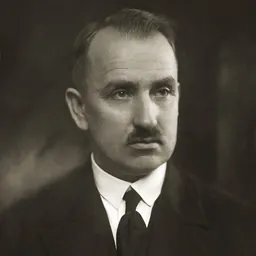



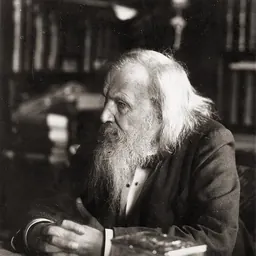

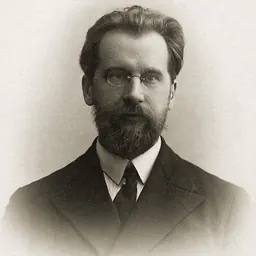
Related people
Same field, nearest in time
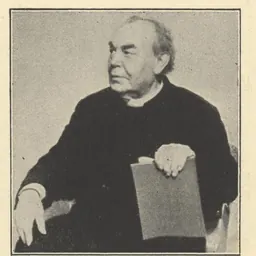

Contemporaries
People whose lives overlapped Adomas Jakštas-Dambrauskas's




Frequently asked questions
Who was Adomas Jakštas-Dambrauskas?
Lithuanian esperantist
When was Adomas Jakštas-Dambrauskas born?
Adomas Jakštas-Dambrauskas was born on 8 September 1860 in Kuronys.
When did Adomas Jakštas-Dambrauskas die?
Adomas Jakštas-Dambrauskas died on 19 February 1938 in Kaunas.
What was Adomas Jakštas-Dambrauskas's occupation?
Adomas Jakštas-Dambrauskas was a catholic priest, catholic theologian, esperantist, philosopher, mathematician and writer.
What nationality was Adomas Jakštas-Dambrauskas?
Adomas Jakštas-Dambrauskas was Lithuanian.
Sources & further reading
· Wikipedia: Adomas Jakštas-Dambrauskas
Cite this page
APA: Biography.guide. (2026). Adomas Jakštas-Dambrauskas. https://biography.guide/adomas-jakstas-dambrauskas/
MLA: "Adomas Jakštas-Dambrauskas." Biography.guide, https://biography.guide/adomas-jakstas-dambrauskas/.
Chicago: "Adomas Jakštas-Dambrauskas." Biography.guide. https://biography.guide/adomas-jakstas-dambrauskas/.
Data last updated: 2026-09-20 · Spot an error? Report a correction.
Page generated 2026-09-27 05:22 UTC