
Antanas Baranauskas
Lithuanian poet, mathematician and bishop
About Antanas Baranauskas
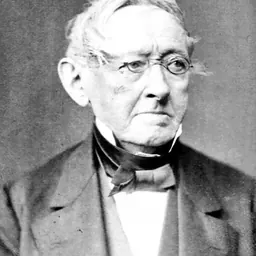
Lived 1835 – 1902 (aged 67). Antanas Baranauskas was a Russian mathematician, linguist, poet, catholic priest, writer and catholic deacon.
Antanas Baranauskas (; 17 January 1835 – 26 November 1902) was a Lithuanian poet, mathematician and Catholic bishop of Sejny. Baranauskas is best known as the author of the Lithuanian poem Anykščių šilelis. He used various pen names, including A.B., Bangputys, Jurksztas Smalaūsis, Jurkštas Smalaūsis, and Baronas.
Early years Baranauskas was born to a small farmer family of Lithuanian nobility origin. His first attempts to write poetry and rhyme in Lithuanian are to be found in his diaries.
Adulthood
In 1853, he finished school and started working as a writer and chancellor in various towns. During this period he began a relationship with the Samogitian poet Karolina Proniewska (Karolina Praniauskaitė) and her family. The two shared a passion for the poetry of Adam Mickiewicz. While some critics contend that Baranauskas wrote the poem in anger, in response to an assertion by his lector Alexander Gabszewicz that the Lithuanian language was not beautiful enough to write poems in, others dispute this as a misinterpretation. The poem was first published in 1861, and again in 1862 in Laurynas Ivinskis' Farmers' Calendar.
From 1858 to 1862, Barnauskas studied at the Saint Petersburg Roman Catholic Theological Academy, receiving a master's degree in theology. Between 1863 and 1864, he studied at Munich's, Rome's, Innsbruck's and Louvain's Catholic universities.
Starting in 1871, he worked at the Kaunas Priest Seminary, and began teaching the Lithuanian language. He authored a grammar textbook in Lithuanian, Mokslas lietuviškosios kalbos. After Baranauskas went to Sejny, he gained a considerable reputation by being able to preach in both Polish and Lithuanian. By 1880, after he realized that the ban of printing in the Lithuanian language would not be lifted, in spite of several unofficial promises by Tsarist authorities to do so, his desire to promote the Lithuanian language slowly declined. He never ceased to believe, that Lithuanian should be developed and expanded and until his death worked on a translation of the Bible into Lithuanian, and working 10–12 hours a day, succeeded to translate three fifths of the Old Testament.
In his later years, Antanas Baranauskas, enjoyed some of the comforts of life. His beliefs were similar to the later Krajowcy group. Therefore, for the rest of his life he tried to reconcile nationalists from both - Lithuanian and Polish - sides. For that he was rather unpopular amongst the nationalists in both sides.
Most of the Lithuanians did not attend his burial, considering him a traitor of the national revival movement, mostly Russian officials and Poles attended it. It was a completely different story when a monument for him was built in Sejny. Only Lithuanians attended the event, and even then paint was spilt on the monument the following night.
Legacy Before Baranauskas, the main "respectable" language in the area was considered to be Polish, so Baranauskas was one of the few primary individuals responsible for re-legitimizing the Lithuanian language, and by extension, Lithuanian culture. Referring to Baranauskas in a lecture, the early 20th century Lithuanian poet Maironis once said, "Without him, there might not be us".
Baranauskas's home is preserved in the Anykščiai Regional Park.
Don’t just read it —
keep it.
Full-length biographies made to live with: read them, listen on the way to work, watch them tonight.
- E-book
- Audio
- Video
Instant download · yours to keep · every purchase keeps this site free
Important facts
People in Antanas Baranauskas's life
Named in this biography and alive at the same time



Related people
Same field, nearest in time

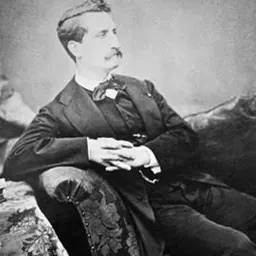
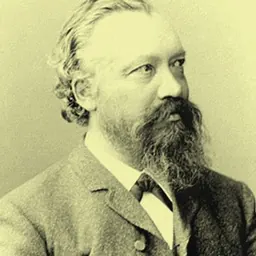
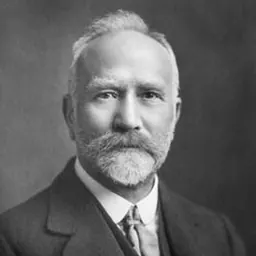
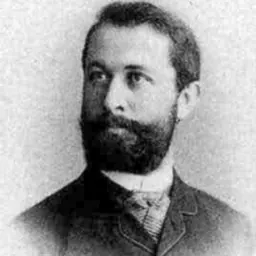
Contemporaries
People whose lives overlapped Antanas Baranauskas's



Frequently asked questions
Who was Antanas Baranauskas?
Lithuanian poet, mathematician and bishop (1835–1902)
When was Antanas Baranauskas born?
Antanas Baranauskas was born on 17 January 1835 in Anykščiai.
When did Antanas Baranauskas die?
Antanas Baranauskas died on 26 November 1902 in Sejny.
What was Antanas Baranauskas's occupation?
Antanas Baranauskas was a mathematician, linguist, poet, catholic priest, writer and catholic deacon.
What nationality was Antanas Baranauskas?
Antanas Baranauskas was Russian.
Sources & further reading
· Wikipedia: Antanas Baranauskas
· DBpedia: Antanas Baranauskas
Cite this page
APA: Biography.guide. (2026). Antanas Baranauskas. https://biography.guide/antanas-baranauskas/
MLA: "Antanas Baranauskas." Biography.guide, https://biography.guide/antanas-baranauskas/.
Chicago: "Antanas Baranauskas." Biography.guide. https://biography.guide/antanas-baranauskas/.
Data last updated: 2026-09-20 · Spot an error? Report a correction.
Page generated 2026-09-27 05:31 UTC