
About Abraham Cronbach
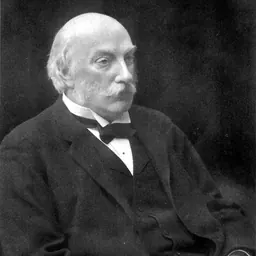
Lived 1882 – 1965 (aged 83). Abraham Cronbach was an American rabbi, writer and professor.
Abraham Cronbach (February 15, 1882 – April 2, 1965) was an American rabbi and teacher, known as a pacifist. He served as a rabbi for congregations in Indiana and Ohio. Cronbach was one of the founders of the Peace Heroes Memorial Society.
Early life and education Abraham Cronbach was born to German immigrants Marcus and Hannah (Itzig) Cronbach. Marcus was a notions store retailer in Indianapolis, Indiana, where Abraham grew up. "Abraham was an introspective boy, with a precocious and mystic conception of both God and the devil (he thought the devil was responsible for the smoke from the manhole in the street)." He grew up in a Christian neighborhood where anti-Semitism and extreme poverty were common. He played violin as a boy as well as read a lot on religion and science. In high school Cronbach decided he would become a rabbi despite his parents' opposition.
Cronbach entered the Hebrew Union College (HUC) in Cincinnati, Ohio in 1898 where, in conjunction with the University of Cincinnati he studied for his bachelor's degree and trained for the rabbinate. He graduated in 1902 from the University of Cincinnati and, in 1906 was valedictorian of his HUC class and was ordained as a rabbi.
On October 7, 1917, Cronbach married Rose Hentel, a teacher at the Free Synagogue in New York City whom he met during his time there. In 1923 the Cronbachs adopted a daughter, Marion. Later Cronbach would become the teacher of rabbinic student, Maurice Davis who would become a leader in the anti-cult movement and Cronbach's son-in-law.
Early career
Cronbach first served as rabbi at the reform congregation of Temple Beth El in South Bend, Indiana. In 1911 he spent a year studying at the University of Cambridge in England and the Hochschule fur die Wissenschaft des Judentums in Berlin. In 1915 he received the Doctor of Divinity degree from Hebrew Union College.
After resigning his pulpit in South Bend in 1915 Cronbach spent three years devoting himself to the chaplaincy in prison and hospital installations. He developed strong convictions about the futility of the prison system. He eventually befriended Nathan Leopold. His interest in prisoners never faded and only increased his detestation of revenge and retribution and made Cronbach a strong opponent of capital punishment and the entire prison system. and from 1919 through 1922 he served as the institutional chaplain for the Chicago Federation of Synagogues.
Lecturer and educator In December 1920, Cronbach delivered a series of lectures on chaplaincy procedures at Hebrew Union College ("The Ministry of the Jewish By-Ways." Hebrew Union College Monthly, January - April, 1921). In 1922, Cronbach was appointed a professor of social studies at Hebrew Union College, where he remained for the rest of his life.
Pacifism and life during the World Wars
Early pacifist actions As a result of World War I, Cronbach became an ardent pacifist. He helped found the Peace Heroes Memorial Society in 1923. The Society's national headquarters were located in Cincinnati. Cronbach served as national secretary and was instrumental in establishing Memorial Day services around the country in honor of the heroes of industry, maternity, pacifism, etc. These services were an annual event in Cincinnati from 1923 through 1941.
Jewish Peace Fellowship In 1942 along with Rabbi Isidor Hoffman and Jane Evans, Cronbach established the Jewish Peace Fellowship, which caused a brief collision between Cronbach and the College Board of Hebrew Union College. The Jewish Peace Fellowship has had many prominent Jews as associates including Rabbi Leo Baeck, Albert Einstein, and Rabbi Abraham Joshua Heschel. Cronbach has been quoted describing the fellowship as a religious organization of Jewish persons who believe war to be as futile as it is fiendish.
On June 16, 1953, Cronbach met with President Eisenhower to urge him to pardon the Rosenbergs.
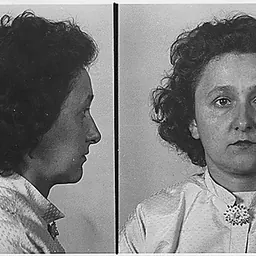
Cronbach appeared with Julius Rosenberg's mother and the Rosenbergs two small sons at a protest meeting in front of the White House after the Rosenbergs had been found guilty. Julius and Ethel Rosenberg were executed at Sing Sing prison in New York on June 19, 1953, more than two years after being found guilty of conspiracy to commit espionage. Cronbach gave a eulogy at the Rosenberg's funeral on June 21, 1953. "Rabbi Cronbach's impassioned eulogy [...] is an eloquent statement against excessive punishment and in favor of the positive synergy existing between American patriotism and Judaism."
Ohel Avraham Synagogue (formerly Cronbach Chapel) at The Leo Baeck Education Center in Haifa, Israel was named in honor of Cronbach by the National Federation of Temple Youth (now known as the North American Federation of Temple Youth or NFTY).
Cronbach died in Cincinnati, Ohio. He is interred near his home in the Clifton neighborhood of Cincinnati. His wife was interred with him in 1982.
Publications Social Creeds of the Churches: A Comparative Study (1923) Prayers of the Jewish Advance (Bloch publishing Company, 1924) Peace Stories (Department of Synagogue and School Extension of the Union of American Hebrew Congregations, 1932) The Social Outlook of Modern Judaism (Committee on Religious Work in Universities of the Central Conference of American Rabbis, 1936) The Quest for Peace (Cincinnati: Sinai Press, 1937) The Bible and Our Social Outlook (Union of American Hebrew Congregations, 1941) The Realities of Religion (Bookman Associates, 1957) Reform Movements in Judaism
Don’t just read it —
keep it.
Full-length biographies made to live with: read them, listen on the way to work, watch them tonight.
- E-book
- Audio
- Video
Instant download · yours to keep · every purchase keeps this site free
Important facts
People in Abraham Cronbach's life
Named in this biography and alive at the same time
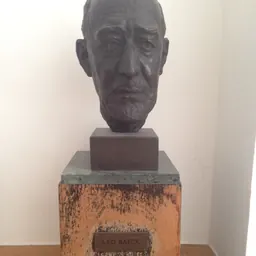
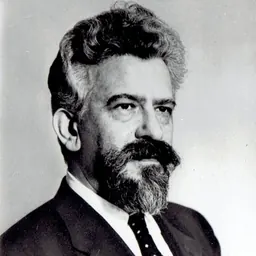

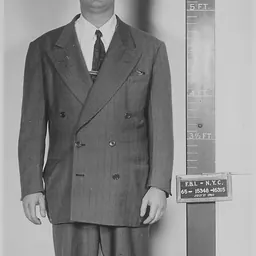
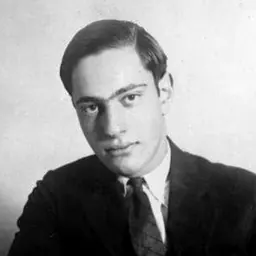

Related people
Same field, nearest in time



Contemporaries
People whose lives overlapped Abraham Cronbach's





Frequently asked questions
Who was Abraham Cronbach?
American rabbi (1882-1965)
When was Abraham Cronbach born?
Abraham Cronbach was born on 15 February 1882 in Indianapolis.
When did Abraham Cronbach die?
Abraham Cronbach died on 2 April 1965 in Cincinnati.
What was Abraham Cronbach's occupation?
Abraham Cronbach was a rabbi, writer and professor.
What nationality was Abraham Cronbach?
Abraham Cronbach was American.
Sources & further reading
Cite this page
APA: Biography.guide. (2026). Abraham Cronbach. https://biography.guide/abraham-cronbach/
MLA: "Abraham Cronbach." Biography.guide, https://biography.guide/abraham-cronbach/.
Chicago: "Abraham Cronbach." Biography.guide. https://biography.guide/abraham-cronbach/.
Data last updated: 2026-09-22 · Spot an error? Report a correction.
Page generated 2026-09-27 05:15 UTC