
Abid Hassan Minto
Senior Lawyer, politician, Literary Critic,
About Abid Hassan Minto
Born 1932. Abid Hassan Minto is a Pakistani lawyer, human rights defender, literary critic, politician and human rights activists, known for Awami Workers Party.
Literature Abid Hassan Minto joined the Progressive Writers Association (PWA) in 1949. He has been active and associated with the Progressive Writers' Movement for many years. After the independence of Pakistan in 1947, he played a key role in establishing the first literary movement of Lahore, namely Halqa-e Arbab-e Zauq (Circle of the Men of Good Taste).
His first essay "The Issue of Language in Pakistan" was published in 1951 in the literary journal Adb e Latif . Other essays by him, later published as a collection "Nuqta e Nazarنقطہ نظر" (The Viewpoint: 1st Edition 1986 2nd Edition 2003) include: The Problem of Religious Literature (Shahrah شاہراہ 1954); Literary Criticism (Adb e Latif 1954ادب لطیف); The Issue of Ideologies in Literature (Adb e Latif 1955ادب لطیف); Progressive Ideology and Contemporary Literature (Adb e Latif 1960ادب لطیف); Problems of Modern Poetry (Nayee Shairi 1964نئ شاعری) and Eternal Values in Literature (Auraq 1967اوراق). His essay The Technique of the One Act Playایکانکی ڈرامہ (Adb e Latif 1957ادب لطیف) was part of the curriculum for graduate studies in Urdu literature. Abid Hassan Minto's favorite writers are Rajinder Singh Bedi and Saadat Hasan Manto.
Legal career (1955–) Minto began law practice in 1955 at Rawalpindi where his father and, before him, his grandfather had also practised. He moved to Lahore in 1958, was admitted, Advocate of the Lahore High Court in 1957 and of the Supreme Court of Pakistan in 1963. He remains a practising lawyer and is the Senior Consultant to "Minto and Mirza, a Lahore based law firm.
Minto conducted several cases of constitutional, political and legal importance. These include: The Ganga Hijacking Case: Minto appeared for one of the accused, Hashim Qureshi, before a special tribunal set up to try Kashmiri freedom fighters who had hijacked an Indian aircraft into Pakistan. The Hyderabad Conspiracy Case: Minto appeared before the Hyderabad tribunal to defend political leaders Abdul Wali Khan, Ghaus Bakhsh Bizenjo, Ataullah Mengal, Mir Gul Khan Nasir, Nawab Khair Bakhsh Marri, Syed Muhammad Kaswar Gardezi and others who had been charged with treason and for working against the Ideology of Pakistan. Farooq Ahmad Khan Leghari versus the Federation: Minto appeared as President, Supreme Court Bar Association of Pakistan to assist the Supreme Court of Pakistan on the question of the validity of imposition of Emergency and suspension of constitutional Fundamental Rights by the President of Pakistan.
Minto has appeared in a large number of cases involving issues such as: Section 295 C of the Pakistan Penal Code, aka "Blasphemy law in Pakistan", which prescribes the death penalty for defiling the name of Muhammad. The Islamic "Law of Evidence" or the "Qanun e Shahadat" which discriminated against women in that it considers their evidence as not at par with men in certain matters. This law was brought into being during the dictatorship of General Zia-ul-Haq. Discrimination against women preventing them from competing with men for admission to certain educational institutions. Minto serves on the commission as the member from Punjab. His tenure will end in 2015.
Politics Abid Hassan Minto is the president of the Awami Workers Party, formed in November 2012 by a merger of three left-wing parties in Pakistan. At the moment, he is serving his second term as the party's elected president.
Background In 1967 Minto joined the National Awami Party (NAP Balochistan). The following year, at the party's general elections in Dacca, Bangladesh (then East Pakistan) he was elected member of its Central Executive Committee.
In 1971, on the eve of East Pakistan's separation from (West) Pakistan, a number of leftwing political workers from NAP and other groups, held a conference and founded the Pakistan Socialist Party (PSP). C. R. Aslam, a veteran communist leader was elected president while Minto was elected first general secretary. He stayed with PSP until 1986 and was elected general secretary three times.
Following a split in the PSP in 1986, Minto founded the Workers Party Pakistan in 1987. Later in 90's he formed Awami Jamhori Party (Peoples Democratic Party) comprising dissidents from the PSP and members of a Sindh based left group called the Communist League. On 1 May 1999, the Awami Jamhoori Party, Pakistan Socialist Party and a faction of Pakistan National Party (led by Baloch leader Ghaus Bakhsh Bizenjo) formed the National Workers' Party. Minto was elected its first President. NWP was a part of the All Parties Democratic Movement (APDM) in lawyers movement. Minto was elected first President of the Workers Party Pakistan, formed after the merger of five leftwing parties and groups (Communist Mazdoor Kisan Party, National Workers Party, Peoples Rights Movement, Watan Dost Mazdoor Federation, Awami Mazdoor Anjuman) and held office until November 2012, when the WPP merged with the Labour Party Pakistan and the Awami Party Pakistan to form the Awami Workers Party. At the founding congress, Minto was elected president of the new Awami Workers Party in November 2012.
The AWP (Awami Workers Party) held its First Federal Congress and second party elections on the 27th and 28 September 2014 and re-elected Minto to serve as president for the next term.
Arrests For his political views and activities, and especially during the lawyers movement against General Zia ul Haq, Minto faced arrests and detentions several times. He was considered a 'prisoner of conscience' by the Amnesty International organization during his prison time. (Our Fight Will Continue) (published: 2016), is the most recent book by Minto. It is a compilation of articles, speeches, resolutions and interviews of Minto spanning over 65 years.
Family and family name The family name "Minto" was originally "Manto" or "Mantu" and is still used as such by most of the "Mantu" family. Minto's father Khawaja Ahmad Hassan (1896—1982), a well known civil lawyer in Rawalpindi was a leader of the Indian National Congress until 1943 later joining the Muslim League to play a role in its local politics during the Pakistan movement. Khawaja Ahmad Hassan Minto was a nephew of the Indian Nationalist Leader Saifuddin Kichlu who was also the paternal uncle of Minto's mother, Aziz Begum (1895—1981). The Urdu short story writer Saadat Hassan Manto (1912—1955) was Minto's great-grand uncle. They have three children, two daughters and a son (Bilal Minto), from their marriage.
Awards and recognition Habib Jalib Peace Award in 2017, presented at the Karachi Arts Council.
Citations/sources
Don’t just read it —
keep it.
Full-length biographies made to live with: read them, listen on the way to work, watch them tonight.
- E-book
- Audio
- Video
Instant download · yours to keep · every purchase keeps this site free
Important facts
People in Abid Hassan Minto's life
Named in this biography and alive at the same time



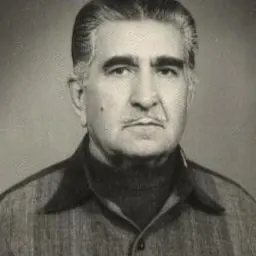
Related people
Same field, nearest in time


Contemporaries
People whose lives overlapped Abid Hassan Minto's
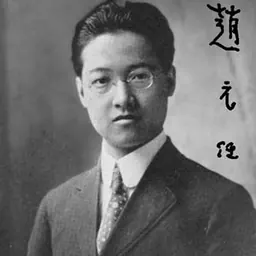

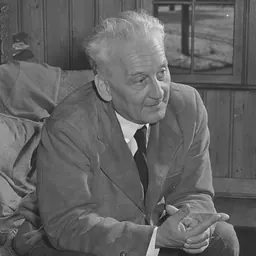
Frequently asked questions
Who is Abid Hassan Minto?
Senior Lawyer, politician, Literary Critic,
When was Abid Hassan Minto born?
Abid Hassan Minto was born on 3 February 1932 in Murree.
What is Abid Hassan Minto's occupation?
Abid Hassan Minto is a lawyer, human rights defender, literary critic, politician and human rights activists.
What is Abid Hassan Minto known for?
Abid Hassan Minto is known for Awami Workers Party.
What nationality is Abid Hassan Minto?
Abid Hassan Minto is Pakistani.
Sources & further reading
· Wikipedia: Abid Hassan Minto
Cite this page
APA: Biography.guide. (2026). Abid Hassan Minto. https://biography.guide/abid-hassan-minto/
MLA: "Abid Hassan Minto." Biography.guide, https://biography.guide/abid-hassan-minto/.
Chicago: "Abid Hassan Minto." Biography.guide. https://biography.guide/abid-hassan-minto/.
Data last updated: 2026-09-26 · Spot an error? Report a correction.
Page generated 2026-09-27 05:16 UTC