
About A. Leon Higginbotham, Jr.
Lived 1928 – 1998 (aged 70). A. Leon Higginbotham, Jr. was an American lawyer, judge and writer.
Aloyisus Leon Higginbotham Jr. (February 25, 1928 – December 14, 1998) was an American civil rights advocate, historian, presidential adviser, and federal court judge. From 1990 to 1991, he served as chief judge of the United States Court of Appeals for the Third Circuit. Originally nominated to the bench by President Kennedy in 1963, Higginbotham was the seventh African-American Article III judge appointed in the United States, and the first African-American United States district judge of the United States District Court for the Eastern District of Pennsylvania. He was elevated to the Third Circuit in 1977, serving as a federal judge for nearly 30 years in all. In 1995, President Bill Clinton awarded him the Presidential Medal of Freedom. Higginbotham used the name "Leon" informally.
Early life and education Higginbotham was born on February 25, 1928, in Ewing Township, a suburb of Trenton, New Jersey. His mother, Emma Lee Higginbotham, was a maid, and his father, Aloyisus Leon Higginbotham Sr., was a factory worker. Higginbotham's mother convinced the principal at the junior high school to enroll him in a second-year Latin course, even though he had never studied first year Latin.
Higginbotham entered Purdue as a freshman in 1944. While in college, Higginbotham successfully convinced the Governor of Ohio to support legislation to lower the voting age to 18. Higginbotham would later describe the experience of seeing Marshall arguing: "With controlled outrage, Marshall eloquently asserted the constitutional promise of equality for Sweatt, for all African Americans and, it seemed, for me personally."
Legal career After graduation, Higginbotham initially sought employment with law firms in Philadelphia, Pennsylvania, however, he was unable to find work at any of the major firms as a result of his race.
Public service
While still in private practice, Higginbotham simultaneously served in several government positions; he was a special Deputy State Attorney General from 1956 to 1962, a special hearing officer for conscientious objections for the United States Department of Justice from 1960 to 1962, and a Commissioner on the Pennsylvania Human Rights Commission from 1961 to 1962. )
U.S. District Court Attorney General Robert F. Kennedy, who had come to know Higginbotham through his work on the FTC, recommended that President Kennedy nominate him to be a judge on the Eastern District of Pennsylvania, which Kennedy did in 1963.
Higginbotham attended the opening of Johnson's presidential library, where Johnson referred to Higginbotham as "one of my closest advisers, sound, reliable, responsible."
In 1974, Higginbotham issued his influential opinion in Comm. of Pa. v. Local 542, Int'l Union of Operating Engineers, explaining why he as an African American judge with a history of active involvement in the civil rights struggle was not obligated to recuse himself from presiding over litigation concerning claims of racial discrimination. He held, in an opinion that was followed by later judges, including a series of Black judges who faced recusal requests, that a judge should not be forced to recuse solely because of their membership in a minority group. Jewish federal Judge Paul Borman relied on the Higginbotham opinion in part in his 2014 decision not to recuse himself from the trial of Palestinian-American Rasmea Odeh.
Higginbotham's first law clerk was Eleanor Holmes, later Eleanor Holmes Norton, who was the first female Chair of the U.S. Equal Employment Opportunity Commission and later Delegate to the United States House of Representatives from the District of Columbia (1991-). NAACP Legal Defense Fund president and director-counsel Sherrilyn Ifill also clerked during the summer of 1986.
Academic and post-judicial career
Higginbotham was an adjunct professor at the University of Pennsylvania for 24 years, in the sociology department and later in the law school. Higginbotham served as a trustee of the University of Pennsylvania from 1968 until his death in 1998.
Publications Higginbotham published In the Matter of Color: Race and the American Legal Process 1: The Colonial Period in 1978, which the Oxford University Press reissued in 1980. He also wrote or helped write over 100 law review articles. His second and surviving wife, Dr. Evelyn Brooks Higginbotham, was also a distinguished historian and faculty member of Harvard's History and African American Studies Departments. Judge Higginbotham's second book, Shades of Freedom: Racial Politics and Presumptions in the American Legal Process was first published by the Oxford University Press in 1996, after his judicial retirement. He also helped University of Pennsylvania law professor Anita Hill and Emma Coleman Jordan publish Race, Gender, and Power in America: The Legacy of the Hill-Thomas Hearings in 1995. Although retired, he delivered over 100 speeches to spur younger generations to continue to fight for racial justice, and during his lifetime received more than 60 honorary degrees from institutions of higher learning.
Work in South Africa Higginbotham was involved in the transition to open democratic elections in South Africa. He had visited South Africa in 1982 with other black jurists and had been appalled by the racial oppression he found and analogized to before the American Civil War. After apartheid's demise, Higginbotham consulted with Nelson Mandela and founded the South Africa Free Election (SAFE) Fund. He raised several million dollars to support fair elections in South Africa, After the election, he helped South Africa's newly elected government draft a new constitution.
Testimony at Clinton impeachment hearings On December 1, 1998, two weeks before his death, Higginbotham gave testimony before the House Judiciary Committee concerning the issue of what constituted an impeachable offense, as part of the hearings on President Clinton's impeachment. Higginbotham argued that Clinton's conduct did not rise to the level of an impeachable offense. Kweisi Mfume said "he world has lost one of its finest, most pre-eminent jurists of our times. His work is a reflection of both his deep passion for civil rights and his legendary pursuit of justice and equality for all Americans." He later married Evelyn Brooks Higginbotham, who survived him.
Awards and honors Higginbotham was elected to the American Philosophical Society in 1978 and the American Academy of Arts and Sciences in 1993. President Clinton awarded him the Presidential Medal of Freedom in 1995. In 1996, the NAACP award him its highest honor, the Spingarn Medal. The Lawyers' Committee for Civil Rights Under Law named its annual A. Leon Higginbotham Corporate Leadership Award after Judge Higginbotham. Higginbotham was awarded honorary degrees from 62 different universities.
Don’t just read it —
keep it.
Full-length biographies made to live with: read them, listen on the way to work, watch them tonight.
- E-book
- Audio
- Video
Instant download · yours to keep · every purchase keeps this site free
Important facts
Family & relationships
People in A. Leon Higginbotham, Jr.'s life
Named in this biography and alive at the same time






Related people
Same field, nearest in time



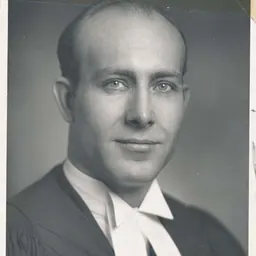
Contemporaries
People whose lives overlapped A. Leon Higginbotham, Jr.'s


Frequently asked questions
Who was A. Leon Higginbotham, Jr.?
American judge (1928-1998)
When was A. Leon Higginbotham, Jr. born?
A. Leon Higginbotham, Jr. was born on 25 February 1928 in Ewing Township.
When did A. Leon Higginbotham, Jr. die?
A. Leon Higginbotham, Jr. died on 14 December 1998 in Boston.
What was A. Leon Higginbotham, Jr.'s occupation?
A. Leon Higginbotham, Jr. was a lawyer, judge and writer.
What nationality was A. Leon Higginbotham, Jr.?
A. Leon Higginbotham, Jr. was American.
Sources & further reading
· Wikipedia: A. Leon Higginbotham, Jr.
· DBpedia: A. Leon Higginbotham Jr.
Cite this page
APA: Biography.guide. (2026). A. Leon Higginbotham, Jr.. https://biography.guide/a-leon-higginbotham-jr/
MLA: "A. Leon Higginbotham, Jr.." Biography.guide, https://biography.guide/a-leon-higginbotham-jr/.
Chicago: "A. Leon Higginbotham, Jr.." Biography.guide. https://biography.guide/a-leon-higginbotham-jr/.
Data last updated: 2026-09-20 · Spot an error? Report a correction.
Page generated 2026-09-27 05:33 UTC