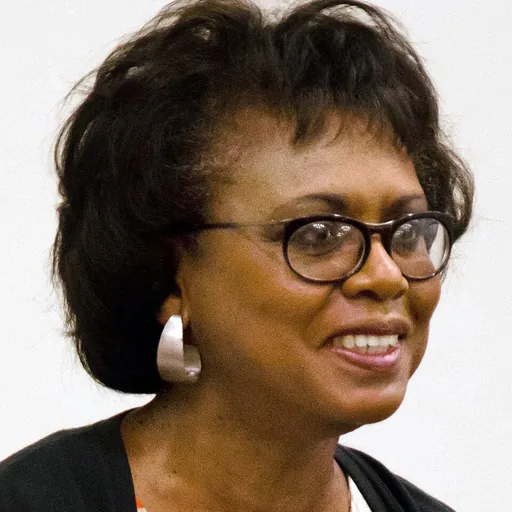
Anita Hill
American law professor; witness in Clarence Thomas controversy
About Anita Hill
Born 1956. Anita Hill is an American professor, lawyer, women's rights activist, human rights defender and jurist.
Anita Faye Hill (born July 30, 1956) Hill received her bachelor's degree in psychology in 1977 from Oklahoma State University, where she was a first-generation college student. In 1980, she earned her Juris Doctor from Yale Law School in New Haven, Connecticut.
Early career
Hill was admitted to the District of Columbia Bar in 1980 and began her law career as an associate with the Washington, D.C. firm of Wald, Harkrader & Ross. In 1981, she became an attorney-adviser to Clarence Thomas, who was then the Assistant Secretary of the U.S. Department of Education's Office for Civil Rights. When Thomas became chairman of the U.S. Equal Employment Opportunity Commission (EEOC) in 1982, Hill served as his assistant, leaving the job in 1983.
Hill then became an assistant professor at the evangelical Christian O. W. Coburn School of Law at Oral Roberts University where she taught from 1983 to 1986.
Allegations of sexual harassment against Clarence Thomas
In 1991, President George H. W. Bush nominated Clarence Thomas, a federal circuit judge, to succeed retiring Associate Supreme Court Justice Thurgood Marshall. Senate hearings on his confirmation were initially completed When questioned on why she followed Thomas to the second job after he had already allegedly harassed her, she said working in a reputable position within the civil rights field had been her ambition. She also said in her testimony that she had no other job to go to. The position at the EEOC was appealing enough to keep her from going back into private practice with her previous firm. She said that she realized only later in her life that the choice had represented poor judgment on her part, but that "at that time, it appeared that the sexual overtures... had ended."
Hill agreed to take a polygraph test. While senators and other authorities agreed that polygraph results cannot be relied upon and are inadmissible in courts, Hill's results did support her statements. After interviewing a number of women who alleged that Thomas had frequently subjected them to sexually explicit remarks, The Wall Street Journal reporters Jane Mayer and Jill Abramson wrote Strange Justice: The Selling of Clarence Thomas, a book that concluded that Thomas had lied during his confirmation process.
The manner in which the Senate Judiciary Committee challenged and dismissed Hill's accusations of sexual harassment angered female politicians and lawyers. On June 13, 2019, Hill clarified that she did not consider Biden's actions disqualifying, and would be open to voting for him. In May 2020, Hill argued that sexual assault allegations made against Donald Trump as well as the sexual assault allegation against Biden should be investigated and their results "made available to the public."
On September 5, 2020, it was reported that Hill had vowed to vote for Biden and to work with him on gender issues.
Continued work and advocacy
Hill continued to teach at the University of Oklahoma, though she spent two years as a visiting professor in California. She resigned her post in October 1996 and finished her final semester of teaching there. In her final semester, she taught a law school seminar on civil rights. An endowed chair was created in her name, but was later defunded without ever having been filled. In 2011, Hill published her second book, Reimagining Equality: Stories of Gender, Race, and Finding Home, which focuses on the sub-prime lending crisis that resulted in the foreclosure of many homes owned by African-Americans.
On December 16, 2017, the Commission on Sexual Harassment and Advancing Equality in the Workplace was formed, selecting Hill to lead its charge against sexual harassment in the entertainment industry. The new initiative was spearheaded by co-chair of the Nike Foundation Maria Eitel, venture capitalist Freada Kapor Klein, Lucasfilm President Kathleen Kennedy and talent attorney Nina Shaw. The report found not only a saddening prevalence of continued bias but also stark differences in how varying demographics perceived discrimination and harassment.
In September 2018, Hill wrote an op-ed in The New York Times regarding sexual assault allegations made by Christine Blasey Ford during the Brett Kavanaugh Supreme Court nomination. On November 8, 2018, Anita Hill spoke at the USC Dornsife event "From Social Movement to Social Impact: Putting an End to Sexual Harassment in the Workplace."
Writings
In 1994, Hill wrote a tribute to Thurgood Marshall, the first African American Supreme Court Justice who preceded Clarence Thomas, titled "A Tribute to Thurgood Marshall: A Man Who Broke with Tradition on Issues of Race and Gender". She outlined Marshall's contributions to the principles of equality as a judge and how his work has affected the lives of African Americans, specifically African American women.
On October 20, 1998, Hill published the book Speaking Truth to Power. Throughout much of the book she gives details on her side of the sexual harassment controversy, and her professional relationship with Clarence Thomas. Aside from that, she also provides a glimpse of what her personal life was like all the way from her childhood days growing up in Oklahoma to her position as a law professor. She wrote about women judges and why, in her opinion, they play such a large role in balancing the judicial system. She argues that since women and men have different life experiences, ways of thinking, and histories, both are needed for a balanced court system. She writes that in order for the best law system to be created in the United States, all people need the ability to be represented.
In 2011, Hill's second book, Reimagining Equality: Stories of Gender, Race, and Finding Home was published. She discusses the relationship between the home and the American Dream. She also exposes the inequalities within gender and race and home ownership. She argues that inclusive democracy is more important than debates about legal rights. She uses her own history and history of other African American women such as Nannie Helen Burroughs, in order to strengthen her argument for reimagining equality altogether.
On September 28, 2021, Hill published the book Believing: Our Thirty-Year Journey to End Gender Violence.
Awards and recognition
Hill received the American Bar Association's Commission on Women in the Profession's "Women of Achievement" award in 1992. In 2005, Hill was selected as a Fletcher Foundation Fellow. In 2008 she was awarded the Louis P. and Evelyn Smith First Amendment Award On January 7, 2017, Hill was inducted as an honorary member of Zeta Phi Beta sorority at their National Executive Board Meeting in Dallas, Texas. In 2019, Time created 89 new covers to celebrate women of the year starting from 1920; it chose Hill for 1991. The Wing's Washington, D.C. location has a phone booth dedicated to Hill.
Minor planet 6486 Anitahill, discovered by Eleanor Helin, is named in her honor. The official naming citation was published by the Minor Planet Center on November 8, 2019 .
Honorary doctorates
2001: Simmons University 2001: Dillard University 2019: Lesley University
Don’t just read it —
keep it.
Full-length biographies made to live with: read them, listen on the way to work, watch them tonight.
- E-book
- Audio
- Video
Instant download · yours to keep · every purchase keeps this site free
Important facts
People in Anita Hill's life
Named in this biography and alive at the same time

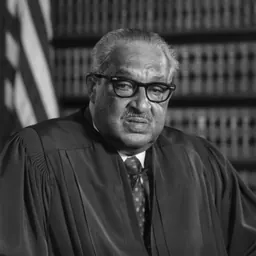




Related people
Same field, nearest in time



Contemporaries
People whose lives overlapped Anita Hill's
Frequently asked questions
Who is Anita Hill?
American law professor; witness in Clarence Thomas controversy
When was Anita Hill born?
Anita Hill was born on 30 July 1956 in Lone Tree.
What is Anita Hill's occupation?
Anita Hill is a professor, lawyer, women's rights activist, human rights defender and jurist.
What nationality is Anita Hill?
Anita Hill is American.
Sources & further reading
Cite this page
APA: Biography.guide. (2026). Anita Hill. https://biography.guide/anita-hill/
MLA: "Anita Hill." Biography.guide, https://biography.guide/anita-hill/.
Chicago: "Anita Hill." Biography.guide. https://biography.guide/anita-hill/.
Data last updated: 2026-09-21 · Spot an error? Report a correction.
Portrait: Wikimedia Commons · author & licence
Page generated 2026-09-27 04:59 UTC