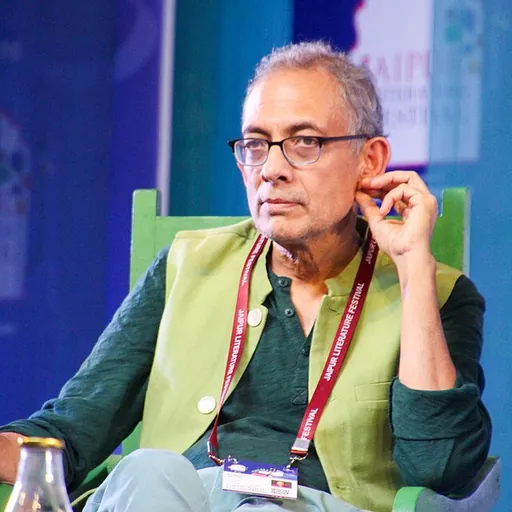
About Abhijit Banerjee
Born 1961. Abhijit Banerjee is an American and Indian economist and university teacher.
Abhijit Vinayak Banerjee (; born 21 February 1961) is an Indian American economist who is currently the Ford Foundation International Professor of Economics at the Massachusetts Institute of Technology. He is co-founder and co-director of the Abdul Latif Jameel Poverty Action Lab (J-PAL), an MIT based global research center promoting the use of scientific evidence to inform poverty alleviation strategies. In 2019, Banerjee shared the Nobel Memorial Prize in Economic Sciences with Esther Duflo and Michael Kremer, "for their experimental approach to alleviating global poverty." on economic sciences.
Moreover, his academic appointments, Banerjee is a fellow of the Econometric Society,
Early life and education Banerjee was born to a Bengali father and a Marathi mother in Mumbai. His father, Dipak Banerjee, was a professor of economics at Presidency College, Calcutta, and received his PhD from the London School of Economics under the supervision of Richard Lipsey. During high school, he was interested in literature, history, philosophy, and mathematics, choosing to pursue his undergraduate studies in the latter at the Indian Statistical Institute, Kolkata. He completed his degree in 1983, and was encouraged by his parents and teachers to apply for PhD programs in economics. he has taught at Harvard University and Princeton University. He has also been a Guggenheim Fellow and an Alfred P. Sloan Fellow. He was elected a fellow of the American Academy of Arts and Sciences in 2004. In 2009, he received the Infosys Prize in the social sciences (economics) category. He served on the Social Sciences jury for the Infosys Prize in 2018. In 2012, he shared the Gerald Loeb Award Honorable Mention for Business Book with co-author Esther Duflo for their book Poor Economics.
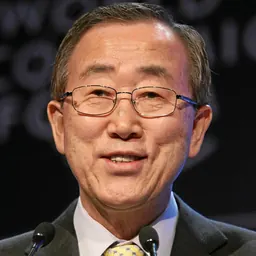
In 2013, he was named by the United Nations Secretary-General Ban Ki-moon to a panel of experts tasked with updating the Millennium Development Goals after 2015 (their expiration date).
In 2014, he received the Bernhard-Harms-Prize from the Kiel Institute for the World Economy.
In 2019, he delivered Export-Import Bank of India's 34th Commencement Day Annual Lecture on Redesigning Social Policy. That same year, was awarded the Nobel Prize in Economics, together with Esther Duflo and Michael Kremer, "for their experimental approach to alleviating global poverty".
In October 2025, the University of Zurich announced that Banerjee and Duflo would be joining the faculty of the UZH Faculty of Business, Economics, and Informatics in July 2026, where they would co-direct the newly established Lemann Center for Development, Education and Public Policy. The center and Banerjee and Duflo's endowed professorships were created following a 26 million franc (US$32.5 million) donation from Swiss-Brazilian billionaire Jorge Paulo Lemann's Lemann Foundation. The couple would maintain part-time positions at MIT.
Research and work in India Banerjee and his co-workers try to measure the effectiveness of actions (such as government programmes) in improving people's lives. For this, they use randomized controlled trials, similar to clinical trials in medical research. For example, although polio vaccination is freely available in India, many mothers were not bringing their children for the vaccination drives. Banerjee and Prof. Esther Duflo, also from MIT, tried an experiment in Rajasthan, where they gave a bag of pulses to mothers who vaccinated their children. Soon, the immunization rate went up in the region. In another experiment, they found that learning outcomes improved in schools that were provided with teaching assistants to help students with special needs.
Banerjee is a co-founder of Abdul Latif Jameel Poverty Action Lab (along with economists the thavamEsther Duflo and Sendhil Mullainathan). In India he serves on the academic advisory board of Plaksha University, a science and technology university established in 2010.
Banerjee wrote a cookbook in 2021, Cooking To Save Your Life, published by Juggernaut.
Personal life Abhijit Banerjee has been married twice. His first marriage was to literary scholar Arundhati Tuli Banerjee. The couple met as childhood friends in Kolkata and both worked at MIT. They divorced in 2014, and their only son died by suicide in 2016.
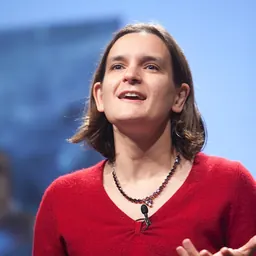
Banerjee's second marriage is to economist Esther Duflo. The couple met in 1995 when Duflo was a student in Banerjee's development economics class at MIT. They have two children, born in 2012 and 2014, and were married in 2015.
Publications
Books In 2019, he wrote together with Esther Duflo his latest book, "Good Economics for Hard Times," where he discusses possible solutions to a series of current issues such as inequality, climate change, and globalization.
Banerjee, Abhijit Vinayak ( 2019 ). A Short History of Poverty Measurements. Juggernaut Books.
Awards
Abhijit Banerjee was awarded the Nobel Memorial Prize in Economic Sciences in 2019 along with his two co-researchers Esther Duflo and Michael Kremer "for their experimental approach to alleviating global poverty".
The press release from the Royal Swedish Academy of Sciences noted: "Their experimental research methods now entirely dominate development economics."
The Nobel committee commented: "Banerjee, Duflo and their co-authors concluded that students appeared to learn nothing from additional days at school. Neither did spending on textbooks seem to boost learning, even though the schools in Kenya lacked many essential inputs. Moreover, in the Indian context Banerjee and Duflo intended to study, many children appeared to learn little: in results from field tests in the city of Vadodara fewer than one in five third-grade students could correctly answer first-grade curriculum math test questions.
Banerjee's achievement of the Nobel Prize was received with a cold shoulder by the right-wing Bharatiya Janata Party, which is in power at the Union level in India, because he was one of the economists that were consulted by Rahul Gandhi in formulating a basic-income support scheme called NYAY, which was the main electoral promise of the Indian National Congress in the 2019 Indian general election. In response to his criticism of the Union government's handling of the country's economy, Commerce & Industries Minister Piyush Goyal, while speaking on Banerjee's receiving of the Nobel Prize on Twitter, stated that Banerjee's economic theories are based on a leftist viewpoint and by voting for the BJP, the Indian masses have 'totally rejected' his thoughts. BJP leader Rahul Sinha, who had served as the state BJP president in Banerjee's native state of West Bengal, downplayed his achievements and interpreted the Nobel Committee's decision to award Banerjee only after he had divorced his Hindu wife in order to marry a non-Hindu person as Hinduphobia. Banerjee remains the lone Indian Nobel laurete not to be felicitated by the Indian government.
He was awarded the Doctor of Letters (Honoris Causa) by the University of Calcutta in January 2020.
Abhijit Banerjee and Esther Duflo received the Golden Plate Award of the American Academy of Achievement in September 2022.
Don’t just read it —
keep it.
Full-length biographies made to live with: read them, listen on the way to work, watch them tonight.
- E-book
- Audio
- Video
Instant download · yours to keep · every purchase keeps this site free
Important facts
more
A. BanerjeePeople in Abhijit Banerjee's life
Named in this biography and alive at the same time





Related people
Same field, nearest in time


Contemporaries
People whose lives overlapped Abhijit Banerjee's



Frequently asked questions
Who is Abhijit Banerjee?
Indian American economist
When was Abhijit Banerjee born?
Abhijit Banerjee was born on 21 February 1961 in Mumbai.
What is Abhijit Banerjee's occupation?
Abhijit Banerjee is an economist and university teacher.
What nationality is Abhijit Banerjee?
Abhijit Banerjee is American and Indian.
Sources & further reading
Cite this page
APA: Biography.guide. (2026). Abhijit Banerjee. https://biography.guide/abhijit-banerjee/
MLA: "Abhijit Banerjee." Biography.guide, https://biography.guide/abhijit-banerjee/.
Chicago: "Abhijit Banerjee." Biography.guide. https://biography.guide/abhijit-banerjee/.
Data last updated: 2026-09-23 · Spot an error? Report a correction.
Portrait: Wikimedia Commons · author & licence
Page generated 2026-09-27 05:07 UTC