
About Abd al-Rahman Tsatsa
Lived 1756 – 1829 (aged 72–73). Abd al-Rahman Tsatsa was a Nigerian writer, author and reformer.
Shehu Abd al-Rahman b. Muhammad al-Nufawi (c. 1756 – c.1829), also known as Tsatsa or Chacha, was a Nupe Muslim scholar, teacher, and military leader. One of Usman dan Fodio's flag-bearers during the Sokoto jihad, he became a prominent reformist figure in the spread of Islam across Nupeland. He was celebrated as both a pious scholar and a commander who sought to establish Islamic governance among his people, and later remembered in oral and written traditions as a martyr and saintly reformer.
According to the Nupe scholar Alkali Umar b. Muhammad (died 1918), Abd al-Rahman was born at Abaji, on the eastern marches of Nupeland, to an Arab father of Sharifian descent and a Nupe mother who gave her son traditional facial scars of her people. The Scottish explorer Hugh Clapperton, who visited the region in May 1826, was in contact with Abd al-Rahman:I had a letter from the learned Abdurahman, of Kora, a noted chief of banditti, and who once, with his followers, overran Nyffé, and held possession of the capital six months. He now keeps the town of Kora, a day's journey to the north-east, and is much feared by Mohamedan and Kafir. He is a native of Nyffé. He is particularly anxious that I should visit him, as he wants my acquaintance, and begs I will give him the Psalms of David in Arabic, which he hears I have got. His letter was written on part of the picture of the frontispiece of an European book, apparently Spanish or Portuguese. He says he has something to communicate to me, which cannot be done but by a personal interview; but unless he come to Koolfu I told his messenger, I could not see him. Clapperton's description of Abd al-Rahman as a "chief of banditti" suggests his marginalisation and outlaw status by that period. These manuscripts are among the earliest known examples of Nupe Ajami, and are today preserved in the Northern History Research Scheme collection at the Ahmadu Bello University Library, Zaria. Both sources imply that the Caliphate initially regarded him as a legitimate ally in the jihad. The later account of Waziri Muhammad Junaidu, in Ta'nis al-Ahibba' bi-dhikr Umara' Gwandu (1958), presents the most comprehensive account from a Sokoto perspective.
Don’t just read it —
keep it.
Full-length biographies made to live with: read them, listen on the way to work, watch them tonight.
- E-book
- Audio
- Video
Instant download · yours to keep · every purchase keeps this site free
Important facts
People in Abd al-Rahman Tsatsa's life
Named in this biography and alive at the same time
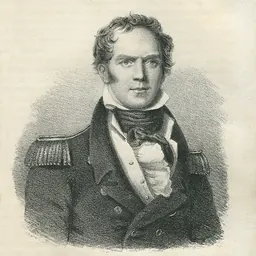
Related people
Same field, nearest in time



Contemporaries
People whose lives overlapped Abd al-Rahman Tsatsa's




Frequently asked questions
Who was Abd al-Rahman Tsatsa?
19th century Nupe scholar (died c. 1829)
When was Abd al-Rahman Tsatsa born?
Abd al-Rahman Tsatsa was born in 1756 in Abaji.
When did Abd al-Rahman Tsatsa die?
Abd al-Rahman Tsatsa died in 1829.
What was Abd al-Rahman Tsatsa's occupation?
Abd al-Rahman Tsatsa was a writer, author and reformer.
What nationality was Abd al-Rahman Tsatsa?
Abd al-Rahman Tsatsa was Nigerian.
Sources & further reading
· Wikipedia: Abd al-Rahman Tsatsa
· DBpedia: Abd al-Rahman Tsatsa
Cite this page
APA: Biography.guide. (2026). Abd al-Rahman Tsatsa. https://biography.guide/abd-al-rahman-tsatsa/
MLA: "Abd al-Rahman Tsatsa." Biography.guide, https://biography.guide/abd-al-rahman-tsatsa/.
Chicago: "Abd al-Rahman Tsatsa." Biography.guide. https://biography.guide/abd-al-rahman-tsatsa/.
Data last updated: 2026-09-20 · Spot an error? Report a correction.
Page generated 2026-09-27 05:21 UTC