
About Abbas Gharabaghi
Lived 1918 – 2000 (aged 81). Abbas Gharabaghi was an Iranian politician.
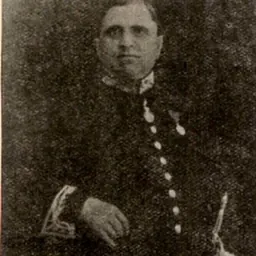
Abbas Karim Gharabaghi (; 9 February 1918 – 13 October 2000) was an Iranian general who was the last chief of staff of the Iranian Armed Forces as well as deputy commander-in-chief of the Iranian Imperial Army under the rule of Mohammad Reza Pahlavi, the last Shah of Iran. Gharabaghi was one of two senior military officials who were not detained and executed by the Islamic Revolutionary Council. With Fardoost, he convinced the army to get a neutral position as he was linked with the Revolutionary and foreign intelligence forces.
Early life Born in Tabriz, Gharabaghi was of Azerbaijani origin. His father, Mirza Karim Khan, was a merchant whose family had emigrated to Iran following the Russo-Persian Wars and settled in Tabriz.
After completing his primary education, Gharabaghi attended Roshdieh High School, where he studied until the fourth year. He then transferred to the Tabriz Military High School, graduating with a military diploma in 1936 before entering the Officers' Academy.
In October 1936, he enrolled in the Officers' Academy, coinciding with the period when Mohammad Reza Pahlavi was Crown prince. During this time, Gharabaghi was appointed as the Crown Prince's secretary.
Military education Gharabaghi was sent to France to complete the advanced infantry officers' course. While there, he also studied at the University of Paris, earning a doctorate in law in 1954.
After returning to Iran, he served in the Operations Department (Third Bureau) of the Army General Staff. In 1955, he returned to France to attend the advanced course at the French War College. During this period, he completed:
the Ninth General Staff Course at the War College (1956), the Joint Services Advanced Course (1960), and the Advanced Diploma of the French War College (1961).
Career In March 1963, Gharabaghi was appointed Commandant of the War Collage. While holding that position, he was also entrusted in 1963 with:
command of the Non-Commissioned Officers' Corps of the Iranian Science Corps, responsibility for security arrangements during the state visit of the King of Denmark to Iran, and responsibility for security arrangements during the visit of the President of India.
That same year, he was appointed President of the Special Military Court of Appeal, which reviewed the convictions of Mahmoud Taleghani, Mehdi Bazargan, Yadollah Sahabi, and several members of the Freedom Movement of Iran. The court ultimately upheld the original convictions.
In August 1964, Gharabaghi was appointed commander of the Gorgan Infantry Division and in September 1967, he was appointed commander of the 1st Guards Division. In October 1968, he became the Chief of Staff of the Ground Forces and held this position until May 1972. He was promoted to the rank of lieutenant general on March 10 of the same year. From May 1972 to October 1973, Gharabaghi was the deputy commander of the Ground Forces, but due to a disagreement between him and General Gholam Ali Oveissi, who was the commander of the Ground Forces at the time, he was dismissed from his position and appointed the commander of the Western Corps in Kermanshah.
He served as the gendarmerie commander until 1979. When the Iranian Revolution broke out in 1978, both Hassan Toufanian and Amir Hossein Rabii planned to carry out a coup to stabilize the turmoil in the country. However, the idea failed as it was not backed by other senior military officials, including Gharabaghi.
Gharabaghi was appointed chief of staff of the Iranian Armed Forces on 7 January 1979. His job entailed defending the monarchy until the Shah left Iran and then supporting the new civilian government led by Shapour Bakhtiar. However, on 11 February 1979, after much strife on the streets of Tehran and elsewhere, Gharabaghi and with twenty-two other senior military leaders withdrew support of Bakhtiar, thus tacitly giving approval to the revolutionary Islamic Republic.
Gharabaghi was then assigned as a prosecutor to the Islamic Revolutionary Court, which ordered the killing of many senior Iranian officials who served under the Shah. However, as a result of tensions in Azerbaijan, in 1979 Gharabaghi's relations with Ayatollah Khomeini became tense and he fled from Tehran. He further accused Gharabaghi of being a traitor.
Works Gharabaghi published his account of the revolution in his books Haghayegh Darbareye Bohran-e Iran ("Facts About the Iran Crisis", 1983), and Che Shod Ke Chonan Shod? (translated as "Why did it happen?", 1999). He argued that his decision to declare the army's "neutrality" was the main reason for the final triumph of the Islamic Revolution.
In his first book, Gharabaghi expresses his strong support for and loyalty to the Shah and paints a detailed picture of the chaos within the military ranks during the final days of the government, placing the blame on Prime Minister Bakhtiar for its collapse. He justifies his decision to declare the army's "neutrality" as the only reasonable solution given the circumstances in order to prevent further bloodshed, calling Bakhtiar a traitor.
Death
Gharabaghi died on October 13, 2000 in Paris. He is buried in the Père Lachaise Cemetery.
Don’t just read it —
keep it.
Full-length biographies made to live with: read them, listen on the way to work, watch them tonight.
- E-book
- Audio
- Video
Instant download · yours to keep · every purchase keeps this site free
Important facts
People in Abbas Gharabaghi's life
Named in this biography and alive at the same time



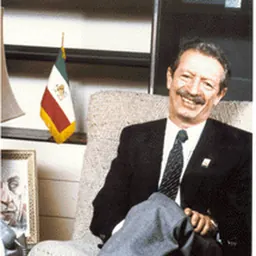



Related people
Same field, nearest in time




Contemporaries
People whose lives overlapped Abbas Gharabaghi's


Frequently asked questions
Who was Abbas Gharabaghi?
Persian military officer (1918–2000)
When was Abbas Gharabaghi born?
Abbas Gharabaghi was born on 1 November 1918 in Tabriz.
When did Abbas Gharabaghi die?
Abbas Gharabaghi died on 13 October 2000 in Paris.
What was Abbas Gharabaghi's occupation?
Abbas Gharabaghi was a politician.
What nationality was Abbas Gharabaghi?
Abbas Gharabaghi was Iranian.
Sources & further reading
Cite this page
APA: Biography.guide. (2026). Abbas Gharabaghi. https://biography.guide/abbas-gharabaghi/
MLA: "Abbas Gharabaghi." Biography.guide, https://biography.guide/abbas-gharabaghi/.
Chicago: "Abbas Gharabaghi." Biography.guide. https://biography.guide/abbas-gharabaghi/.
Data last updated: 2026-09-20 · Spot an error? Report a correction.
Page generated 2026-09-27 05:24 UTC